Mauritania Desert Camp Toilets and Hygiene
A night beside the dunes is one of Mauritania’s great travel experiences: dinner in the open air, a sky full of stars, and silence that feels almost unreal. For many travelers, though, the practical question comes first. Mauritania desert camp toilets and hygiene are different from hotel facilities, but a well-organized guided camp can make them straightforward, private, and comfortable.
The key is to arrive with the right expectations. Desert camping is not about replicating a city hotel in the sand. It is about having sensible facilities, clean routines, enough water for essential use, and a team that plans the details before camp is set up. When these basics are handled properly, you can focus on the dunes, the tea, and the extraordinary night around you.
What toilet facilities are like at desert camps
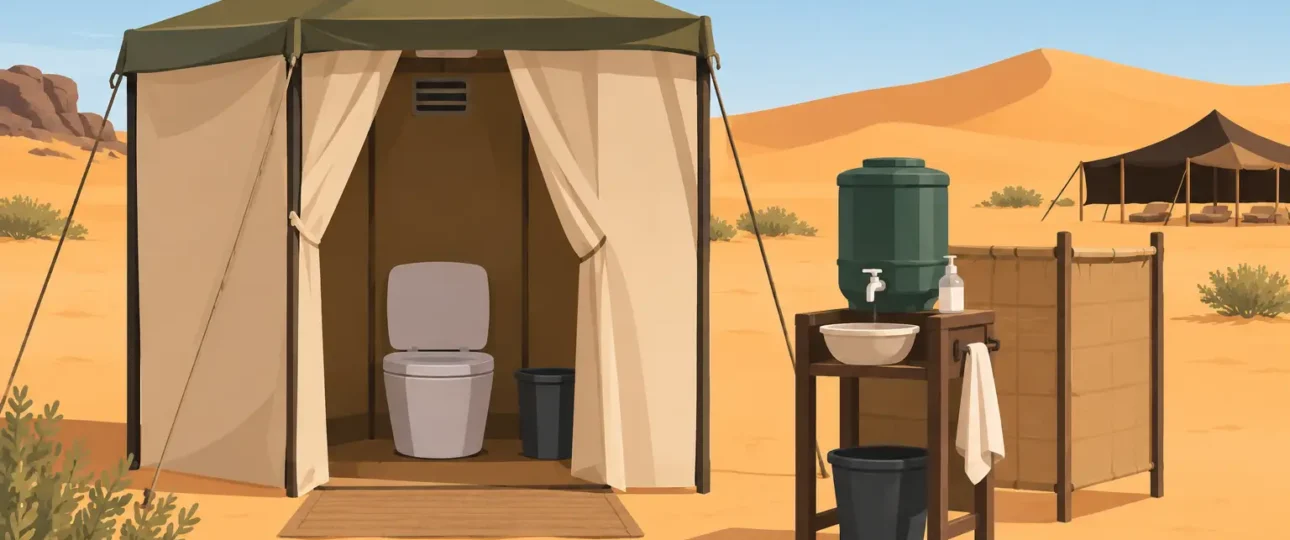
Toilet arrangements vary by route, campsite, group size, and how remote the overnight stop is. Some established desert camps use a simple enclosed toilet area or a private toilet tent. Others, especially on mobile expeditions deep in the Adrar or during dune crossings, may use a portable camp toilet set at a respectful distance from the sleeping and dining area.
Do not expect a flushing toilet everywhere. Water is precious in the Sahara, and flush systems are not practical at many remote sites. Instead, a properly managed camp toilet is designed around privacy, cleanliness, and responsible waste handling. The enclosure should be stable, discreet, and positioned with consideration for wind direction and the camp layout.
At a good camp, the toilet area is never an afterthought. Your team should establish it before guests settle in, explain where it is, and keep it separate from food preparation and sleeping spaces. If you have mobility concerns, travel with young children, or simply feel anxious about camping facilities, raise this before booking. The right itinerary and camp style depend on your comfort level.
Privacy matters in open landscapes
The desert can feel wonderfully vast, but that does not mean travelers should have to sacrifice privacy. A screened toilet tent or enclosed area is the most common solution on organized camping trips. It gives guests a clear, private space while preserving the low-impact nature of a temporary camp.
For travelers who prefer more privacy, choosing a structured guided itinerary is generally more reassuring than arranging an unplanned overnight stop independently. Camp placement, lighting, water supplies, and the toilet setup are all easier to manage when the same local team handles transport, camp equipment, and the overnight routine.
Mauritania desert camp toilets and hygiene: what to expect
Handwashing in the desert is practical rather than luxurious. Camps commonly provide a handwashing station with a water container, tap, basin, soap, and a towel or paper towels. In more remote settings, hand sanitizer may be provided alongside water for washing. Both are useful, but soap and water remain the better choice when your hands are visibly dusty or have been in contact with food, animals, or toilet surfaces.
Water for washing is limited, so use it thoughtfully. You will normally have enough for essential hygiene, but a long shower is not part of the experience. Many travelers freshen up with biodegradable wet wipes, a small washcloth, and a modest amount of water before bed. Morning routines are similarly simple: wash your hands and face, brush your teeth, apply sunscreen, and enjoy the cool part of the day before the heat rises.
A clean camp also depends on the people running it. Food should be prepared with clean hands and utensils, drinking water should be handled separately from washing water, and rubbish should be collected rather than left in the landscape. These details may sound ordinary, but they are what turn a remote night into a secure and enjoyable part of the journey.
Drinking water and food hygiene
Desert air is dry, and dehydration can arrive faster than many visitors expect. Carry a reusable bottle and drink regularly throughout the day, rather than waiting until you feel thirsty. Your guide should make safe drinking water available and help you judge how much to carry during drives, walks, and time on the dunes.
For meals, the practical standard is simple: food should be freshly prepared, protected from sand and insects, and served with clean equipment. Hot tea is a familiar part of Mauritanian hospitality, and meals around camp can be a highlight of the evening. Still, tell your guide about dietary requirements, allergies, or a sensitive stomach in advance. Remote camps can accommodate many needs more easily when supplies are planned before departure.
What to pack for a cleaner, more comfortable night
You do not need to bring a suitcase full of camping products. A few personal items will make a meaningful difference, especially when you are traveling through several regions and changing accommodations often.
Bring hand sanitizer for use between stops, biodegradable wet wipes for a quick refresh, tissues or toilet paper for personal reassurance, and a small zip bag for used paper if there is not an immediate disposal point. A travel toothbrush, toothpaste, lip balm, sunscreen, and a compact microfiber towel are also useful. For overnight comfort, include a headlamp. It keeps both hands free when walking to the toilet area after dark and helps you avoid disturbing other guests.
If you use menstrual products, pack the type you know works best for you and bring enough for your full trip, plus extra. Disposable products should never be left in the desert. Keep a sealable disposal bag in your daypack until your camp team can place waste in the appropriate collection bag. Menstrual cups can work well for some travelers, but only if you are already comfortable using one with limited washing water.
Avoid heavily scented products where possible. The desert does not need perfume, and strong fragrances can be unpleasant in a shared tent or vehicle. A small amount of unscented soap, deodorant, and moisturizer is usually all you need.
The hygiene habits that make the biggest difference
Desert travel is not difficult when you maintain a few consistent habits. Wash or sanitize your hands before eating and after using the toilet. Keep your drinking bottle separate from wash-water containers. Do not place personal toiletries directly on shared surfaces, and keep wipes, tissues, and other waste in a bag until it can be properly removed.
Sand gets everywhere, including in shoes, bags, and clothing. That is part of the adventure, but it is worth keeping your sleeping bag, pillow, and clean clothes inside a closed duffel or dry bag. A lightweight scarf can protect your face during windy moments, while closed-toe shoes help keep sand and dust off your feet around camp.
It also helps to accept that a desert night has its own rhythm. You may not feel freshly showered, but you can feel clean enough, rested, and comfortable. A simple evening wash, clean base layer, brushed teeth, and organized sleeping space go a long way.
Why guided logistics make the difference
The quality of a desert camp is often less about the tent itself and more about the planning behind it. The team needs to carry the right equipment, choose a suitable site, allocate water carefully, set up a private toilet area, prepare food safely, and leave the location clean when the group departs. Those tasks become harder on remote routes where there are no nearby shops, facilities, or easy backup options.
Tours in Mauritania coordinates transport, camps, and on-the-ground support so travelers are not left trying to solve these details after reaching the dunes. That preparation is particularly valuable for first-time visitors to the Sahara, photographers carrying sensitive equipment, and small groups who want a genuine desert camp without unnecessary uncertainty.
Ask practical questions before your trip: Will the camp use a toilet tent or fixed facilities? Is handwashing water available? How is waste managed? What should I bring for the overnight? Clear answers are a sign that the operator understands desert travel and respects both guests and the landscape.
When you step out of your tent before sunrise, the cool sand underfoot and the first light on the dunes tend to put the practical worries in perspective. Pack thoughtfully, choose a team that plans responsibly, and let the desert night be memorable for all the right reasons.