Sahara Desert Camping Logistics in Mauritania
A night beneath the Sahara sky in Mauritania can feel wonderfully simple: dunes, a fire, tea, and stars with no city glow in sight. Getting to that moment is less simple. Sahara desert camping logistics in Mauritania require careful route planning, a capable vehicle, reliable water supplies, and people on the ground who understand changing sand conditions and remote travel realities.
For travelers, the goal should not be to overcomplicate the experience. It should be to remove the uncertainty before leaving the paved road. With the right preparation, desert camping becomes a comfortable, memorable part of a wider journey through the Adrar, Chinguetti, Ouadane, or the great dune fields beyond them.
Why Mauritania desert camping needs local planning
Mauritania is vast, lightly populated, and shaped by distances that can look deceptively short on a map. A route across sand may take far longer than its mileage suggests. Wind can soften tracks, cover familiar landmarks, or make a planned crossing unsuitable for a vehicle carrying guests and equipment.
This is why a desert camp should be treated as part of an organized itinerary, not as an overnight stop added at the last minute. A knowledgeable local team can judge the day’s driving conditions, select a sheltered and scenic camp location, and adjust the route without sacrificing safety.
There is also a practical difference between camping near a road or settlement and sleeping deep among the dunes. The more remote the camp, the more essential it becomes to plan fuel, water, food, recovery equipment, communications, and a realistic exit route. Neither choice is inherently better. A remote camp offers greater solitude, while a camp closer to a village may suit travelers with limited time or those who prefer easier access to facilities.
Choosing the right season and route
The best time for Sahara camping in Mauritania is generally from October through April, when daytime temperatures are more manageable and evenings can be pleasantly cool. December through February may bring cold nights, particularly in open desert locations. A warm layer, socks, and a proper sleeping setup matter more than many first-time visitors expect.
From late spring through early autumn, heat can make long days in the dunes demanding. Travel is still possible with the right planning, but camp routines need to change. Driving should begin early, shade becomes a priority, and water requirements rise sharply. For photographers, the softer light of the cooler months also makes morning and late afternoon more rewarding.
Your ideal route depends on what you want from the journey. The Adrar region combines dramatic dunes with historic caravan towns, palm groves, rocky plateaus, and ancient libraries. A route between Chinguetti and Ouadane can pair cultural visits with nights in the sand. Travelers focused on wide dune crossings and remote landscapes may prefer more time away from towns, while a shorter itinerary can include one carefully planned desert night alongside guesthouse stays.
Plan for flexible driving days
Desert travel works best when the schedule has room to breathe. A fixed arrival at a distant camp can create unnecessary pressure if the sand is difficult or a vehicle needs attention. A well-run trip sets clear objectives for the day but keeps the exact camp location flexible.
That flexibility is not a compromise. It is often what leads to the best campsite: a quiet dune ridge, a sheltered hollow, or a high point with an open view of the sunset.
Transport, navigation, and vehicle preparation
A properly maintained 4×4 is central to safe Sahara travel. It should be equipped for sand driving and carry the tools needed for ordinary recovery situations, including traction boards, a shovel, a compressor, tow equipment, and a spare tire in good condition. For longer or more isolated crossings, carrying additional fuel and checking the vehicle before departure are basic precautions.
Experienced drivers lower tire pressure when conditions require it and understand when to change course rather than force a difficult line through soft sand. This judgment is one reason guided travel provides real value in Mauritania. Satellite navigation can help, but it does not replace local route knowledge, visual reading of the terrain, or an understanding of where a vehicle can safely turn around.
Travelers should avoid assuming that mobile coverage will be available. Coverage may disappear well outside major towns. A reliable local operator plans communication procedures before departure and knows how to respond if a schedule changes. On more remote expeditions, appropriate backup communication is worth considering.
Water, food, and the camp routine
Water is the non-negotiable item in every desert plan. It is needed not only for drinking, but also for cooking, handwashing, and a sensible reserve in case driving takes longer than expected. The exact amount depends on the season, the number of travelers, the route, and whether the group is camping for one night or several.
As a practical standard, the vehicle should carry more drinking water than the day’s plan appears to require. Travelers should drink consistently rather than waiting until they feel thirsty, especially during warm-weather travel. Reusable bottles are preferable to relying on a large number of small disposable bottles.
Meals in the desert do not need to be elaborate to feel special. Freshly prepared food, hot tea, bread, fruit, and a satisfying evening meal are often exactly right after a day on the road. The key is safe handling and realistic planning. In remote camps, menus should be based on ingredients that travel well and can be prepared hygienically with the available equipment.
A good camp routine also allows time to arrive before dark. The team can set up sleeping areas, prepare dinner, and let guests enjoy the changing light rather than rushing through the evening. Sunset is one of the Sahara’s great moments. It is better experienced from camp than through a windshield.
Comfort under the stars
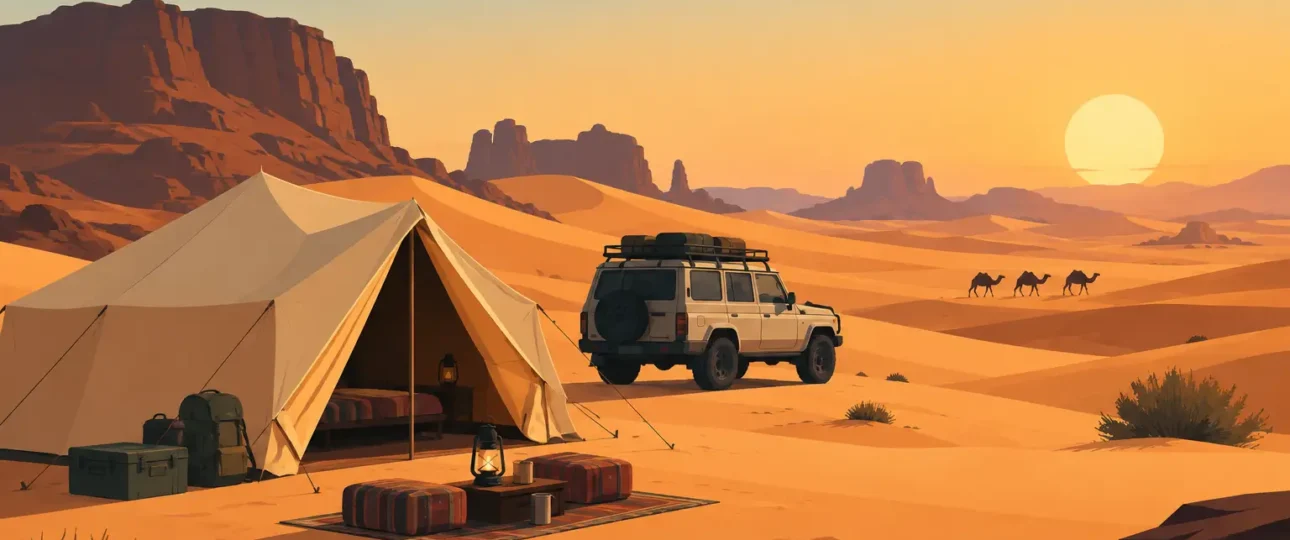
Sleeping under the stars is a highlight, but comfort is what allows travelers to enjoy it fully. A clean sleeping mat or camp bed, a warm blanket or sleeping bag suited to the season, and a wind-protected sleeping area make a major difference. Some travelers prefer an open sleeping arrangement; others appreciate a tent for privacy, warmth, or protection from wind. Both can work well.
Desert camping is not luxury accommodation in the conventional sense, and it should not be presented that way. There may be no permanent bathroom, no electricity, and no phone signal. Yet a clean camp, organized equipment, safe food, and thoughtful hosting create a genuine sense of ease.
For personal packing, keep a small overnight bag accessible rather than burying essentials under luggage. Include a warm layer, headlamp, sunscreen, sunglasses, a scarf or buff for sand, personal medication, and a power bank. Closed shoes are useful around camp, even if sandals are comfortable during the day.
Permits, cultural respect, and responsible camping
Depending on the route and activities, travel in Mauritania may involve local permissions or coordination that visitors should not have to manage alone. This is especially relevant for remote routes, protected areas, filming projects, and itineraries involving multiple regions. A ground team can organize the required arrangements and ensure the journey follows local expectations.
Camping responsibly also means leaving the landscape as it was found. Waste should be packed out, fires should be managed carefully, and vehicles should avoid unnecessary damage to vegetation or fragile terrain. Water is precious, and respectful use matters even on a short camp.
Cultural awareness matters just as much. The desert is not empty space. It is connected to communities, grazing routes, family histories, and traditional ways of moving through the land. A respectful guide can share context, facilitate appropriate interactions, and help travelers experience Mauritania as more than a dramatic backdrop.
What a well-managed camp arrangement includes
The strongest Sahara desert camping logistics in Mauritania are largely invisible to the guest because the work is done in advance. Transport is checked, supplies are loaded, the route is reviewed, and the team knows where the group can safely camp. At Tours in Mauritania, we handle the practical coordination so guests can focus on the landscape, the hospitality, and the rare quiet of a desert evening.
Before confirming a trip, ask what is included in the camping setup: vehicle type, water provision, meals, sleeping equipment, camp support, and contingency planning. Clear answers are a sign of a reliable operation and help prevent surprise costs or mismatched expectations.
The Sahara rewards travelers who arrive prepared but remain open to the day’s conditions. Let the route have room for a changed track, a longer tea stop, or a better campsite found just before sunset. That is where careful logistics and real adventure meet.