
Planning a Chinguetti Ouadane Cultural Route
The old libraries are easy to romanticize. Reaching them is less simple. To plan a Chinguetti Ouadane cultural route well, you need to account for long desert drives, changing road conditions, modest accommodation, and the real rhythm of two living Saharan towns. Done properly, this route is not a rushed checklist of UNESCO names. It is a journey through caravan history, Adrar landscapes, family-held manuscripts, and the quiet hospitality that makes Mauritania memorable.
For most international visitors, a guided private or small-group itinerary is the most comfortable choice. Local transport, reliable drivers, camp arrangements, and flexible timing matter more here than squeezing every stop into a tight schedule. The reward is the freedom to look up from the logistics and pay attention to where you are.
Why Chinguetti and Ouadane Belong on One Route
Chinguetti and Ouadane are both historic ksour, fortified desert settlements that grew through trans-Saharan trade and Islamic scholarship. Their shared history makes them natural partners, but they offer different experiences.
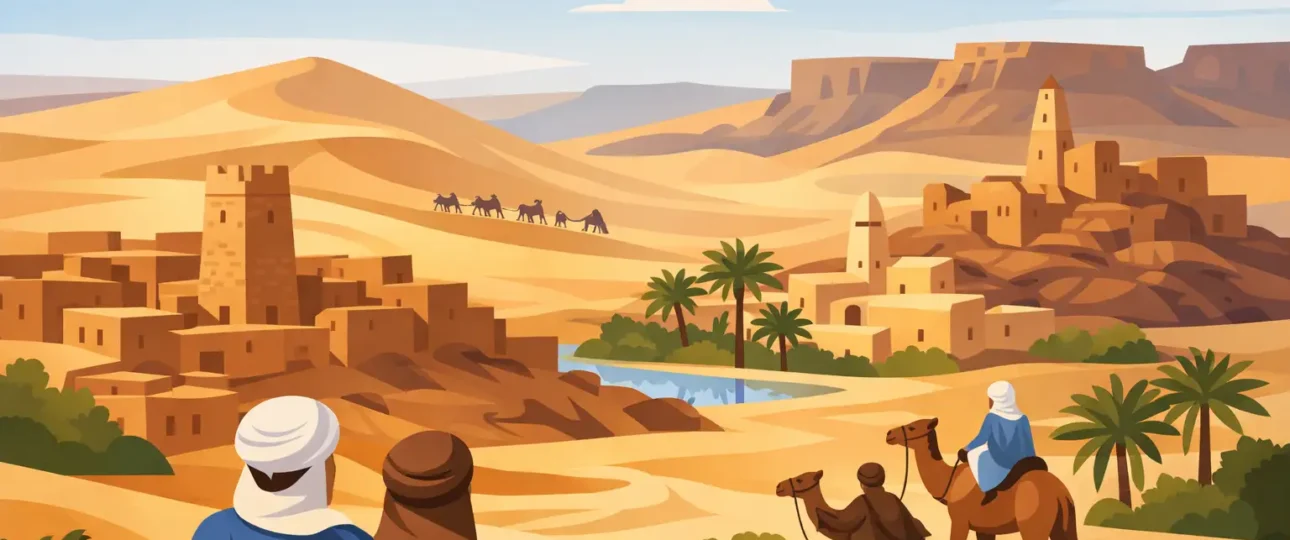
Chinguetti, founded in the 13th century, is known for its old quarter and private libraries. Narrow sand-filled lanes lead past stone-and-mud buildings, painted wooden doors, and the landmark Friday Mosque. The town has long been associated with learning and pilgrimage, and its manuscript collections remain a powerful reminder that the Sahara was once a major intellectual crossroads.
Ouadane feels more remote and more dramatically shaped by the desert. Its old town rises across a rocky slope, with ruined walls, passages, and dwellings overlooking the Adrar plateau. The atmosphere is expansive rather than busy. A walk through the old settlement helps visitors understand how trade, water, defense, and geography determined where people could live.
The drive between these towns is not simply transit. It is part of the cultural route. You travel through terrain that explains their history: dry valleys, hamadas, dune fields, and vast open space where caravan routes once connected West Africa with North Africa.
Choose a Realistic Length of Time
A short route can be done in three nights from Nouakchott, but four to six nights is a better pace for travelers who want more than photographs from the roadside. Distances are considerable, and the experience is stronger when there is time to walk slowly, meet local hosts, and spend at least one night in the desert.
A well-paced itinerary often includes one travel day from Nouakchott into the Adrar region, a full day in and around Chinguetti, a transfer via desert landscapes toward Ouadane, and time for the old town before returning. Many travelers add Atar, Terjit Oasis, or a night among the dunes to balance historic visits with the natural grandeur of the Sahara.
It depends on your priorities. Photographers may prefer extra mornings and late afternoons, when light reveals the texture of stone walls and wind-shaped sand. Travelers interested in manuscripts and local history should allow time for respectful, arranged visits rather than expecting every library to be open on demand. Those with limited mobility should discuss walking conditions in advance, as old quarters have uneven ground, loose sand, and occasional steps.
The Best Season for the Adrar
The cooler months, generally from October through March, are the most comfortable for cultural touring and desert camping. Days are more manageable for walking, while evenings can become surprisingly cold. Bring layers, even if the forecast for Nouakchott looks warm.
Spring and early autumn can still work well with the right planning, but daytime heat is more demanding. In the hotter period, sightseeing should start early and pause through the strongest afternoon sun. A good operator will adjust the day around conditions rather than treating every itinerary hour as fixed.
Plan Transport Around Conditions, Not Just Distance
The route to Chinguetti and Ouadane requires dependable four-wheel-drive transport. Some stretches are paved, while others involve sand, gravel, rough tracks, or roads affected by windblown dunes. Travel times can vary, and that is normal in the Adrar.
This is where local organization makes a meaningful difference. Your team should confirm the vehicle, fuel planning, driver experience, accommodation, and desert camp setup before departure. If your itinerary includes airport pickup, it is also sensible to arrange the transfer and first night in Nouakchott as part of the same plan. One clear point of contact reduces uncertainty when flights arrive late or plans need to change.
Independent travelers can rent a vehicle, but self-driving is best reserved for people with substantial desert-driving experience and a realistic approach to navigation, fuel, and recovery equipment. A map alone does not tell you where sand has shifted or which track is currently practical. For most visitors, a local driver-guide provides more value than the apparent freedom of driving alone.
Make the Cultural Visits Respectful and Meaningful
Chinguetti’s manuscript libraries are often family collections, not formal museums with set opening hours. Their caretakers preserve fragile works that may include Quranic texts, legal writing, astronomy, poetry, and records of trade or scholarship. Access can depend on the family’s availability, conservation concerns, and local customs.
Ask before taking photographs, especially of manuscripts, people, homes, and religious spaces. A guide can help with introductions and translation, but respectful curiosity should come from the traveler. The most memorable visits are often conversations about the work of preservation, the challenges of sand and climate, and the meaning these collections hold for families today.
In Ouadane, avoid treating the old town as a ruin set. People still live in the area, and the site is part of an active cultural landscape. Stay on established paths where possible, do not remove stones or artifacts, and give yourself time to notice the practical details: the thickness of walls, the placement of doorways, the relationship between settlement and surrounding escarpment.
A Note on Friday Mosque Etiquette
The historic mosque in Chinguetti is one of the town’s defining sights. As with any religious place, modest clothing and considerate behavior are expected. Entry rules and photography practices can vary. Your guide can explain what is appropriate on the day, ensuring your visit is respectful rather than intrusive.
Stay Comfortable Without Expecting Resort Travel
Accommodation in the Adrar is selected for cleanliness, welcome, and security, not for international luxury standards. Guesthouses are typically simple and characterful. Desert camps can range from furnished tents to a mattress setup beneath the stars, depending on the season and your preference.
That simplicity is part of the experience, but it should be organized well. Confirm whether your room has a private bathroom, what bedding is provided, whether meals are included, and how drinking water is handled. If you have dietary requirements, communicate them before arriving in Mauritania. Advance notice gives hosts the best chance to prepare properly in a remote setting.
Pack light, but do not pack casually. Closed walking shoes, sun protection, a scarf for wind and dust, a reusable water bottle, a small flashlight, and a warm layer for desert nights will earn their place in your bag. Keep essential medication with you, along with copies of travel documents. Connectivity can be limited outside major towns, so download maps and keep key contacts available offline.
Build Flexibility Into Your Plan
A cultural route through the Adrar works best when it has structure without rigidity. Sandstorms, road conditions, local events, or a library caretaker’s schedule can affect the order of visits. These are not failures of planning. They are part of traveling responsibly in a remote region.
Tours in Mauritania can organize the practical details from transport and secure stays to permits, airport transfers, and desert support, with a clear price and no surprise fees. That allows your guide to make sensible adjustments while protecting the experiences that matter most.
Before confirming any itinerary, ask what is included, how long the road days are expected to be, and what happens if weather or local conditions require a change. Clear answers are a sign of good on-the-ground planning.
The best final preparation is to leave a little room in your schedule. Chinguetti and Ouadane are places that reward the unplanned moment: tea with a host, a call to prayer carrying across stone walls, or the last light settling over a desert town that has watched caravans pass for centuries.