
Nouakchott to Banc d Arguin Tour Planning
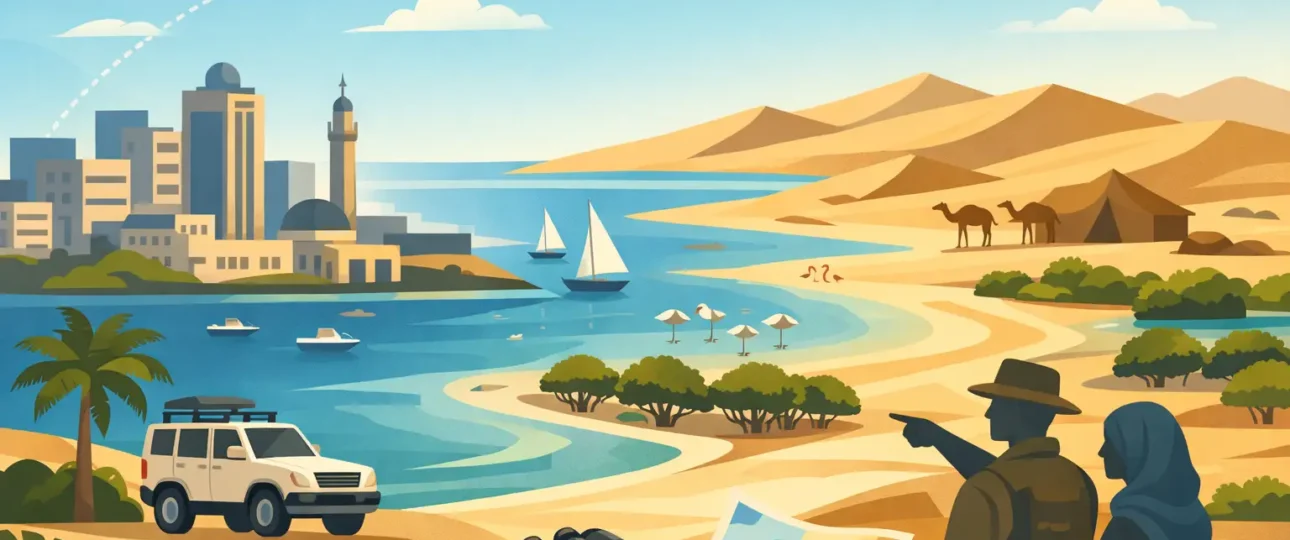
The road north of Nouakchott soon gives way to a landscape that feels almost empty: pale sand, low salt flats, wide Atlantic light, and long distances with few services. A Nouakchott to Banc d Arguin tour is not a quick beach trip. It is a carefully planned journey into one of Mauritania’s most remarkable protected coastal landscapes, where desert and ocean meet and migratory birds gather in extraordinary numbers.
For travelers, photographers, and birdwatchers, the reward is real solitude and a powerful sense of place. The trade-off is that this part of Mauritania requires dependable transport, local knowledge, flexible timing, and respect for a fragile national park. With the right preparation, the journey is comfortable, safe, and deeply memorable.
Why Banc d’Arguin Is Worth the Journey
Banc d’Arguin National Park stretches along Mauritania’s Atlantic coast, north of Nouakchott. Its shallow bays, tidal flats, islands, and coastal desert create vital habitat for vast numbers of migratory and resident birds. In the cooler months, visitors may see flamingos, pelicans, terns, shorebirds, herons, and raptors, often against a backdrop of dunes rather than the green wetlands many travelers expect.
The park is also shaped by the Imraguen, a coastal fishing community with a long relationship to these waters. Their presence gives the area cultural depth, but it should never be treated as a spectacle. A good guided visit approaches local villages and fishing activity with courtesy, asks before photographing people, and follows the park’s rules on access.
This is a destination for travelers who value stillness over a packed checklist. You will not find resort infrastructure, crowded promenades, or a fixed schedule that works perfectly every day. You may find wind, changing tides, basic facilities, and an evening so quiet that the sound of the sea carries across camp.
What a Nouakchott to Banc d’Arguin Tour Looks Like
Most trips begin with pickup in Nouakchott, where the practical work happens before the adventure starts. Your team should confirm your departure time, water supply, vehicle condition, permits, accommodation plan, and the route suitable for current conditions. Depending on the itinerary, a tour can be a long day excursion, but an overnight or two-night visit gives the park the time it deserves.
The drive north is generally measured in hours rather than minutes. Parts of the journey use the main northbound road, while access toward camps, villages, and shoreline areas may require driving on sand tracks or uneven coastal ground. A proper 4×4 is not a luxury here. It provides the clearance, reliability, and recovery capability needed when conditions become more demanding.
A typical overnight itinerary allows time to arrive without rushing, settle into a simple desert or coastal camp, take a guided walk near the tidal areas, and watch the changing light at sunset. The following morning can be planned around tides and bird activity before the return journey to Nouakchott. Some travelers combine the park with a longer northbound route toward Chami, the Adrar region, or the Iron Ore Train experience.
Day trip or overnight stay?
A day trip can work for travelers on a short schedule, especially if the goal is to see the coast, experience the park’s atmosphere, and return to Nouakchott by evening. It is also a reasonable choice when flight dates leave little flexibility.
An overnight stay is usually the better option for photography and wildlife observation. Early morning and late afternoon bring softer light, cooler temperatures, and more time to move at a calm pace. It also removes the pressure of completing a long return drive after sunset. For a first visit, two days and one night is often the most balanced format.
The Planning Details That Matter Most
Banc d’Arguin is remote enough that small oversights can become large inconveniences. The best tours handle those details before you leave the capital, rather than asking guests to solve problems from the passenger seat.
Transport, permits, and local coordination
Park access requirements and local procedures can change, so arrangements should be confirmed close to departure. A local operator can organize transport, coordinate permits where required, plan the appropriate access route, and communicate with camp teams or local contacts. This matters especially for small groups, families, photographers carrying equipment, and travelers who are unfamiliar with desert travel.
Do not assume that a standard city vehicle, a loosely planned taxi arrangement, or a phone map is enough for this route. Mobile coverage can be inconsistent away from main roads, and coastal tracks are affected by wind, sand, and tides. The objective is not to make the journey feel extreme. It is to reduce avoidable risk through sound preparation.
Tours in Mauritania can manage the transport, bookings, and on-the-ground coordination so you can focus on the coast, wildlife, and experience rather than operational details.
Accommodation and comfort
Accommodation in and around the park is generally simple, but simple does not need to mean careless. Ask what is included: sleeping arrangements, bedding, meals, drinking water, toilet facilities, lighting, and whether the camp is fixed or set up for your group.
The right expectation is a clean, welcoming, and secure camp experience rather than hotel-level facilities. Many travelers find that this is part of the appeal. A warm meal after a day in the wind, a comfortable place to sleep, and an organized camp team can make a remote night feel restorative rather than rough.
If you prefer a private room, have dietary needs, travel with children, or need a more structured comfort level, say so during planning. Mauritania rewards clear communication. A reliable operator can recommend the itinerary and accommodation style that genuinely fit your needs instead of promising an experience that the destination cannot deliver.
Best time to go
The most comfortable period for a Banc d’Arguin visit is generally from late autumn through early spring, when daytime temperatures are more manageable and migratory birdlife is a major draw. December through February can bring cool evenings, especially with coastal wind, while March and April can feel warmer but remain rewarding for nature travel.
Summer travel is possible, but heat can be intense and conditions require more careful planning. If wildlife photography is your priority, build flexibility into the schedule. Wind direction, tide levels, light, and bird movement all influence what you see on a particular day.
What to Bring for the Coast and Desert
Pack for sun, wind, sand, and changing temperatures rather than for a conventional beach vacation. Your guide should provide water planning and safety guidance, but personal comfort is easier when you arrive prepared.
Bring these essentials:
- Lightweight long sleeves and long pants for sun and wind protection
- A warm layer for evenings and early morning departures
- Closed shoes that handle sand, plus sandals for camp if you like
- Sunglasses, sunscreen, lip balm, and a scarf or buff for windblown sand
- Binoculars, spare camera batteries, memory cards, and a protective bag for equipment
For photography, a telephoto lens is useful, but do not overlook wider compositions. Banc d’Arguin’s character lies in scale: a small fishing boat on a bright tidal flat, birds rising over a dune line, or a campsite under an enormous sky. Sand protection for cameras and lenses is essential, and changing lenses outside should be done carefully.
Travel Responsibly in a Protected Landscape
Banc d’Arguin is not simply a scenic stop on a Mauritania itinerary. It is a sensitive ecosystem with international importance. Responsible travel here means staying on approved routes, avoiding disturbance to birds and nesting areas, keeping a respectful distance from wildlife, and taking all waste out of the park.
It also means treating local communities as hosts, not props. Ask permission before portraits, avoid intrusive drone use, and follow your guide’s advice about where and when to visit. Fresh fish may be part of the experience in some places, but meals and activities should be arranged in ways that respect local availability and park practices.
The most meaningful visits leave little behind. That approach protects the park and makes the experience better for the travelers who come next.
Build the Right Mauritania Itinerary
A Banc d’Arguin trip works best when it has enough space around it. Arrive in Nouakchott with time to rest after your flight, particularly if you are coming from a long-haul route. Keep a buffer before onward flights as well, since remote travel should not be planned down to the last hour.
For a short Mauritania stay, pair the park with a guided look at Nouakchott’s markets, coast, and cultural landmarks. For a longer expedition, use it as the Atlantic counterpoint to the Sahara: first the tidal flats and fishing villages, then dunes, palm-lined oases, ancient caravan towns, or the vast railway route north.
The best Nouakchott to Banc d Arguin tour is not the one that tries to cover the most ground. It is the one with a reliable vehicle, an unhurried rhythm, clear arrangements, and enough time to stand quietly where the Sahara meets the Atlantic.