
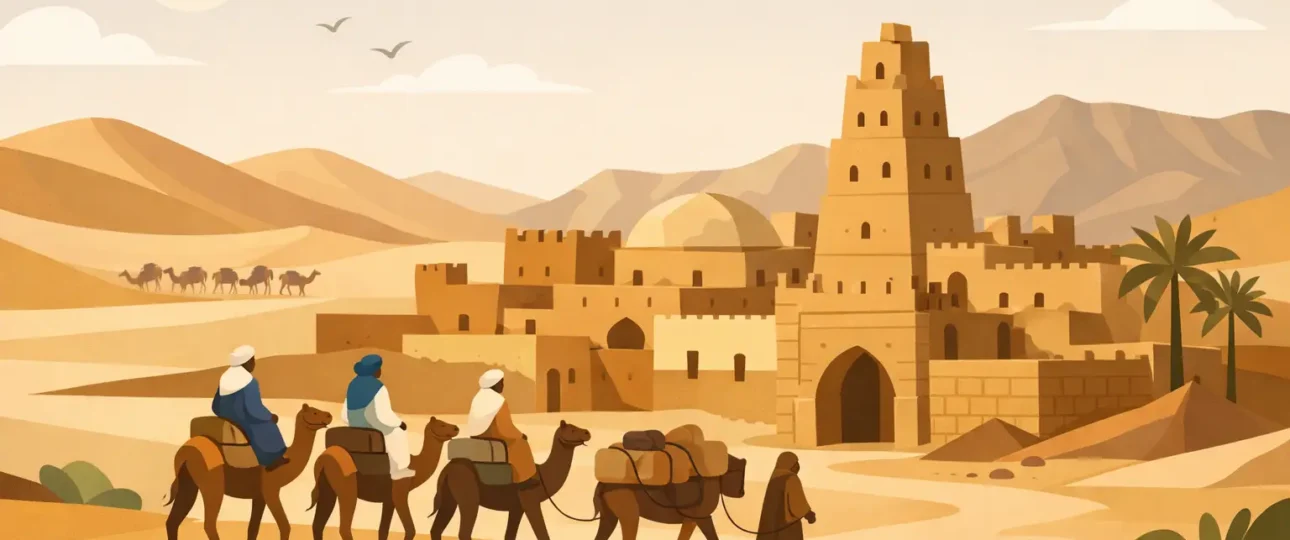
Mauritania Caravan Towns History Tour Guide
A Mauritania caravan towns history tour is not a quick stop between desert views. It is a journey through places built for the slow rhythm of camel caravans, manuscript study, trade, and survival at the Sahara’s edge. In Chinguetti and Ouadane, narrow stone lanes still lead past homes, mosques, wells, and libraries that carry the memory of a world connected by routes across the desert.
For travelers drawn to history but unwilling to leave practical details to chance, the Adrar region offers an extraordinary balance: profound cultural heritage, vast landscapes, and a route that can be organized with comfortable stops, experienced local guidance, and dependable desert transport.
Why Mauritania’s Caravan Towns Matter
For centuries, the western Sahara was not an empty barrier. It was a working landscape crossed by caravan networks moving salt, gold, textiles, books, and people between North Africa and West Africa. Towns on these routes became resting places, markets, religious centers, and places of learning.
Mauritania’s historic ksour, or fortified settlements, were shaped by this trade. Their architecture was practical: thick stone walls, shaded alleys, and compact neighborhoods designed for heat, wind, and scarce water. Their influence was larger than their size. Scholars traveled between communities, copied texts, and taught Islamic law, astronomy, grammar, and theology.
The experience today is powerful because these towns have not been polished into theme-park attractions. Sand presses against old walls. Daily life continues around ancient courtyards. Preservation is a real challenge, and that is part of what makes a respectful visit meaningful. You are seeing living heritage in a harsh environment, not a recreated version of the past.
Chinguetti: A City of Books and Pilgrims
Chinguetti is the best-known stop on a Mauritania caravan towns history tour. Founded in the medieval period and long associated with the trans-Saharan pilgrimage routes, it became an important religious and intellectual center. Its name still carries weight across the Islamic world, and Mauritanian tradition has often referred to the country itself as the land of Chinguetti.
The old quarter is best explored on foot with a knowledgeable guide. At first, the streets can appear quiet and almost indistinguishable, but details begin to stand out: carved wooden doors, faded geometric decoration, dry-stone walls, and the square minaret of the old mosque. The setting rewards patience and photography, particularly in early morning or late afternoon when the desert light gives texture to the stone.
The manuscript libraries
Chinguetti’s private family libraries are among its most remarkable features. Collections vary in size and access, and they are not all formal museums. Many manuscripts have been protected by families for generations, stored in wooden chests or carefully wrapped against dust and heat.
Depending on the library and the host’s availability, visitors may see handwritten works on religious scholarship, language, poetry, mathematics, medicine, and astronomy. This is not a display to rush through. A good guide helps explain why these books matter, how they traveled, and why their preservation remains difficult in a desert climate.
Respect is essential. Ask before taking photographs, do not handle manuscripts unless invited, and understand that access can change. The most rewarding visits are conversations, not transactions.
What Chinguetti feels like
Chinguetti is often described as timeless, but it is better understood as fragile and enduring at once. Desert sand has moved into sections of the old town, while residents continue to care for homes, welcome guests, and sustain local traditions. A night nearby, in a clean guesthouse or carefully prepared desert camp, gives the town more context than a brief daytime visit ever could.
Ouadane: Trade, Stone, and Desert Horizons
Farther west in the Adrar, Ouadane offers a different perspective on caravan history. Established around the 12th century, it developed into a significant trading settlement and was later linked to routes that carried salt and other goods across the Sahara. Today, its old town rises in weathered layers of stone above the surrounding desert plain.
Where Chinguetti is associated with scholarship and pilgrimage, Ouadane makes the commercial side of the caravan world easier to imagine. Walking through its ruins, you can see how tightly homes, storage areas, lanes, and defensive structures were arranged. The town’s position was strategic, but life here still depended on difficult logistics: water, food, animals, and the arrival of caravans from far away.
The approach to Ouadane is part of the experience. The road crosses open desert and rocky terrain, and conditions can vary after wind or rain. This is why a guided 4×4 route is more than a convenience. It means transport is suited to the terrain, timing is realistic, and there is support if plans need to adjust.
Add the Richat Structure if time allows
Many Adrar itineraries pair Ouadane with the Richat Structure, also known as the Eye of the Sahara. This immense circular geological formation is not a caravan town, but it provides a striking contrast to the human scale of Ouadane’s stone lanes. From the ground and nearby viewpoints, its rings reveal the immense age and force of the landscape that shaped every settlement in this region.
It is worth allowing enough time for both. Trying to fit Ouadane, the Richat Structure, and a long transfer into one rushed day can reduce the experience to photographs from a vehicle. A better itinerary leaves room to walk, listen, and rest before the next desert drive.
How to Plan the Route Well
The main trade-off is between speed and depth. Travelers with limited time can visit Chinguetti and Ouadane as part of a focused Adrar circuit. Those with more flexibility should include extra nights for a desert camp, local walks, and the changing light that makes the region so memorable.
A well-planned route usually begins with arrival support in Nouakchott, then heads north toward the Adrar region by reliable vehicle. Long drives are part of travel in Mauritania, but they do not need to feel uncertain. Clear departure times, planned fuel stops, drinking water, and a driver-guide who understands the route make a substantial difference.
The best season depends on what you value. Cooler months are generally more comfortable for walking through historic towns and sleeping in desert camps. Warmer periods can be quieter and offer strong light for photography, but midday heat requires more careful pacing. If you are filming, traveling with a motorcycle group, or carrying specialist equipment, build additional time into the schedule rather than relying on tight connections.
Comfort without losing the adventure
A caravan towns route does not require roughing it every night. The right balance might include welcoming guesthouses in town, a secure desert camp with practical sleeping arrangements, and one night under the stars where conditions allow. Comfort in Mauritania is not about pretending the desert is a resort. It is about dependable basics: clean places to sleep, good meals, safe transport, and guides who know when weather or road conditions call for a different plan.
Tours in Mauritania can handle the transport, permits, accommodation coordination, and airport transfers that make this kind of itinerary easier to enjoy. That local organization matters most in the moments travelers do not see in advance: a road condition changes, a guesthouse needs reconfirming, or a desert crossing takes longer than expected.
Visit With Respect for Living Heritage
Historic towns need thoughtful visitors. Dress modestly, especially in residential areas and near mosques. Always ask before photographing people, homes, manuscripts, or private courtyards. Buy local crafts or services when appropriate, but avoid treating residents as part of the scenery.
It also helps to arrive with realistic expectations. Old towns may have uneven ground, limited facilities, and wind-blown sand. Library access may depend on family schedules. A flexible approach is not a compromise on quality. It is the right way to travel in a place where heritage and everyday life share the same narrow streets.
Give Chinguetti and Ouadane the time they deserve. When the day’s heat fades, the desert quiet settles over the stone walls, and a guide explains the route once followed by caravans, the history becomes less like a distant chapter and more like a place you have genuinely met.