
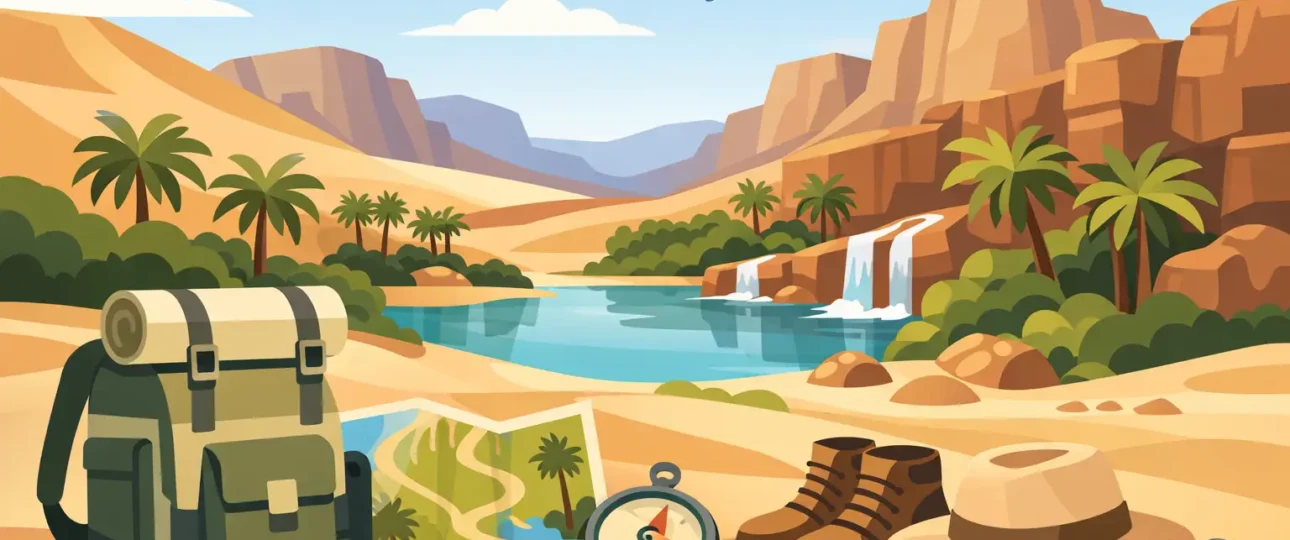
Tergit Oasis Hike Planning: What to Know
Tergit is the kind of place that makes the Adrar feel full of surprises. After hours of open rock, sand, and wide desert horizons, palms appear beneath a narrow escarpment, with shade, flowing water, and a welcome change in temperature. Good Tergit oasis hike planning lets you enjoy that contrast without underestimating the heat, road conditions, or local logistics that shape the day.
This is not a long alpine trek with marked routes and mountain huts. It is a short, atmospheric desert walk that works best as part of a well-paced Adrar itinerary, usually combined with Atar, Chinguetti, Ouadane, or nearby dunes. The reward is less about ticking off distance and more about slowing down in one of Mauritania’s most memorable natural settings.
What the Tergit Oasis hike is really like
Tergit Oasis lies in the Adrar region, within driving distance of Atar. Its defining feature is a palm-filled gorge where water runs through the rock and vegetation gathers in a landscape that is otherwise strikingly dry. Visitors commonly come for the natural spring area, the shaded pathways, and the chance to walk beneath the cliffs rather than across exposed sand.
The walking itself is generally gentle, but conditions deserve respect. Paths can be uneven, sandy, rocky, or damp near the water. Some sections involve stepping over stones or navigating narrow passages between vegetation and rock. This is accessible hiking for most travelers with reasonable mobility, not a technical expedition, but it is not an ideal place for flimsy sandals or an unplanned midday walk.
How far you walk depends on the season, your interests, and the route conditions on the day. Photographers may spend far longer moving slowly through the gorge than travelers who simply want a refreshing stop after a drive. A local guide can adjust the pace, point out safe footing, and explain how this oasis has supported life in the Adrar for generations.
Tergit oasis hike planning starts with the season
The most comfortable period for hiking in the Adrar is generally from late autumn through early spring, when daytime temperatures are more manageable and desert travel is easier to enjoy. Even then, mornings and evenings can feel cool, especially in the open desert, while midday can still be warm.
From roughly late spring into early fall, heat becomes the main consideration. Tergit’s shade and water make it more pleasant than exposed terrain, but the drive there and any walk outside the gorge can be demanding. In hotter months, start early, keep the hike short, and build in time to rest. Travelers who are not accustomed to intense dry heat may find a cooler-season trip much more comfortable.
Rain is infrequent, but it can change road and trail conditions quickly when it does arrive. Water flow, slippery rocks, and access tracks can all be affected. This is one reason to avoid treating a fixed online route description as a guarantee. A local team should confirm conditions shortly before departure and keep the day flexible if weather or access requires a change.
Choose the right time of day
An early arrival is usually the best choice. You will walk in softer light, avoid the strongest sun, and have time to enjoy the oasis without rushing. Late afternoon can also be beautiful, particularly for photography, although timing must account for the return drive and sunset.
Avoid planning your main walk for the middle of the day. Shade inside the oasis helps, but it does not eliminate dehydration or heat fatigue. A relaxed itinerary gives you the freedom to pause, drink water, and appreciate the setting rather than forcing a timetable.
Getting to Tergit: why a 4×4 and local planning matter
Reaching Tergit is part of the experience. Roads in the Adrar can combine paved stretches with rough tracks, sand, rocky ground, and terrain that changes after wind or rain. A suitable 4×4, an experienced driver, and realistic journey times make a significant difference to comfort and safety.
Independent travelers sometimes assume a rental car and a map are enough. That can work for very experienced desert drivers who are prepared for changing conditions, but it carries more risk than a conventional self-drive trip. Fuel availability, tire issues, navigation, mobile coverage, and road quality all need to be considered before leaving Atar or another established base.
For most visitors, guided transport is the simpler choice. Your driver and guide can plan water stops, confirm access, and build the oasis into a route that makes sense geographically. Tours in Mauritania can organize transport, accommodation, permits where needed, and on-the-ground support, so the day feels like a desert experience rather than a logistics exercise.
What to wear and carry for the walk
Pack for a desert outing even though the destination is green. Lightweight, loose clothing that covers shoulders and legs provides better sun protection than relying on sunscreen alone. Closed-toe walking shoes with grip are the most practical option for sand, rock, and damp ground near the spring.
Bring a hat, sunglasses, sunscreen, and more drinking water than you think you will need. A small daypack is useful for keeping your hands free on uneven sections. A light layer is worthwhile in the cooler months or for early starts, while a compact towel can be welcome if you expect to spend time close to the water.
Keep electronics protected from dust and splashes. For photographers and filmmakers, the palms, textured rock, and changing light can be exceptional, but humidity around the water can create a sharp contrast with the dry conditions outside. Carry a soft cloth for lenses and avoid changing equipment where sand is blowing.
There is no benefit in overpacking. The hike is short, and heavy bags make warm conditions harder. The essentials are water, sun protection, stable footwear, and a way to carry personal medication.
Respect the oasis as a living place
Tergit is not merely a scenic stop. Oases are valuable water sources and cultural landscapes, sustained by fragile ecological conditions. The green corridor can look abundant after the surrounding desert, but it should never be treated as a resort environment with unlimited facilities.
Stay on established paths where possible, do not leave litter, and avoid disturbing plants or water channels. Ask before photographing local people, and follow your guide’s advice about where swimming, resting, or walking is appropriate. Modest clothing is respectful and practical in rural Mauritania.
This approach also improves the experience. A guide who knows the area can help you see beyond the obvious palm grove: the relationship between water, cultivation, seasonal travel, and the historic settlements of the Adrar. The quiet details are often what travelers remember most.
Build Tergit into a balanced Adrar itinerary
Tergit works particularly well as a restorative contrast within a multi-day trip. After time among the old libraries and stone lanes of Chinguetti, the plateau landscapes around Ouadane, or nights in a desert camp, the oasis brings cooler shade and a different texture to the journey.
Do not try to squeeze it into an already overfilled day. Combining a long drive, a town visit, dune activities, and a hike can turn a peaceful stop into a rushed one. It is better to allow enough time for the drive, a slow walk, a break in the shade, and a safe return before dark.
If you are planning a private route, tell your local operator what matters most: walking time, photography, cultural context, comfort level, or a more adventurous desert extension. The right plan depends on your group, the season, and the current state of the roads. Families and first-time desert travelers may prefer a shorter visit with a reliable vehicle close by, while experienced hikers may want to pair Tergit with longer walks elsewhere in the Adrar.
A few safety habits that matter
Desert safety is mostly good preparation. Begin hydrated, carry sufficient water, and speak up early if you feel dizzy, unusually tired, or unwell. Heat exhaustion can develop faster than expected, especially after travel, poor sleep, or a day spent in the sun.
Stay with your group and do not wander beyond the agreed walking area. The oasis may feel sheltered, but the surrounding terrain is remote. Mobile reception can be limited, and a wrong turn is far easier to prevent than solve.
Your guide should know the route, the vehicle should carry basic recovery and first-aid provisions, and your schedule should leave room for the unexpected. Those practical details are what make a remote place feel welcoming rather than uncertain.
Plan Tergit with patience, not pressure. Arrive early, walk lightly, and leave enough space in the day to sit beneath the palms for a while – the oasis is at its best when you let the desert set the pace.