
Guide to Chinguetti Ancient Libraries Visit
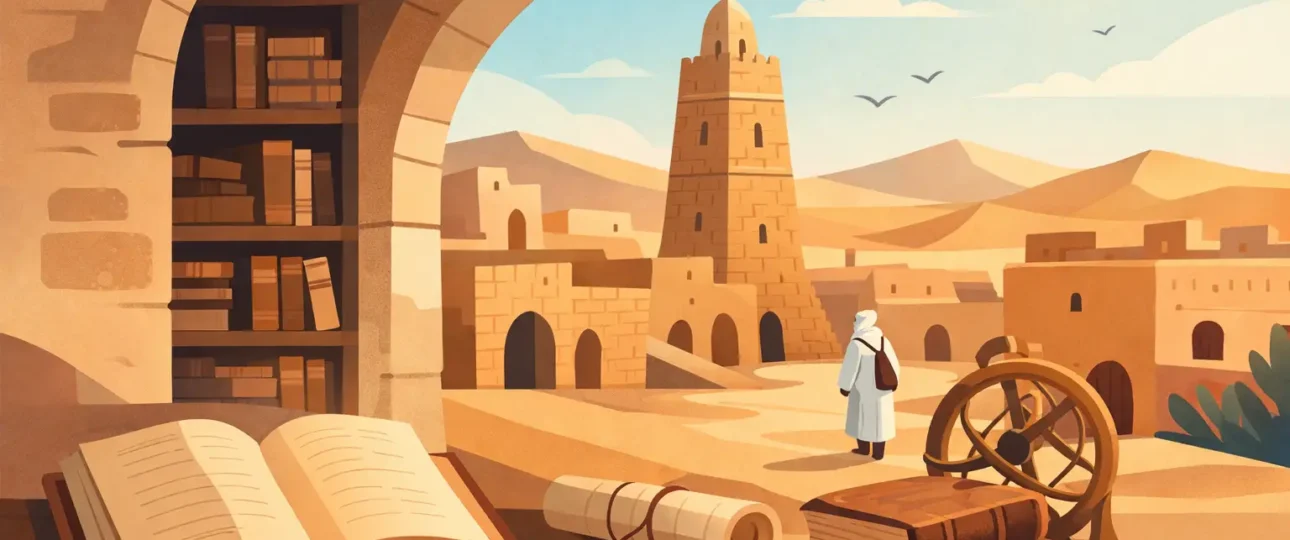
By the time you step into one of Chinguetti’s family libraries, the silence usually hits first. Not museum silence, but the quiet of a living place where manuscripts have survived dust, heat, trade routes, and generations of careful hands. If you are looking for a guide to Chinguetti ancient libraries visit, the most useful thing to know is this: the experience is intimate, local, and far more rewarding when logistics are handled properly.
Chinguetti is one of Mauritania’s great historic caravan towns, set in the Adrar region where sand and stone seem to press right up against the old quarters. Travelers often arrive expecting a single formal site with posted hours and fixed ticket counters. In reality, the ancient libraries are better understood as a small network of private and community-held collections, each with its own rhythms, custodians, and practical limits. That difference matters because it shapes how you should plan, how much time you need, and what kind of experience you will actually have.
What makes a Chinguetti ancient libraries visit special
These libraries are not simply rooms full of old books. They are part of a wider scholarly tradition that linked Chinguetti to trans-Saharan trade, Islamic learning, astronomy, law, poetry, and regional intellectual life. Some manuscripts are beautifully preserved. Others show their age more plainly, and that is part of their power. You are not looking at polished display pieces created for tourism. You are seeing fragile materials that survived because families protected them over centuries.
That also means no two visits feel exactly the same. One custodian may focus on the history of a particular manuscript collection. Another may talk more about family lineage, restoration challenges, or the way desert conditions affect preservation. If you enjoy cultural travel with texture and nuance, this is one of the most memorable stops in Mauritania.
Guide to Chinguetti ancient libraries visit: plan for flexibility
The biggest mistake travelers make is treating the libraries like a conventional attraction. Access can depend on whether a custodian is available, whether a collection is open that day, and whether local arrangements have been made in advance. That is why many visitors get more from the experience when it is part of a guided Adrar itinerary rather than a do-it-yourself day.
A good local operator can coordinate transport, timing, local introductions, and overnight stays so you are not trying to solve access issues after a long drive across the desert. In a destination like Mauritania, that practical support is not a luxury. It is often the difference between a rushed photo stop and a meaningful cultural visit.
If your broader route includes Atar, Ouadane, desert camps, or the wider Adrar circuit, Chinguetti fits naturally as an overnight or longer stop. A half-day can work if your schedule is tight, but one night in town gives you a better pace and more margin if timings shift.
How much time to allow
For the libraries themselves, allow at least two to three hours if arrangements are in place. That gives time to visit more than one collection, walk through the old town, and absorb the context instead of treating the manuscripts as isolated objects. If you are a photographer, researcher, or especially interested in manuscript culture, you may want more time.
The town deserves that slower rhythm. Chinguetti is not only about what is kept inside shelves and chests. Its old stone architecture, narrow lanes, mosque setting, and desert edge all deepen the sense of place.
When to go
Cooler months are generally more comfortable for travel in Mauritania, especially if your trip includes overland driving and desert nights. Light and temperature are usually best from late fall through early spring. Midday can still be bright and dry, so morning and late afternoon visits are often more pleasant.
Season matters for comfort more than for the meaning of the site, but comfort affects how much you enjoy the day. If you are tired from heat and road time, subtle cultural experiences can feel harder to appreciate.
What to expect on arrival
Do not expect polished visitor infrastructure. Expect authenticity, local hospitality, and some variation. Roads into the region can be long, and even well-planned itineraries benefit from a relaxed mindset. In return, you get one of the Sahara’s most distinctive cultural experiences.
A typical visit may begin with a walk through the old quarter and an introduction to the library custodian or family representative. You may be shown selected manuscripts rather than an entire archive. This is normal. These collections are delicate, and access is often carefully controlled for preservation reasons.
You should also expect simple conditions. Chinguetti is historic and remote. That is part of the appeal, but it also means travelers should value clear planning, secure accommodations, and reliable local support. If you are joining a structured trip, this is where having transport, lodging, and local coordination already handled makes the whole experience smoother.
Etiquette inside the libraries
Respect matters here more than speed. These are culturally significant collections, and many are still tied to family stewardship rather than impersonal institutions.
Dress modestly and avoid touching manuscripts unless explicitly invited. Ask before taking photos, especially close-ups of texts, storage areas, or people. Some custodians are open to photography, others are selective, and that should be accepted without debate.
It also helps to come with genuine curiosity. Ask about preservation, family history, script styles, or how collections are maintained in desert conditions. Those kinds of questions often lead to a richer conversation than simply asking how old everything is.
Can you visit independently?
Yes, sometimes – but “possible” and “advisable” are not always the same thing in Mauritania. Independent travelers who speak some French or Arabic, have flexible schedules, and are comfortable with regional transport may be able to arrange a visit once in town. Still, there are trade-offs.
Without local coordination, timing can be uncertain. You may arrive when a key contact is unavailable, or you may not know which collections can receive visitors. Add road logistics, accommodation standards, and desert-region navigation, and independent planning quickly becomes more complex than it appears on a map.
For many travelers, especially first-time visitors to Mauritania, a guided trip is the more reliable path. It reduces friction and lets you focus on the place itself.
Practical road realities for Chinguetti
Any honest guide to Chinguetti ancient libraries visit should mention the journey, because the road is part of the equation. Reaching Chinguetti usually involves overland travel through the Adrar region, often from Atar or as part of a wider circuit. Distances are manageable, but conditions, timing, and comfort depend on your vehicle, driver, and overall itinerary.
This is not the sort of destination where you want uncertain transfers at the last minute. Fuel planning, route knowledge, and dependable vehicles matter. So do realistic expectations. Mauritania rewards travelers who appreciate remoteness, but it is best enjoyed when the practical side is organized well.
If your trip includes desert camps, older caravan towns, or photography stops, build in margin rather than packing every hour. The region is better experienced with breathing room.
Pairing the libraries with the rest of Chinguetti
The manuscripts are the headline, but the town should not be reduced to a single stop. Walking the old quarter, spending the night, and seeing the light change over the stone buildings adds emotional depth to the visit. Chinguetti feels different in the evening and early morning, when the town settles and the desert quiet becomes more pronounced.
This is also why many travelers pair Chinguetti with Ouadane or a broader Adrar route. Together, these places tell a larger story about caravan trade, scholarship, architecture, and survival on the desert edge. If you only race in and out for a quick library visit, you may miss what gives the manuscripts their true setting.
Who will enjoy this most
Travelers who like high-production attractions with heavy interpretation may find Chinguetti understated. Travelers who value authenticity, history, and human connection usually find it unforgettable. It is especially rewarding for culture-focused explorers, photographers, filmmakers, and anyone interested in Islamic manuscript traditions or Saharan trade history.
It also suits travelers who want adventure without chaos. With the right local planning, Chinguetti can feel remote but still manageable – the kind of place where the logistics stay in the background and the experience comes forward.
Tours in Mauritania often builds this kind of stop into wider itineraries for exactly that reason: you get the depth of a remote historic destination without carrying every operational detail yourself.
Come to Chinguetti ready for a quiet experience rather than a staged one. If you give it time, respect, and a well-planned route, the libraries do more than show you old manuscripts – they give you a rare sense of how knowledge traveled, survived, and still lives in the Sahara.