
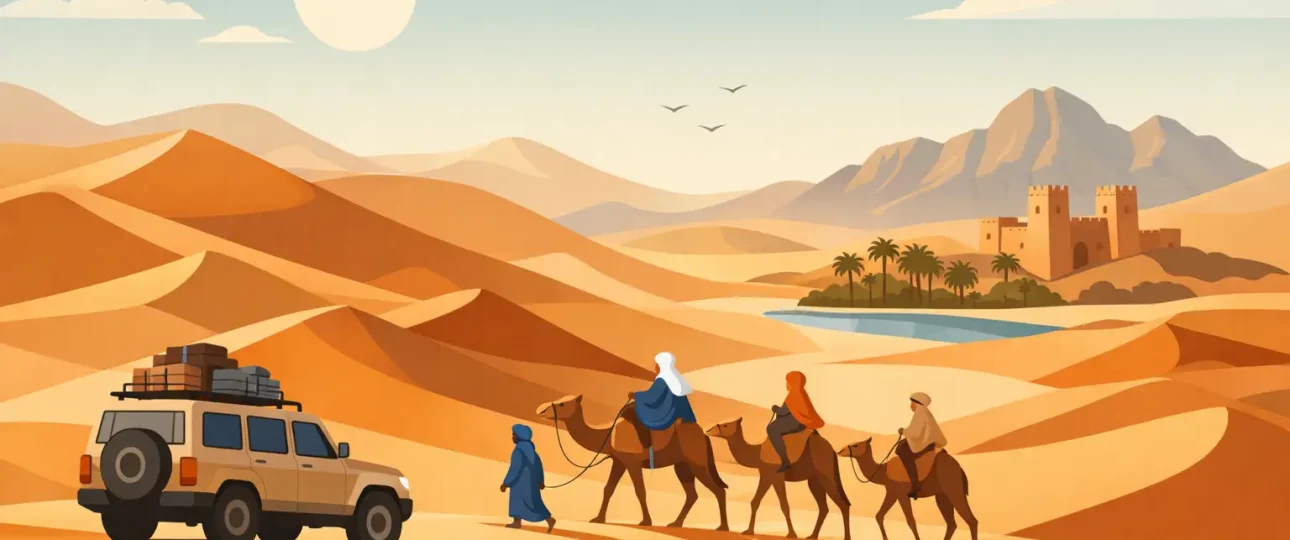
Mauritania Desert Expedition Itinerary Example
If you are planning your first journey across the Sahara here, a mauritania desert expedition itinerary example helps more than a generic bucket list. Distances are long, road conditions change, and the best experiences – dune camps, old caravan towns, oasis stops, and train-side landscapes – only work well when the timing is realistic. The right itinerary is not about packing in every landmark. It is about moving at a pace that keeps the trip comfortable, safe, and genuinely memorable.
For most travelers, the sweet spot is 7 to 9 days. That gives you enough time to combine Nouakchott, the Adrar region, Chinguetti, Ouadane, desert camp nights, and at least one long scenic crossing without turning the trip into a constant transfer. Shorter trips can work, but they usually force hard choices. Longer trips open up richer options, especially if you want filming time, slower photography sessions, or a deeper cultural focus.
A practical Mauritania desert expedition itinerary example
The itinerary below is a solid starting point for travelers who want a structured adventure with good logistics and comfortable pacing. It is designed for guided travel, where transport, permits, airport transfers, and overnight planning are handled in advance.
Day 1 – Arrival in Nouakchott
Most expeditions begin in Nouakchott. After arrival, this first day should stay light. A smooth airport pickup, hotel check-in, and time to rest matter more than trying to rush into sightseeing after a long international flight.
If arrival timing allows, a short city outing can be worthwhile. The fish market, central streets, and a first taste of Mauritanian tea culture help set the tone. Still, this day works best as a buffer. It gives you time to meet your guide, review the route, and make sure luggage, camera gear, and desert essentials are properly organized.
Day 2 – Nouakchott to Atar and into the Adrar
This is usually the transition day from capital city to expedition country. Depending on season, route design, and flight schedules, some travelers fly to Atar while others travel overland. The best option depends on your timeframe and budget.
Once in the Adrar region, the landscape starts to change quickly. The road journey itself becomes part of the experience, with rocky plains, rising escarpments, and broad open space replacing the coast. A well-planned overnight in or near Atar is often the right call. It breaks the journey cleanly and gives you a comfortable base before heading deeper into the desert.
Day 3 – Atar, oasis stops, and Chinguetti
Day three is where the expedition begins to feel distinctly Saharan. From Atar, many routes include an oasis or palm-lined stop on the way to Chinguetti. These pauses are not filler. They help balance long drives with moments of shade, walking, and photography.
Chinguetti is one of the anchors of any classic Mauritania journey. It is historic, atmospheric, and visually striking without feeling staged. Old stone lanes, desert-edge architecture, and centuries-old manuscript heritage give the town a depth that rewards a slower visit. An overnight here makes sense because sunset and early morning light are often the best times to experience it.
Why this Mauritania desert expedition itinerary example works
A strong desert route in Mauritania needs more than famous names on a map. It has to account for fatigue, daylight, road quality, meal timing, and the fact that remote travel is always more comfortable when there is room for small adjustments.
This example works because it alternates movement and immersion. You are not spending every day in a vehicle, but you also are not staying so long in one place that the route loses momentum. For most travelers, that balance is what turns a demanding trip into an enjoyable one.
Day 4 – Chinguetti to desert camp
After a town stay, a night in the open desert changes the rhythm of the trip. This is the day for dunes, off-road tracks, and the quieter side of the Adrar. Some camps are simple and traditional, others offer more structure with prepared meals, bedding, and practical wash facilities. The right level depends on your travel style.
For many guests, this becomes the emotional center of the expedition. Crossing soft sand by 4×4, watching the light shift across the dunes, and sleeping under a wide star field is exactly why they came. At the same time, comfort matters. Good camp setup, reliable food, and experienced local support make a huge difference after sunset.
Day 5 – Desert crossing to Ouadane
Ouadane pairs well with Chinguetti because the two towns complement each other. Chinguetti often feels more immediate and lived-in, while Ouadane can feel more remote and monumental. The road or track between them is part of the appeal, especially for travelers who want a true expedition atmosphere rather than a city-to-city tour.
This can be one of the most scenic days of the route. Rock formations, open plateaus, sand corridors, and changing horizons keep the drive visually strong. Once in Ouadane, a guided walk through the old settlement gives context to the region’s caravan history. Overnighting here allows you to experience the silence and scale that shorter day visits miss.
Day 6 – Ouadane and the Richat area or surrounding desert
This is where itineraries start to branch. Some travelers prioritize the Richat Structure and want a geological focus. Others prefer a slower day around Ouadane with more walking, photography, and time to absorb the setting. There is no single correct choice.
If you include the Richat area, expectations should be realistic. It is fascinating in scale and significance, but it is not a polished sightseeing stop. It works best for travelers who appreciate remote landscapes, aerial-scale geography, and the feeling of reaching a place few people visit. If that is not your priority, another night in the dunes or more time around the historic town may be more rewarding.
Day 7 – Return toward Atar
After several days in the desert, returning toward Atar gives the itinerary a practical reset point. You can rest, shower properly, recharge equipment, and enjoy a secure guesthouse before the final phase of the trip. This is especially useful for small groups, photographers, and anyone carrying specialized gear.
A good expedition does not treat comfort as an afterthought. In Mauritania, comfort is what allows you to go farther without stress. Clean, welcoming overnight stops and organized transport support are not luxuries here. They are part of smart planning.
Day 8 – Option day: Iron Ore Train, extra desert, or return to Nouakchott
This day depends on what kind of traveler you are. If the Iron Ore Train is high on your list, this is often where it can be integrated, though it changes the rhythm of the expedition and needs careful coordination. It is iconic, but it is also rougher, less predictable, and better suited to travelers who are comfortable with a more demanding experience.
If you prefer a smoother route, this can be an extra Adrar day with another scenic drive, village visit, or final camp. Travelers with tighter schedules may instead begin the return to Nouakchott. None of these versions is better in absolute terms. The best fit depends on whether your priority is endurance, comfort, culture, or photography.
Day 9 – Departure or final city stay
A final night in Nouakchott before departure is often the safest plan, especially if you have an international flight. It reduces stress and gives you a margin in case of route delays or weather-related adjustments earlier in the journey.
This last day is also where a guided operator adds real value. When transfers, confirmations, and timing are already managed on the ground, you can finish the trip focused on the experience rather than the logistics.
What to adjust before you book
Not every mauritania desert expedition itinerary example should be copied exactly. Season matters. Cooler months are generally more comfortable for long desert days, while hotter periods demand more caution with pacing and hydration. Group type matters too. A couple, a photography team, and a motorcycle group will not move through the same route in the same way.
Accommodation style is another real trade-off. Some travelers want the romance of simple camps every night. Others enjoy one or two camp nights but prefer guesthouses in between for recovery. There is no loss of authenticity in choosing comfort where it helps. In a remote destination, better rest usually means a better trip.
Transport choices also shape the itinerary more than people expect. A private 4×4-supported route gives flexibility and access. Public or shared transport can reduce costs, but it removes control over timing and can make a carefully designed expedition feel fragmented. That is one reason many international travelers choose a local operator. Companies such as Tours in Mauritania handle bookings, transport, permits, and airport transfers so the route stays coherent from start to finish.
The best itinerary is the one that leaves room to actually experience Mauritania. Not just cross it off, not just survive the logistics, but feel the quiet of the dunes, the age of the caravan towns, and the ease that comes from knowing the route is in reliable hands.