Do Mauritania Camps Have Toilets? What to Expect
A night beside the dunes near Chinguetti or Ouadane can be one of the defining moments of a Mauritania trip. It is also reasonable to ask, before committing to desert camping: do Mauritania camps have toilets? The short answer is yes, many organized camps do – but the type of facility depends on where you are staying, how remote the camp is, and whether it is a permanent camp or a wild overnight stop.
Mauritania rewards travelers who are open to simple, well-managed comfort rather than luxury for luxury’s sake. With the right expectations and a reliable local team handling the camp setup, you can sleep under an immense Saharan sky without feeling unprepared.
Do Mauritania camps have toilets at desert sites?
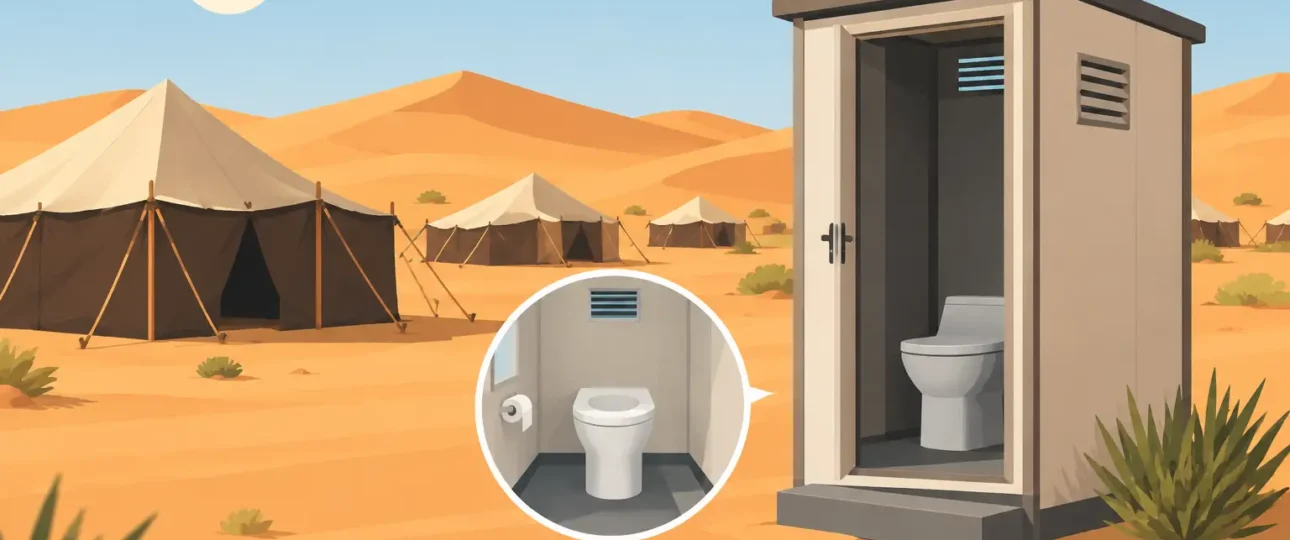
Established desert camps used on guided routes commonly provide a toilet facility. This may be a basic enclosed toilet room near the sleeping area, a shared bathroom block, or a private field toilet arranged for your group. At better-equipped fixed camps, you may also find a simple shower area, though hot running water should never be assumed in the desert.
The facilities are designed for practical use, not resort-style indulgence. Expect clean, functional arrangements, water supplied in containers or tanks, and limited plumbing. In a dry, remote environment, that is often the most responsible and reliable approach.
For a planned Sahara camp night, your guide should be able to tell you in advance whether the toilet is shared or private, whether there is a shower, and how far the facilities are from your tent or sleeping area. These details matter, particularly for families, older travelers, and anyone who prefers more privacy.
Permanent camps versus wild camping
The biggest difference is between a permanent or semi-permanent camp and a wild camp.
A permanent desert camp usually has a defined facility for guests. It may have simple flush toilets, a latrine-style toilet, or an enclosed dry toilet, depending on the location and water supply. These camps may also have shaded communal areas, beds or mattresses, and staff who maintain the site.
Wild camping is more remote and more flexible. Your driver and guide may choose a quiet dune valley, rocky plateau, or open desert plain based on the route, weather, and group timing. There is no building in these places, so a professional expedition setup should include a discreet, hygienic toilet solution or a clearly designated private area well away from camp and any water source.
Wild camping delivers the strongest sense of solitude. The trade-off is that facilities are simpler. For some travelers, that is the point. For others, a fixed camp with an enclosed toilet is the better choice. Neither option is inherently better – it depends on the experience you want and the level of comfort you need.
What “simple facilities” really means in Mauritania
Simple does not have to mean uncomfortable or unhygienic. In Mauritania, it means the camp is adapted to its environment rather than pretending the Sahara has urban infrastructure.
Water is precious in the desert. You may wash using a basin, a water container, or a limited camp shower rather than spending ten minutes under running water. Toilet paper may be supplied, but bringing your own small roll and personal wipes is sensible. Handwashing water or sanitizer should be available at a thoughtfully operated camp.
Electricity is another variable. Some camps use solar power or generators for a few evening hours, while wild camps may rely on lanterns and headlamps. This does not directly change toilet access, but it affects how comfortable moving around at night feels. A headlamp is one of the most useful items you can pack.
Cleanliness depends greatly on management. A camp that is carefully selected, regularly checked, and supported by local staff will feel very different from an unplanned overnight stop. That is why the operator and guide team matter as much as the camp location.
Toilet expectations on different Mauritania routes
Mauritania is vast, and the answer changes from one itinerary to another. A desert circuit through the Adrar region is not the same as a night near the coast or an expedition involving the Iron Ore Train.
Adrar, Chinguetti, and Ouadane
The Adrar region has some of the country’s most established desert travel infrastructure. On routes connecting Atar, Chinguetti, Ouadane, and the surrounding dunes, travelers can generally expect organized camps or guesthouses with basic but usable toilets. Facilities tend to be more straightforward outside the towns, but guides can plan overnight stops around the comfort level of the group.
A night among the dunes near Chinguetti may involve a fixed camp with facilities, or a private mobile camp setup. Ask which one is included if the distinction is important to you.
Coastal and national park trips
On trips toward Banc d’Arguin or other remote coastal areas, accommodation can range from simple lodges to temporary camps. Toilets are often available at lodges and village-based stays, while more isolated camp nights may require a portable or field setup. The terrain may be flat and open rather than sandy, but remoteness creates the same need for practical planning.
The Iron Ore Train journey
The Iron Ore Train is an adventure experience, not an overnight camp with facilities. Travelers riding in an open wagon should not expect toilets, showers, or conventional comfort. Before and after the journey, reputable itineraries arrange appropriate lodging or a camp stop where you can wash, change clothes, and rest.
If bathroom access is a major concern, discuss the full train-day logistics before booking. The question is not only where you sleep, but when you will have access to facilities before departure and after arrival.
How to choose the right camp setup
There is no need to leave comfort to chance. Before departure, ask direct questions about the specific nights on your itinerary. A dependable operator should answer clearly rather than using vague descriptions such as “authentic camp” or “desert experience.”
Ask whether each camp has an enclosed toilet, whether it is private or shared, and whether it is a flush, dry, or field toilet. Also ask about shower availability, lighting after dark, bedding, and the distance from your sleeping area to the bathroom. If you have mobility needs, are traveling with children, or need additional privacy, say so early. A good itinerary can often be adjusted before the trip begins.
At Tours in Mauritania, camp planning is part of the wider in-country logistics: transport, route timing, accommodations, and practical support are coordinated together. That matters because the best bathroom solution is often linked to the day’s driving distance, the chosen campsite, and the availability of water and staff.
What to pack for a more comfortable night
You do not need to overpack, but a few small items make desert facilities easier to use. Bring toilet paper in a sealable bag, hand sanitizer, biodegradable wet wipes for personal use, and a headlamp with spare batteries. Keep medications and menstrual products in your day bag rather than in luggage that may be packed away for the evening.
Use wipes sparingly and never leave them in the desert, even if they are labeled biodegradable. They should go into a waste bag unless your guide confirms a disposal point. The same principle applies to all personal waste: keeping the desert clean is part of traveling responsibly in a landscape that has little capacity for careless disposal.
For nighttime comfort, wear easy layers and keep sandals or closed shoes beside your bedding. Desert temperatures can drop quickly after sunset, and walking to a toilet facility in darkness is much more pleasant when your light and footwear are within reach.
When a hotel or guesthouse night is the better option
Not every traveler needs to camp every night to experience Mauritania. A well-paced itinerary can combine guesthouses in historic towns with one or two carefully chosen nights in the desert. This gives you the stillness of the dunes and the bright arc of stars overhead while preserving time for a proper shower and private bathroom.
This balance is especially helpful after long drives, before the Iron Ore Train, or for travelers who are new to remote travel. Adventure should stretch your perspective, not make you anxious about basic needs.
The right camp is one where you know what is waiting for you after sunset. Ask about the toilet arrangement before you go, choose the level of simplicity that feels right, and let the desert night be memorable for the silence, the stars, and the welcome around the campfire.