
Banc dArguin National Park Guide
A trip to Mauritania can feel vast and open-ended, but Banc d’Arguin rewards careful planning. This Banc dArguin National Park guide is built for travelers who want the wild beauty of the Atlantic coast without guessing their way through permits, transport, tides, or where to sleep.
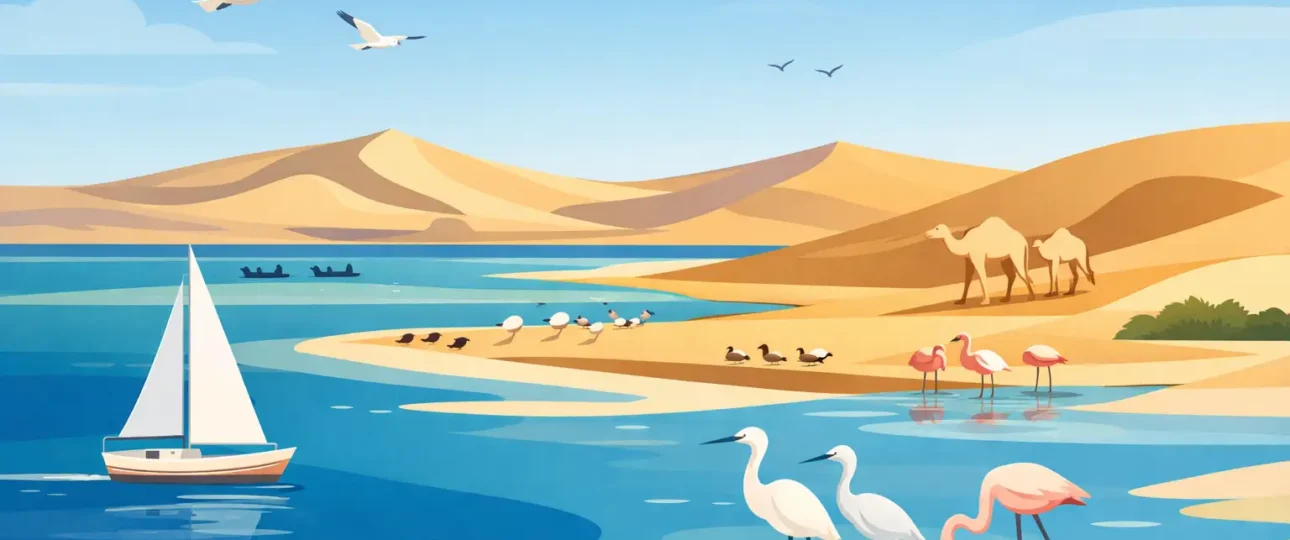
Set between Nouakchott and Nouadhibou, Banc d’Arguin National Park protects one of West Africa’s most important coastal ecosystems. It is a meeting point of desert, ocean, mudflats, islands, and traditional fishing culture. For many visitors, that contrast is the whole appeal. You can watch migratory birds gather in extraordinary numbers, then look inland and see sand and empty horizon stretching away from the coast.
Why visit Banc dArguin National Park
Banc d’Arguin is not a park of marked trails, polished visitor centers, or easy day-trip logistics. Its value lies in how intact it feels. The landscape is quiet, the human footprint is light, and the experience is shaped by weather, tides, bird movement, and local access rather than a fixed tourist routine.
For birders, it is one of the most significant wetlands in the world. Vast flocks of migratory shorebirds winter here, feeding in shallow waters and mudflats. Even travelers who do not arrive with binoculars usually leave talking about the scale of the birdlife. Flamingos, pelicans, terns, gulls, and waders are often the highlight, especially in cooler months when migratory populations are at their peak.
For photographers, the park offers a rare mix of clean light, reflective tidal flats, traditional sailboats, and desert coastline. The strongest images often come from the simplicity of the setting rather than dramatic infrastructure. Morning and late afternoon can be especially rewarding, when the low sun sharpens textures in both sea and sand.
There is also a cultural dimension. The Imraguen fishing communities have long been part of this coastline, using local knowledge shaped by tides, seasons, and marine life. Visitors should approach these villages with respect. This is not a staged cultural attraction. It is a living environment where people work and raise families.
Banc dArguin National Park guide to access and logistics
The first thing to know is that access is possible, but not casual. Distances are long, signage can be limited, and park visits are much easier with arranged transport and local coordination. If you are building a wider Mauritania itinerary, Banc d’Arguin works best as part of a structured overland route rather than as a last-minute add-on.
Most travelers approach from Nouakchott. The drive north along the coastal road is straightforward in principle, but services are sparse and conditions can shift. Depending on your route and overnight plan, you may need a 4×4 for sections near the park or for reaching more remote viewpoints and camps. This is one of those places where reliable vehicles, a driver who knows the area, and clear fuel planning matter more than speed.
Permits and entry procedures can vary, and this is where having support on the ground makes a real difference. Independent travel is possible in Mauritania, but national park visits often involve extra layers of coordination. A local operator can handle transport, timings, and practical communication so you can focus on the landscape rather than administrative details.
Accommodation is part of the planning equation as well. You should not expect a broad range of hotel options inside or immediately around the park. Depending on the route, the most comfortable approach may be to combine a lodge or guesthouse stay with a day excursion, or include a simple camp setup where conditions allow. Comfort in this region is less about luxury and more about clean, secure, well-managed logistics.
What you will actually see
Travelers sometimes picture Banc d’Arguin as a single scenic lookout. It is better understood as a broad protected coastal zone with different moods and habitats. Some sections feel marine, with shallow water, sandbanks, and bird colonies. Others feel almost purely Saharan, where wind-shaped dunes come close to the Atlantic edge.
The villages are often the most human point of connection. Places such as Iwik are known as gateways for traditional boat excursions into the park’s waters. These outings can be one of the best ways to understand the area, especially for birdwatching. Seeing the coastline from the water changes your sense of scale. Sandbars, islands, and feeding grounds become easier to read, and the birdlife often feels far more immediate.
That said, expectations should stay realistic. This is not a zoo and not a guaranteed wildlife spectacle on command. Tides, season, weather, and timing all affect what you will see. Some days are rich with activity. Others are defined more by atmosphere than abundance. For many experienced travelers, that unpredictability is part of the park’s value.
Best time to go
For most visitors, the best season is from roughly November to March, when temperatures are more comfortable and migratory birdlife is at its strongest. This is the window most likely to suit birders, photographers, and travelers who want long outdoor days without extreme heat.
The hotter months can still be possible, but they are more demanding. Heat changes the pace of travel, reduces comfort during long drives, and can make midday activity less enjoyable. If your main focus is wildlife, the cooler season is usually the better choice.
Wind is another factor worth taking seriously. Coastal conditions can shift quickly, and boat outings depend on the sea state and local judgment. Flexibility is useful. A rigid minute-by-minute plan is rarely the smartest way to travel here.
How much time you need
A rushed visit rarely does Banc d’Arguin justice. If you are based in Nouakchott and only want a brief taste, a long excursion may be possible, but it will feel compressed. A better plan is to allow at least one overnight linked to the park, especially if birdwatching or photography is your main reason for coming.
If Banc d’Arguin is part of a longer Mauritania journey, it pairs well with coastal travel northward or as a contrast to inland desert destinations such as the Adrar. The emotional rhythm works well. After the historic towns and dunes of the interior, the open Atlantic flats feel completely different.
What to pack and how to prepare
Travel in Banc d’Arguin is more comfortable when you pack with the environment in mind. Light layers work better than heavy clothing because mornings and evenings can be cool while daytime sun remains strong. Sun protection is essential. So are closed shoes, water, and basic dust protection for drives.
If birdlife is a priority, bring binoculars and a camera lens suited to distance. If it is not, you may still appreciate a small pair of binoculars once you see the scale of the wetlands. Power access may be limited depending on where you overnight, so charging in advance is wise.
More than anything, bring patience with the pace of remote travel. In Mauritania, the best days often depend on allowing room for road conditions, local timing, and real-world logistics. That does not mean disorganization. It means planning well enough that small changes do not disrupt the experience.
Is Banc dArguin right for every traveler?
Not always, and that is worth saying clearly. If you want highly developed tourism infrastructure, multiple dining options, and easy self-drive sightseeing, this may not be your best match. Banc d’Arguin appeals more to travelers who value nature, space, authenticity, and the feeling of reaching a place that remains largely outside mass tourism.
It is especially rewarding for birders, nature travelers, photographers, documentary crews, and visitors building a broader expedition across Mauritania. It can also suit first-time visitors, provided the trip is properly organized. This is where guided planning pays off. When transport, permits, overnight stops, and timings are handled in advance, the park feels accessible rather than difficult.
That is the difference between a memorable remote journey and a tiring one. A dependable local partner can organize the practical side – bookings, transport, and on-the-ground support – so the experience stays focused on the coast, the wildlife, and the quiet scale of the place.
Banc d’Arguin does not compete for attention. It earns it slowly, through light, distance, and the rare feeling that the natural world still sets the terms. If that kind of travel speaks to you, give it enough time, plan it well, and let the coast do the rest.