
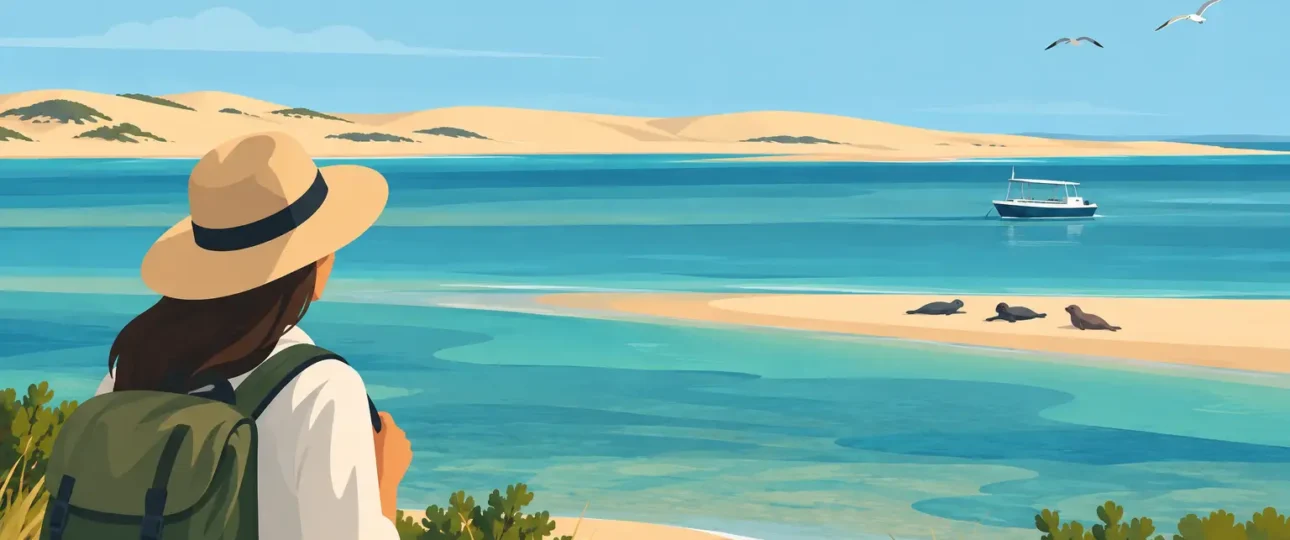
Banc d’Arguin Guide for a Planned Visit
The Banc d’Arguin guide you need starts with one expectation: this is not a park built around quick sightseeing. On Mauritania’s Atlantic coast, enormous tidal flats, shallow channels, dunes, and islands create a landscape that changes by the hour. A visit rewards travelers who are willing to slow down, accept simple conditions, and travel with careful local planning.
Banc d’Arguin National Park is one of the country’s most remarkable wild places. It is also remote, environmentally sensitive, and shaped by tides rather than a fixed tourist schedule. The right transport, permits, route, camp arrangements, and timing make the difference between a meaningful coastal expedition and a difficult day spent navigating sand tracks.
Why Banc d’Arguin Is Worth the Journey
The park protects a vast meeting point between the Sahara and the Atlantic. From a distance, the coast can appear spare and empty. Up close, it is intensely alive: birds rise from mudflats in large formations, fish move through clear shallows, and traditional sailing boats cross the water near the shore.
It is internationally known for migratory birds, particularly during the cooler months. Species traveling between Europe and Africa depend on these feeding grounds, and the scale of the birdlife is striking even for travelers who do not consider themselves birdwatchers. Photographers and filmmakers will find broad horizons, soft coastal light, textured dunes, and strong human stories in the fishing communities.
The cultural dimension matters just as much. The Imraguen people have lived along this coast for generations, with livelihoods closely connected to artisanal fishing and the rhythms of the sea. Visitors should approach villages with respect, ask before taking portraits, and remember that these are working communities, not staged attractions.
When to Go to Banc d’Arguin
For most international travelers, October through March is the most comfortable period. Days are generally milder than in the height of summer, and migratory bird activity is a major reason to visit during this season. The light can also be excellent for photography, especially early and late in the day.
April and May can still suit travelers who tolerate heat well and want fewer visitors, although the sun becomes more demanding. From June through September, temperatures can be severe, and conditions are usually less forgiving for long overland journeys, camping, or extended time outdoors. Coastal wind may bring some relief, but it should not be treated as a substitute for heat preparation.
Tides are a practical consideration throughout the year. They influence where boats can go, how the flats look, and sometimes when local activities are possible. Build flexibility into your plan rather than expecting every part of the day to run at a precise time.
How to Reach the Park
Banc d’Arguin lies between Nouakchott and Nouadhibou on Mauritania’s Atlantic coast. It can be approached as part of a longer route through the country or as a dedicated excursion from the capital. Either way, the final approach is not a standard highway transfer.
A capable four-wheel-drive vehicle and a driver who knows the coastal tracks are strongly recommended. Sand conditions shift, navigation points can be subtle, and mobile coverage may be limited once you are away from main roads. Self-driving can appeal to experienced overland travelers, but it brings real responsibilities: route knowledge, fuel planning, recovery equipment, communications, water, and the ability to handle a vehicle problem far from assistance.
For most visitors, guided travel is the easier and safer choice. A local team can coordinate park permissions, transport, accommodation or camp arrangements, meals, and timing around the route. Tours in Mauritania handles the practical side of journeys like these so guests can focus on the coast, wildlife, and communities rather than chasing permits or guessing which track is passable.
Allow Enough Time
A rushed day trip rarely does the park justice. Two days can provide a rewarding first experience, while three days allow more space for birdwatching, village encounters, coastal walks, and unhurried photography. If Banc d’Arguin is part of a wider Mauritanian itinerary, connect it thoughtfully with Nouakchott, Nouadhibou, the Iron Ore Train route, or the Adrar region rather than trying to cover every highlight at speed.
Long driving days are part of travel in Mauritania. A well-planned itinerary accepts that reality and balances transit with time on the ground.
What a Visit Feels Like
Do not expect large visitor centers, marked walking loops, or resort-style facilities. The pleasure of Banc d’Arguin is its openness and quiet. You may spend an afternoon watching the tide pull back across a vast flat, hearing little beyond wind, surf, and bird calls.
Boat outings, when conditions and local arrangements permit, offer a different perspective on the park. They can bring you closer to channels, islands, and feeding areas, but wildlife should always be observed from a respectful distance. A good guide will prioritize the park’s rules and the animals’ space over getting a closer photo.
Accommodation is generally simple. Depending on the route and arrangements, travelers may stay in basic local lodging or in a desert-style camp. Comfort comes from good preparation: clean sleeping gear, reliable food and drinking water, a clear camp setup, and a team that knows the area. If you prefer private bathrooms, air conditioning, or a fixed hotel standard every night, be candid when planning. This coast can be included in a comfortable trip, but it cannot and should not be made to feel like a city hotel destination.
What to Pack for the Coast
Pack for sun, wind, sand, and cooler evenings in the high season. Lightweight long sleeves and pants protect against the sun while remaining practical in warm weather. A brimmed hat, sunglasses, sunscreen, and a reusable water bottle are essential rather than optional.
Bring a warm layer for early mornings and nights, especially between November and February. Closed shoes are useful for walking on uneven ground and around camp, while sandals are convenient for relaxed time near the shore. A small dry bag or zippered pouch helps protect cameras, batteries, and documents from sand.
Birdwatchers should bring binoculars if they have them, and photographers should carry extra batteries and memory cards. Dust and salt air are hard on equipment, so use protective cases and avoid changing lenses in strong wind when possible. There may be no easy place to buy specialized items once you leave Nouakchott or Nouadhibou.
Travel Responsibly in a Sensitive Park
Banc d’Arguin is protected because its ecology is unusually rich and unusually vulnerable. The most responsible visit is also the most rewarding one: stay with approved local guidance, avoid disturbing nesting or feeding birds, and leave no waste behind.
Keep water use sensible, particularly at camps or in villages where supplies are limited. Do not collect shells, plants, or other natural materials as souvenirs. If your itinerary includes fishing communities, buy locally only when it is appropriate and clearly offered, and avoid treating daily life as a performance for visitors.
Drone use deserves special caution. It can disturb birds and people, and rules may be strict or permissions may be required. Never assume that a drone is acceptable simply because the landscape looks empty. Confirm regulations before bringing one, and follow the decision of park authorities and your guide.
Planning With Confidence
Mauritania rewards travelers who prepare well without trying to control every detail. For Banc d’Arguin, that means confirming the season, setting realistic travel times, and choosing a team with current local knowledge. Weather, tides, road conditions, and park procedures can change plans, so a flexible itinerary is a strength, not a compromise.
Ask practical questions before booking: how many hours of driving are expected, what type of sleeping arrangement is planned, whether meals and water are included, and what support is available if conditions require a route change. Clear answers are a sign of a well-organized trip.
Come with patience, a sense of curiosity, and respect for the place. When the tide recedes and the horizon fills with birds, Banc d’Arguin offers the kind of stillness that is increasingly rare – and worth reaching on its own terms.