Guided Mauritania Itinerary for Photographers Example
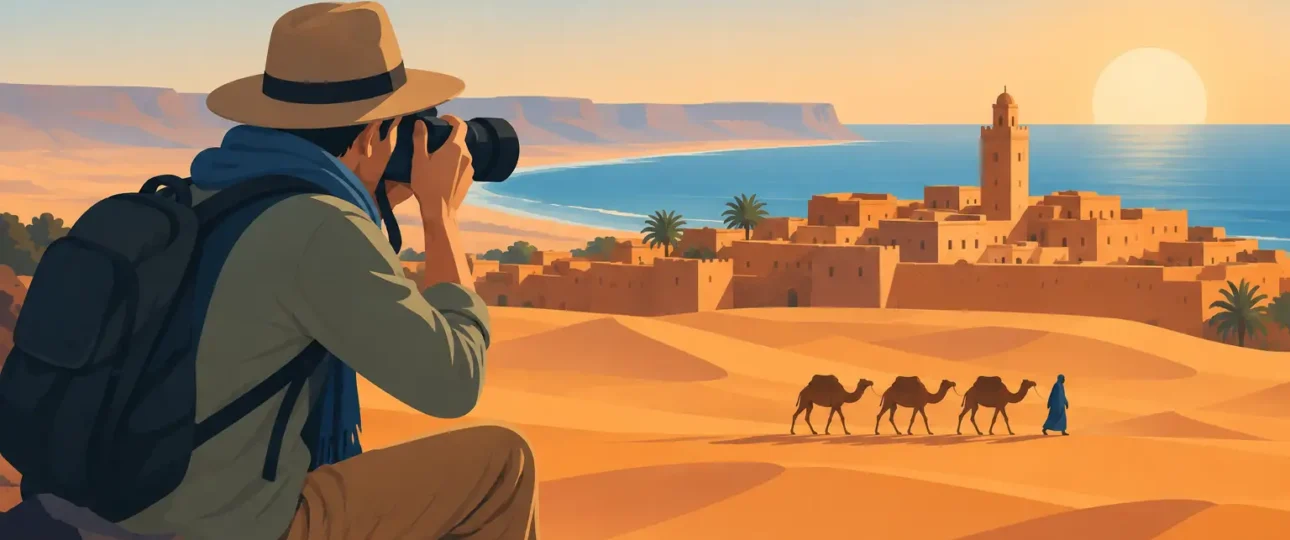
The light changes fast at the edge of the Adrar. One minute, the dunes are pale gold; the next, their ridges hold deep blue shadows and a caravan path becomes the strongest line in the frame. This guided Mauritania itinerary for photographers example is designed around those moments, while giving you the dependable transport, secure overnight stays, and local coordination needed to reach them without rushing.
Mauritania is not a destination for a loose schedule and a hope that fuel, permits, desert navigation, and accommodation will fall into place. It rewards patience and preparation. A guided route gives photographers more time to watch the light, speak with local communities respectfully, and work a scene properly rather than spending the day solving logistics.
What makes a photography itinerary work in Mauritania
A strong photo journey here is not about checking off every landmark. It is about reaching a small number of extraordinary places at the right time of day. That means early departures, flexible desert stops when conditions are good, and enough nights in the Adrar to photograph both sunrise and evening light.
The route below balances the historic caravan towns of Chinguetti and Ouadane, desert camp life, the geological drama around Terjit and the Richat Structure, and the Iron Ore Train experience. It also leaves space for real travel conditions. Sand, road conditions, local events, and train operations can affect timing. A knowledgeable guide adjusts the sequence where possible while protecting the key photographic opportunities.
For cultural photography, consent matters. Always ask before making close portraits, especially in markets, homes, and religious settings. Your guide can help start respectful conversations, explain local customs, and identify situations where photography is not appropriate.
A 9-day guided Mauritania itinerary for photographers
Day 1: Arrival in Nouakchott
Arrive in Nouakchott and settle into a clean, welcoming hotel or guesthouse. This is a practical arrival day: airport transfer, a route briefing, equipment check, and a chance to discuss your priorities with the guide. Some photographers want broad desert landscapes; others are focused on portraiture, architecture, or documentary work.
If arrival time allows, head toward the Atlantic coast near Port de Pêche. The fishing boats, nets, sea haze, and late-afternoon activity can offer an energetic first shoot. Work with a light kit on this first evening. Tomorrow is a long drive north.
Day 2: Nouakchott to Atar and Terjit Oasis
Travel toward Atar, the gateway to the Adrar region. The journey itself introduces the scale of Mauritania: long horizons, sparse settlements, and changing tones in the desert. Stops are made when the landscape and light justify them, not only at standard roadside breaks.
By late afternoon, arrive near Terjit Oasis. Date palms, rock walls, and running water create a surprising contrast to the open Sahara. Photograph the oasis in the softer light before sunset, then rest at a selected lodge or guesthouse. Secure accommodation matters after a full day of driving, especially when dawn starts come early.
Day 3: Terjit to Chinguetti
Leave Terjit after an early shoot and continue through the Adrar toward Chinguetti. This ancient caravan town is one of Mauritania’s most important visual and cultural locations. Its mud-brick lanes, weathered doors, low walls, and mosque silhouette are best photographed with restraint. The town is lived in, not a film set.
The late afternoon is ideal for walking the old quarter with your guide. Use a moderate focal length for architectural detail and allow time to make wide images that show how the town meets the encroaching sand. If local families welcome the interaction, portrait sessions can be arranged respectfully rather than approached as quick street photography.
Day 4: Chinguetti at sunrise, then the Erg Amatlich dunes
Photograph Chinguetti before breakfast, when the streets are quiet and side light reveals texture in the walls. Afterward, travel toward the Erg Amatlich dune fields. This is where a guided 4×4 route becomes especially valuable. Desert tracks shift, distances are deceptive, and the best camp location depends on wind, access, and the quality of the surrounding dunes.
Set up camp before sunset. You can work the final light from a high ridge, then photograph blue hour, campfire scenes, and the stars if conditions are clear. A tripod, headlamp with a red-light setting, spare batteries, and protection against blowing sand are essential. Sleep under the stars if you wish, with practical camp standards and support close at hand.
Day 5: Dunes to Ouadane
Sunrise in the dunes is worth the early wake-up. Avoid trying to photograph everything in the first ten minutes. Choose one clean composition, watch the shadows retreat, and make variations as the color changes.
Continue to Ouadane, another historic caravan town with a very different feel from Chinguetti. Its ruined stone structures, elevated viewpoints, and surrounding desert create strong graphic compositions. The town is particularly rewarding for photographers who enjoy layers, patterns, and the relationship between human settlement and an unforgiving landscape.
Day 6: Richat Structure and Adrar landscapes
Today focuses on the landscapes outside Ouadane, including viewpoints toward the Richat Structure, often called the Eye of the Sahara. From the ground, its vast geological scale is less obvious than in aerial images, but the surrounding escarpments, dry valleys, and layered rock formations are compelling in their own right.
This is a day for patient landscape work. A wide-angle lens helps with foreground texture, while a telephoto lens can isolate distant ridges and heat-haze patterns. Drone photography requires careful planning and official authorization. Do not assume permission is available. Your local team can advise on current requirements, but approvals and restrictions remain subject to the authorities.
Day 7: Return toward Choum and the Iron Ore Train experience
Travel toward Choum, a key staging point for the Iron Ore Train. The experience is one of Mauritania’s defining adventures, but it should never be treated as a casual photo prop. The train’s schedule, loading operations, weather, and local conditions can change plans. Your guide coordinates the practical details and provides clear safety guidance before departure.
Photograph the industrial landscape, rail lines disappearing into the distance, and the gathering dusk around the train yard where appropriate. Keep cameras protected from iron ore dust and sand. A weather-sealed body helps, but simple precautions matter just as much: a dry bag, lens cloths, a rain cover, and a separate pouch for used cleaning cloths.
Day 8: Iron Ore Train to Nouadhibou
Ride the train toward Nouadhibou and photograph one of the most raw, memorable travel experiences in the Sahara. Conditions are basic and can be physically demanding. Wind, cold at night, dust, and long waiting periods are part of the reality. The reward is a rare perspective on Mauritania’s industrial life and a horizon that seems to have no end.
Keep equipment use selective. Change lenses as little as possible, use a protective wrap when the camera is not in hand, and prioritize personal comfort and safety over any image. Arrive in Nouadhibou, clean your gear thoroughly, and rest in organized accommodation.
Day 9: Banc d’Arguin or departure planning
Depending on flight timing and seasonal conditions, spend the final day exploring coastal scenes near Nouadhibou or travel toward the Banc d’Arguin area for birdlife, fishing communities, and open shoreline landscapes. Wildlife photography depends heavily on season, tides, and access, so this day should be planned around your interests rather than promised as a fixed shot list.
Transfer onward for departure or extend the journey with additional coastal or desert time.
Packing and working smarter in the field
Bring fewer lenses than you think you need, but make them count. A wide-angle for dunes and interiors, a standard zoom for daily work, and a telephoto for compressed landscapes and distant activity cover most situations. Two camera bodies reduce lens changes in dust, though a single body can work well when handled carefully.
Back up images every evening to two separate storage devices. Power is not guaranteed in every desert camp, so carry spare batteries and a reliable power bank. Clothing should cover skin from sun and dust, with a warm layer for desert nights. Comfortable closed shoes are more useful than fashionable ones on sand, rock, and train surfaces.
Tours in Mauritania handles transport, selected stays, airport transfers, and on-the-ground coordination so you can focus on the work in front of you. The value of a guide is not only access. It is knowing when to wait for the light, when conditions call for a different plan, and how to move through local places with care.
Mauritania gives photographers more than dramatic dunes. It offers quiet streets shaped by centuries of caravan travel, working railways, generous encounters, and landscapes that refuse to fit into a quick itinerary. Give each place time, travel with respect, and leave room for the unplanned frame that becomes the one you remember.