Mauritania Transport Comparison for Travelers
The road from Nouakchott to the Adrar is not simply a line on a map. It can mean long stretches without services, soft sand beyond the pavement, changing wind conditions, and a driver who knows where to refuel before the next desert section. That is why a useful Mauritania transport comparison starts with the kind of journey you want, not just the lowest fare.
For most visitors, the best choice is a planned 4×4 journey with a local driver and guide. It gives you access to the places that make Mauritania memorable – Chinguetti’s old libraries, Ouadane’s stone lanes, sweeping Erg Amatlich dunes, coastal parks, and remote desert camps – while keeping the practical side organized. Other options can work well in specific situations, but they come with different levels of flexibility, comfort, and risk.
Mauritania Transport Comparison: Your Main Options
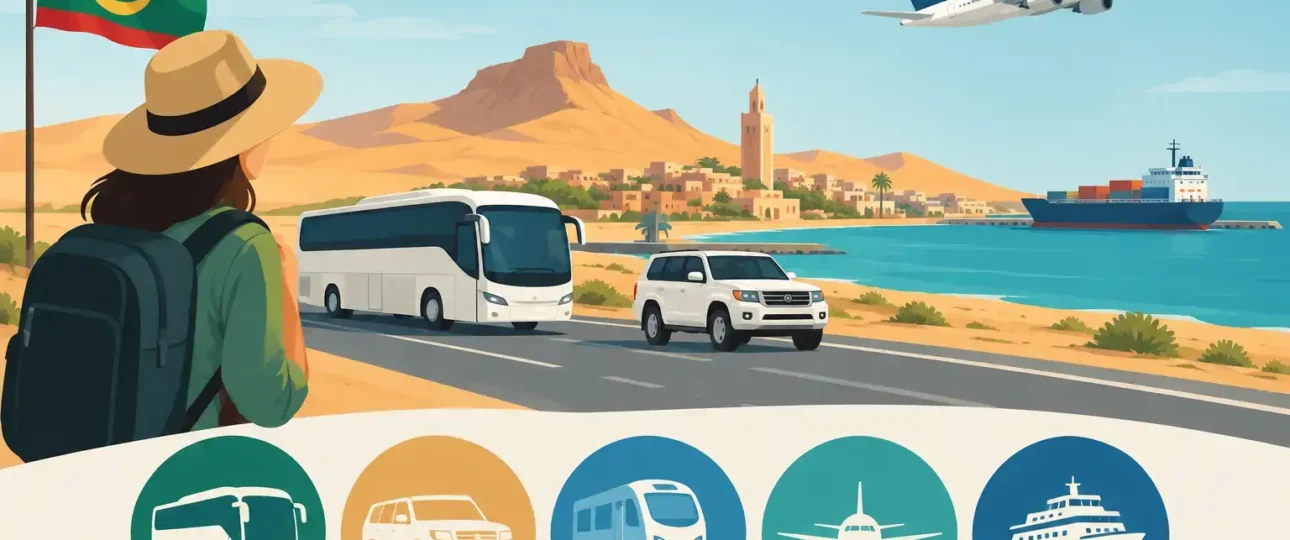
Mauritania is a large country with a small transport network relative to its distances. Public transport connects many populated areas, but it is not designed around sightseeing schedules or remote cultural sites. Domestic flights save time on selected routes, while the Iron Ore Train delivers a legendary experience rather than predictable point-to-point travel.
A guided 4×4 is the strongest all-round option for a first visit or any itinerary that combines cities, desert, and historic towns. Self-driving can suit highly experienced overland travelers, especially those comfortable with sand driving and vehicle recovery. Shared taxis and buses are useful for budget-minded travelers moving between main towns, but they require patience and leave little room for detours.
Guided 4×4 with driver and guide
A private or small-group 4×4 is the practical choice for multi-day travel through the Adrar, desert crossings, and routes where paved roads end. The vehicle carries water, fuel planning, luggage, and camp equipment where needed. Just as valuable, a local team understands road conditions, seasonal changes, police checkpoints, and the pace that makes a long driving day enjoyable rather than exhausting.
This option costs more than public transport, but the price covers far more than a seat. It can include airport pickup, hotel coordination, permits when required, a trained driver, an English-speaking guide, and help if plans need to change. For photographers, families, and travelers on a limited schedule, that reliability is often worth more than a small saving.
It also creates room for the experiences public transport cannot provide. You can stop at a palm grove, take time over tea in a village, camp under the stars, or adjust a route for better morning light in the dunes. Tours in Mauritania arranges these logistics as part of guided itineraries, so travelers can focus on the journey rather than finding fuel, negotiating vehicles, or managing desert navigation.
Rental car and self-drive travel
Renting a vehicle offers independence, but it should be approached realistically. On paved highways between major towns, a capable vehicle and careful planning may be enough. Once you turn toward dunes, isolated camps, or unmarked tracks, a proper 4×4, recovery equipment, extra fuel, offline navigation, and desert-driving experience become essential.
Self-drive travelers should also allow for the possibility of delays. A flat tire, a missed turn, sand that has shifted overnight, or a fuel station with limited supply can change the day quickly. Mobile coverage is inconsistent away from towns, and help may be far away. This is not a reason to avoid independent travel, but it is a reason to plan conservatively.
For a short trip, self-driving can become less economical than it first appears. Rental charges, fuel, insurance, deposits, camping gear, navigation, and the time needed to research routes all add up. It is best suited to travelers who actively enjoy the responsibility of overland travel, rather than those who simply want flexibility.
Shared taxis and buses
Shared taxis, minibuses, and larger buses serve routes between Nouakchott and regional centers. They can be affordable and provide a direct look at everyday travel in the country. For travelers with open schedules and a basic destination in mind, they are a valid way to cover distance.
The trade-off is control. Departure times may depend on passenger numbers, luggage space can be tight, stops may be frequent, and journey lengths are difficult to predict precisely. Comfort varies by vehicle, road, and weather. Travelers should not build a tight connection, an international flight, or a fixed desert camp reservation around an estimated public-transport arrival time.
Public transport is also less useful for landmark-rich routes. It may bring you to Atar or another town, but not to a remote oasis, a dune camp, or the exact starting point for an Iron Ore Train experience. You will still need local transport and local knowledge for the final stages.
Domestic flights
Flying can be sensible when time is the priority, particularly between Nouakchott and northern destinations when service is available. A flight may reduce a full driving day, leaving more time for Chinguetti, Ouadane, or the desert.
However, domestic schedules can be limited and are subject to change. Flying also does not remove the need for ground transport. Once you arrive, you will still need a vehicle, driver, and route plan to see the region well. Consider flights as a time-saving addition to a road itinerary, not a complete replacement for one.
For travelers who have only a few days, combining a domestic flight with an organized 4×4 circuit can be a smart balance. For those who enjoy gradual changes in landscape, the road journey itself is part of Mauritania’s appeal.
The Iron Ore Train Is an Experience, Not a Transfer
Mauritania’s Iron Ore Train is often placed in a transport comparison because it travels between the mining town of Zouerat and the Atlantic coast. Yet treating it like a regular passenger train leads to disappointment. Its primary job is hauling iron ore, not operating on a tourist timetable.
Riding the train can be extraordinary: immense desert horizons, a night under the open sky, and the raw scale of one of the world’s longest freight trains. It is also physically demanding. Conditions can be dusty, cold after dark, hot in daylight, and subject to operational changes. Passenger arrangements, departure timing, and access can vary.
A guided arrangement is particularly valuable here. You need a plan for reaching the departure area, carrying the right equipment, protecting cameras and luggage from dust, and meeting transport at the far end. Travelers should choose the Iron Ore Train because they want the story and challenge, not because it is the easiest way to travel north.
Choosing Transport by Travel Style
If comfort, time efficiency, and dependable logistics matter most, choose a guided 4×4 itinerary. It is the most effective way to combine Nouakchott, the Adrar, desert camps, and historic towns without making every transfer a separate project.
If you are a confident overlander with substantial remote-driving experience, self-drive can offer rewarding independence. Build in extra days, carry appropriate supplies, and avoid assuming that a mapped track is a straightforward route.
If your budget is tight and your plans are flexible, shared transport can connect the main towns. Keep your itinerary simple, travel light, and leave buffer time before important commitments. If the Iron Ore Train is the centerpiece of your visit, treat it as a supported expedition with realistic expectations about comfort and timing.
What a Well-Planned Journey Should Include
The best transport plan is not only about the vehicle. It should account for arrival transfers, accommodation locations, fuel stops, meal breaks, water, luggage capacity, and how you will communicate if a route changes. In remote areas, these details are the difference between an adventurous day and an avoidable complication.
Ask who is responsible for permits, airport pickup, roadside support, and the transition between activities. Confirm whether quoted prices include vehicle costs, driver expenses, fuel, and transfers. Clear planning matters especially in Mauritania, where a beautiful route may be far from the nearest service station.
Choose the transport that leaves you free to notice the landscape: the first green palms after a long desert road, tea shared at sunset, or the silence around a camp beyond the last paved highway. Those moments are easier to enjoy when the essential logistics are already in capable hands.