Mauritania Desert Stargazing Night Camp Tour
A Mauritania desert stargazing night camp tour is not about finding a luxury observatory in the Sahara. It is about sitting beyond the last village lights, where the dunes settle into darkness and the sky becomes the main event. In the Adrar region, the dry air, broad horizon, and sparse light pollution can produce deeply clear nights that make even a simple desert camp feel extraordinary.
The experience is best when the adventure is planned with the same care as the route itself. Desert distances are real, temperatures can change quickly after sunset, and a beautiful remote campsite still needs clean bedding, reliable transport, a good meal, and a guide who knows where to stop. With the right local support, travelers can enjoy the silence of the Sahara without carrying the burden of every logistical decision.
Why Mauritania’s desert skies feel different
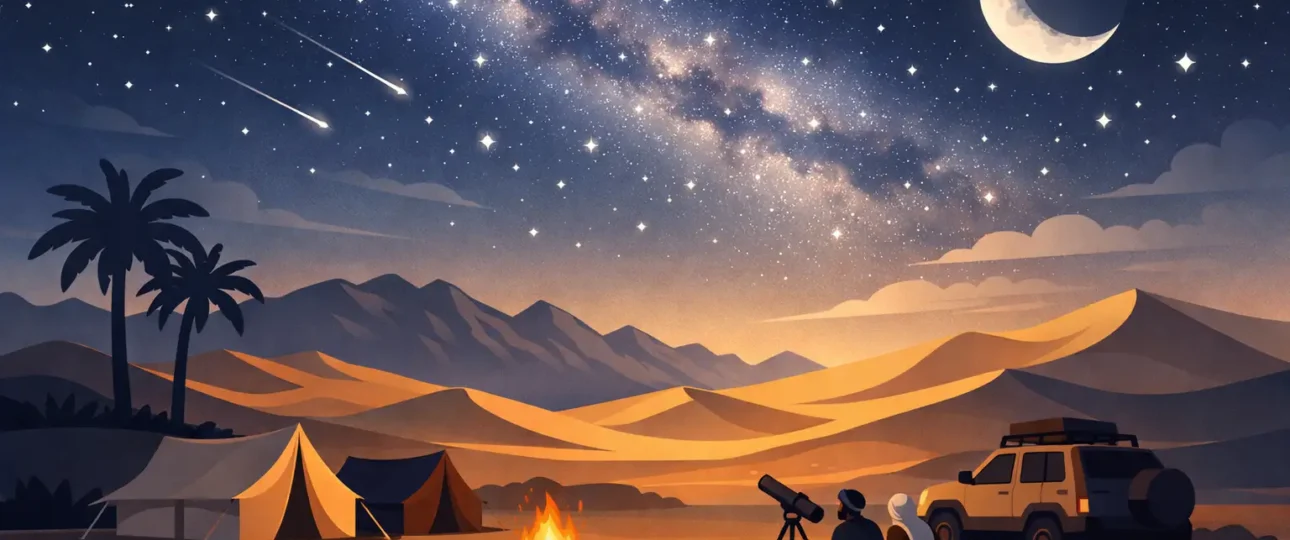
The Sahara does not need much staging. Once the sun drops behind the dunes, the landscape loses its color and gains its scale. The open horizon makes it easy to see the moon rise, trace constellations low in the sky, and watch the Milky Way stretch above the camp on moonless nights.
Mauritania’s Adrar plateau and dune country offer particularly rewarding conditions because many overnight stops sit far from urban lighting. Around Chinguetti, Ouadane, and the dune fields between desert settlements, travelers are often surrounded by a level of darkness that is hard to find in more developed destinations. The stars look brighter not because the desert creates magic on demand, but because there is less haze and far less artificial light competing with the night sky.
Still, conditions depend on the season and the lunar cycle. A full moon can be beautiful for walking around camp and photographing dunes, but it softens the Milky Way and reduces the number of faint stars visible overhead. Travelers hoping for the darkest possible sky should aim for nights close to the new moon. Those who value an easier, gently lit camp atmosphere may prefer some moonlight.
What a Mauritania desert stargazing night camp tour includes
A well-organized desert night begins before sunset. After traveling by capable vehicle through the Adrar or nearby dune routes, your guide selects a suitable camp area based on the itinerary, weather, road conditions, and local knowledge. The goal is not simply isolation. It is a secure, practical place with a good view of the sky and a comfortable setup for the night.
At camp, the pace naturally slows. There is time to watch the last light move over the sand, have tea, and enjoy a freshly prepared dinner before the temperature falls. Afterward, the camp lights are kept low so eyes can adjust to the dark. Within 20 to 30 minutes, the sky often reveals far more detail than it did when you first arrived.
For many travelers, the best part is the absence of distraction. There is no traffic noise, no restaurant music, and no need to rush back to a hotel. You can lie on a mattress or blanket, talk quietly with your group, or step a short distance from camp to photograph the dunes under starlight. A desert night can feel profoundly remote, but it should never feel unmanaged.
Tours in Mauritania arranges the essential details that make this possible: transport, planned overnight stops, camp coordination, and on-the-ground guidance. That support matters when a route includes historic towns, off-road tracks, and desert camps where last-minute improvisation is rarely the comfortable option.
Comfort in the desert: what to expect
Camping in Mauritania is an adventure experience, not a hotel room transplanted into the dunes. Yet practical comfort makes a major difference. A good camp setup should provide a proper sleeping surface, blankets suited to the season, drinking water, a satisfying dinner, and clear guidance on the available facilities.
Many travelers choose to sleep under the open sky, which is the most direct way to experience the stars. Others prefer a tent or sheltered arrangement, especially when wind, cold, or privacy is a concern. Neither choice is less authentic. The right option depends on your comfort level, the weather, and how lightly you sleep.
Desert nights can be surprisingly cool, especially from late fall through early spring. Even after a hot afternoon, temperatures may drop sharply after midnight. Bring a warm layer, long pants, closed shoes, and a light hat or scarf. In warmer months, the challenge may be retaining enough comfort before the evening breeze begins rather than staying warm all night.
You should also expect sand. It is part of the setting, and a little flexibility helps. Keep cameras and phones in protective cases, use a small dry bag for valuables, and avoid leaving belongings loose outside after dark. A trusted guide will help create an orderly camp, but travelers who pack simply tend to enjoy the night more.
The best time for a desert camp night
For most visitors, October through March offers the most comfortable season for a desert camp. Days are generally more manageable for travel and walking, while evenings bring the cool, crisp conditions that make sitting under the stars especially pleasant. December and January nights can be cold, so warmer sleepwear becomes essential.
Spring can offer beautiful skies and warmer nights, although temperatures rise as the season progresses. Summer desert travel requires more careful planning due to intense daytime heat. It can suit experienced travelers with a flexible itinerary and strong heat tolerance, but it is not usually the first choice for a relaxed camp-and-stargazing experience.
Astronomy-minded visitors should check moon phases while planning their broader route. A new-moon window is ideal for deep-sky photography, while a crescent moon can create dramatic foreground light on dunes without overwhelming the stars. Weather also matters. Desert skies are often clear, but dust, wind, or occasional cloud can affect visibility. A responsible itinerary leaves room for the reality of the environment rather than guaranteeing a perfect celestial display.
Photography tips without losing the moment
Mauritania’s dark skies attract photographers and filmmakers, but the camp experience should not become a race to capture every frame. Set up early, keep your equipment organized, and then give yourself time to look up without a screen between you and the sky.
A camera with manual settings, a sturdy tripod, spare batteries, and a wide-angle lens are useful for star photography. Cold night air drains batteries faster than expected, and sand can complicate lens changes. A headlamp with a red-light setting is far better than a bright white flashlight because it preserves night vision for everyone at camp.
If you are traveling with a phone, modern night modes can still create memorable images of camp silhouettes, lanterns, and moonlit dunes. For the Milky Way, a dedicated camera usually gives better results. Your guide can help position the group and camp lights thoughtfully, but always ask before photographing local staff or fellow travelers.
Travel responsibly in a fragile landscape
A quiet desert camp depends on leaving little behind. Avoid scattering food waste, plastic, or tissues, even in places that appear empty. The Sahara may look endless, but campsites and tracks are used by local communities, guides, and other travelers over time.
Respect is equally important around villages and historic caravan towns. Chinguetti and Ouadane are not backdrops for an itinerary. They are living places with families, traditions, and daily rhythms. Dress modestly, ask before taking close portraits, and follow your guide’s advice on local customs.
The best desert travel is not defined by how far off-grid you go. It is defined by whether the journey remains safe, considerate, and well supported. Experienced local planning helps avoid unsuitable routes, poorly prepared camps, and unnecessary pressure on sensitive areas.
How to add a stargazing camp to your Mauritania itinerary
A desert night works especially well within a multi-day route through the Adrar. Travelers often combine it with Chinguetti’s old libraries and stone lanes, Ouadane’s historic settlement, oasis stops, dune crossings, or a longer journey that begins in Nouakchott. This approach gives the camp night a natural place in the journey rather than treating it as a rushed detour.
Allow enough time. Arriving at camp after dark means missing the changing colors of sunset and makes setup less relaxed. One night can be memorable, but two desert nights offer more flexibility if weather changes or if you want one evening focused on photography and another simply on rest. Private travelers may have more room to tailor pace, while fixed-departure groups benefit from a structured route and shared local support.
Before departure, confirm what is included in your camp arrangement, how luggage is carried, whether tents or open-air bedding are planned, and what level of facilities to expect. Clear answers before you travel are part of a good expedition, especially in a destination where remote beauty and practical preparation go together.
When the fire has burned low and the last voices in camp have gone quiet, resist the urge to check the time. Let your eyes adjust, let the desert settle, and give the sky a little longer than you think it needs.