
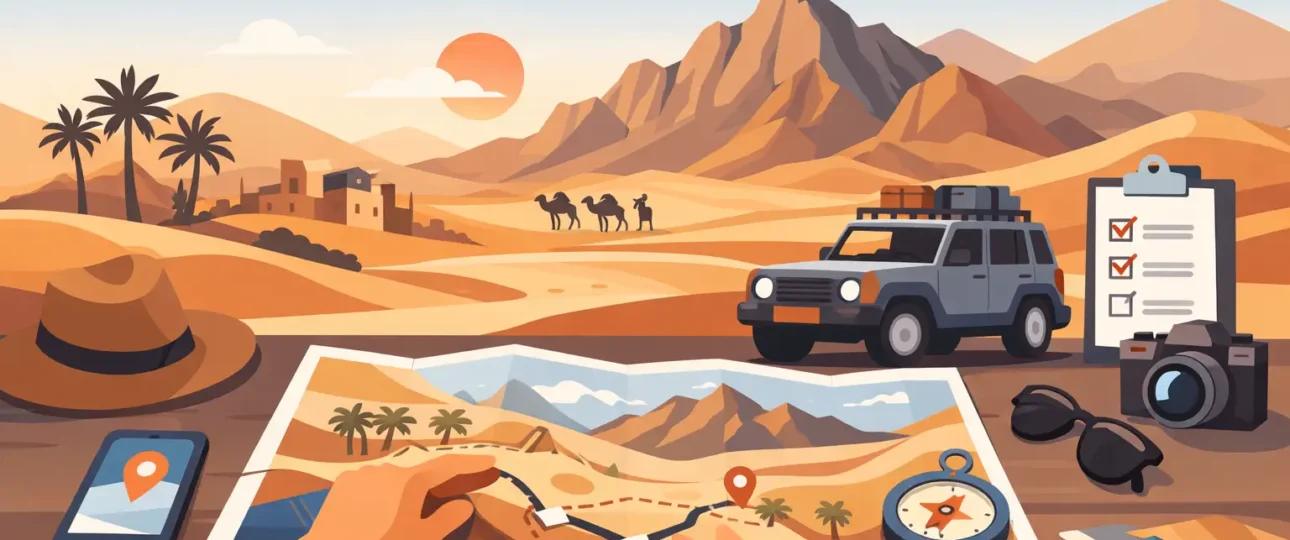
How to Plan Adrar Road Trip the Smart Way
A road trip through Adrar is not the kind of journey you should improvise from a hotel lobby the night before. Distances are long, phone signal comes and goes, and the places you came to see – desert passes, palm oases, old caravan towns, and camps under open sky – are at their best when the route, timing, and logistics are already working in your favor. If you are wondering how to plan Adrar road trip travel well, the goal is simple: keep the adventure intact while removing the avoidable stress.
Adrar is one of Mauritania’s most rewarding regions, but it asks for real preparation. The difference between a memorable trip and a tiring one often comes down to a few practical choices made early.
How to plan Adrar road trip around the right pace
The first decision is not where to start. It is how much time you can give the region. Many travelers try to fit Adrar into a rushed loop, then realize too late that the road time is part of the trip. This is not a destination where you race between checklists.
For most visitors, four to six days is the sweet spot for Adrar itself. That usually gives you enough time to combine Atar with one or two historic towns such as Chinguetti and Ouadane, plus at least one desert camp or oasis stop. If you want photography time, hiking, or a slower cultural rhythm, give it closer to a week.
A shorter trip can still work, but you need to accept trade-offs. You may see the headline sites without much time to linger. A longer itinerary gives the region room to breathe, and that matters here. Sunrise over dunes, tea in a guesthouse courtyard, and long scenic drives are not extras. They are part of why people come.
Choose the best season before you choose the route
Timing shapes everything in Adrar. Cooler months are the most comfortable for road travel, walking, and sleeping outdoors. For many international travelers, the best window is from late fall through early spring, when daytime temperatures are more manageable and nights in the desert feel pleasant rather than punishing.
Heat changes the experience quickly. In warmer months, drives become more draining, camp comfort drops, and daytime exploration gets shorter. This does not mean travel is impossible, but the margin for error is smaller. If you are visiting Mauritania for the first time, the cooler season is usually the safer and more enjoyable choice.
Festival dates, local holidays, and regional events can also affect availability. In small destinations, a few full guesthouses can reshape an entire route. That is one reason early planning helps.
Build the route around road reality, not map distance
When travelers picture Adrar, they often imagine a simple desert drive with easy stopovers. The reality is more nuanced. Some stretches are straightforward, while others depend on road conditions, sand, vehicle type, and local knowledge. A route that looks manageable on a map can feel very different on the ground.
Most Adrar itineraries revolve around a handful of anchor points. Atar is often the practical gateway. Chinguetti offers history, architecture, and a strong sense of place. Ouadane brings a more remote atmosphere and works particularly well for travelers who want old Saharan settlement landscapes. Depending on the plan, oasis areas and desert camp nights add contrast between long drives and slow evenings.
The smart approach is to pick two or three major bases and connect them sensibly rather than trying to see every place in one pass. Adrar rewards depth more than coverage. If your main interests are culture and heritage, prioritize the old towns. If you want dramatic desert scenery and camp nights, leave more space between town visits.
Transport is the decision that affects everything else
This is where many plans become either smooth or stressful. A standard self-drive mindset does not always translate well in Mauritania. In Adrar, vehicle reliability, local navigation, fuel planning, and driver experience are not small details. They are central to the trip.
A proper 4×4 is often the right choice, especially if your route includes desert tracks, remote viewpoints, or camp access away from paved roads. Even where roads are clear, comfort matters. Long driving days feel very different in a well-prepared vehicle with a knowledgeable local driver than they do when you are managing every navigation and language issue yourself.
Independent travel can appeal to experienced overland travelers, but it comes with more moving parts. You may need to think about checkpoints, regional coordination, timing your fuel stops, and adjusting the route when conditions shift. For many visitors, especially first-time travelers in Mauritania, a guided arrangement offers better value than it first appears because it reduces risk, saves time, and keeps the experience focused on the destination instead of the mechanics.
That is why many travelers choose a local operator such as Tours in Mauritania to handle transport, permits, airport transfers, and on-the-ground support in one clear package.
How to plan Adrar road trip stays without guessing
Accommodation in Adrar should be planned with the route, not added later. This is not a region where you want to finish a long drive and then start looking around for the best option. Quality can vary, and in remote settings the difference between a clean, secure place and a disappointing one matters a lot.
A good Adrar itinerary usually mixes simple guesthouses with one or two nights in a desert camp. The balance depends on your comfort level. Some travelers want more authentic, stripped-back overnights. Others want a softer landing at the end of each day. Neither approach is wrong, but it should be decided early.
The best trips usually avoid extremes. If every night is very basic, fatigue catches up. If every night is too structured, you can lose some of the desert atmosphere that makes Adrar special. A well-planned road trip gives you both – welcoming stays in town and at least one night where the silence and stars do the work.
Permits, local coordination, and small details that matter
Mauritania rewards travelers who respect logistics. Depending on your nationality, route, and style of travel, you may need visa support, checkpoint-ready copies of documents, and clear plans for arrivals and departures. These are manageable details, but they can become frustrating if left too late.
You should also plan for cash needs, water, and realistic packing. Bring layers for cool desert evenings, sun protection for long outdoor hours, and soft luggage if vehicle space is limited. Offline maps help, but they should not be your only navigation system.
Photographers and filmmakers need to think one step further. Equipment protection, charging strategy, and permission for certain kinds of shooting should be arranged in advance. Adrar is visually outstanding, but remote beauty is easier to work with when the practical side is already covered.
Keep your daily plan ambitious, but not crowded
A strong Adrar itinerary feels full without feeling rushed. That usually means one major movement per day, not three. If you drive between towns, let that be the day’s backbone and keep the rest flexible. If you are staying near dunes or an oasis, leave room for walks, tea, and the kind of unplanned pauses that become the best memories.
Travelers sometimes ask whether they should add more stops to get the most out of the region. Usually, the better question is whether each stop has enough time around it. Adrar is not only about arrival points. It is about the spaces between them.
This is especially true if you care about comfort and safety. Long desert days get harder when every hour is overbooked. A realistic plan leaves room for weather, road conditions, and simple human pace.
What a good Adrar road trip actually feels like
The best-planned trips do not feel overplanned. They feel calm. Your driver knows the road. Your guesthouse is expecting you. Water is stocked, timing makes sense, and the camp is ready before sunset. You still get the thrill of remoteness, but not the uncertainty that can wear people down.
That balance is the real answer to how to plan Adrar road trip travel well. You do not need to remove the wildness of the Sahara. You just need to place solid logistics underneath it.
If you give Adrar enough time, travel in the right season, choose the right vehicle, and let experienced local coordination handle the difficult parts, the region opens up in the way people hope it will. You stop managing the trip and start being present for it – the old stone streets, the sand tracks, the evening firelight, and the quiet that follows after dark.
Plan for ease, not just movement. Adrar gives more back when you arrive ready to experience it rather than recover from it.