
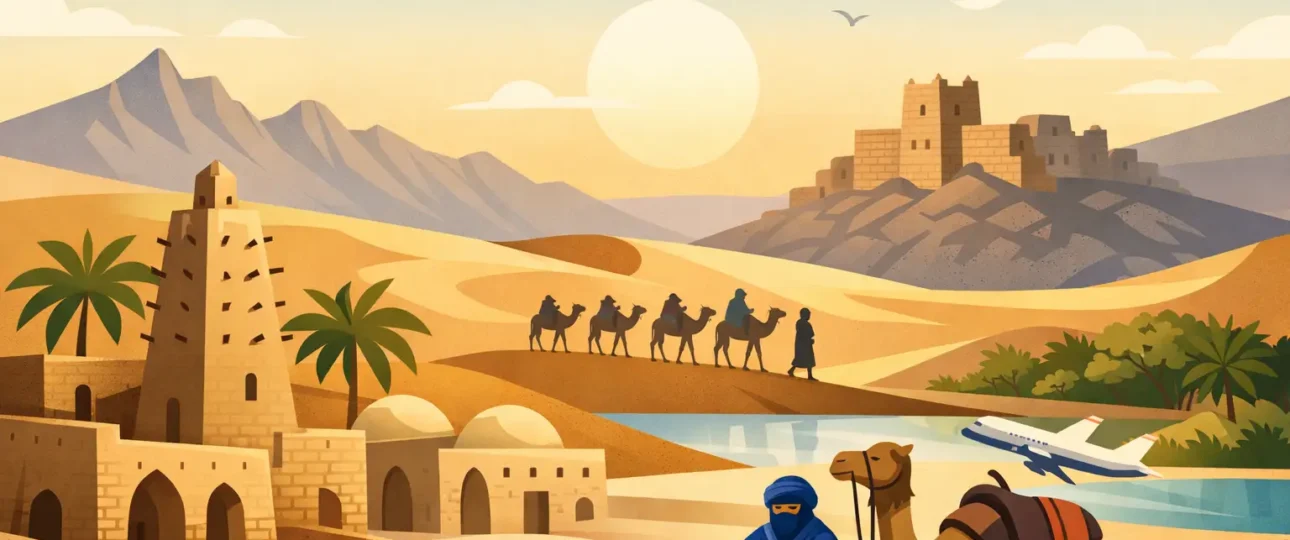
Mauritania Cultural Heritage Travel Itinerary
A good Mauritania cultural heritage travel itinerary should do more than connect places on a map. It should give you enough time to understand how trade, faith, desert geography, and daily life shaped the country you are seeing today. In Mauritania, distances are real, road conditions vary, and many of the most meaningful places are rewarding precisely because they still feel remote. That is why the best route is not the one that tries to do everything. It is the one that balances heritage, movement, and comfort so the experience feels rich rather than rushed.
For most travelers, seven to ten days is the sweet spot. That gives you time to combine Nouakchott, the old caravan towns of the Adrar region, desert landscapes, and at least one wildlife or coastal stop if your schedule allows. Shorter trips can still work, but they involve trade-offs. You may reach Chinguetti and sleep under the stars, yet miss the deeper rhythm of the country. Longer trips are ideal if you also want the Iron Ore Train, extended photography time, or a custom route built around filming or special interests.
How to build a Mauritania cultural heritage travel itinerary
The first planning decision is where to place your cultural focus. If your priority is historic urban heritage, Chinguetti and Ouadane deserve the most time. If you want a broader picture of Mauritania, begin in Nouakchott and treat the capital not as a transit point, but as a living introduction to language, markets, coast, and modern identity. If you are drawn to landscapes as part of cultural history, the Adrar is where the story becomes clear. Here, old settlements, palm groves, rocky plateaus, and dunes all explain why caravan routes formed where they did.
The second decision is pace. Mauritania is best experienced with a structured route and realistic driving days. A tight itinerary may look efficient on paper, but in practice it can leave little room for market visits, local conversations, changing light for photography, or the simple pleasure of arriving at camp before dark. Travelers usually enjoy the country more when transport, permits, airport transfers, and overnight planning are arranged in advance. It removes uncertainty and lets you focus on the experience rather than the operational details.
Day 1-2: Nouakchott as your starting point
Most journeys begin in Nouakchott, and that is exactly how it should be. The capital gives context. You see how Mauritania works today before heading into places that speak more directly to its older layers of history. Spend your first day recovering from arrival, settling into a secure and comfortable guesthouse or hotel, and getting a clear briefing on the route ahead.
On your second day, explore the city with intention. The fish market, artisan areas, and local neighborhoods show a country shaped by movement between coast, desert, and inland communities. This is not heritage in the museum sense alone. It is heritage as lived practice – trade, food, textiles, tea, and social rhythm. For travelers who value photography, Nouakchott also offers a strong visual start, especially early and late in the day.
If your schedule is very limited, you could leave for the interior after one night. Still, two nights is the better choice for most people. It creates a softer arrival and lowers the chance that the whole trip feels rushed from the start.
Day 3: Travel into the Adrar
The move from Nouakchott into the Adrar region is part of the journey, not dead time between highlights. As the scenery changes, so does your understanding of how settlements emerged in relation to water, trade routes, and defensive geography. Depending on the route, this is often the day when Mauritania starts to feel truly vast.
A planned stop en route matters. Breaking the drive properly keeps the trip comfortable and safer, especially for travelers unfamiliar with desert road travel. With the right local team, vehicle choice, timing, and rest stops are handled carefully. That may sound practical rather than romantic, but in Mauritania the practical side is exactly what protects the quality of the adventure.
The heart of a Mauritania cultural heritage travel itinerary
If you are building the trip around cultural heritage, Chinguetti and Ouadane are the anchors. They are not interchangeable. Each offers a different mood, visual identity, and historical layer.
Day 4-5: Chinguetti
Chinguetti is the town many travelers picture first, and for good reason. Its stone architecture, old mosque, desert edge, and manuscript tradition make it one of the most compelling historic places in the Sahara. It feels both fragile and enduring. You do not visit Chinguetti only to see old buildings. You come to understand how knowledge, trade, and religion once moved through this landscape.
Stay long enough to walk slowly. A hurried visit misses the point. The old quarter reveals itself through texture – walls worn by sand and time, narrow passages, shifting light, and the contrast between stillness and hospitality. If manuscript libraries are available to visit during your stay, they add depth, but they should be approached with respect and realistic expectations. Access can vary, and that is one reason guided planning helps.
An overnight in or near Chinguetti is essential. Many travelers choose a desert camp experience here, pairing heritage with the atmosphere of the surrounding dunes. Done well, this is one of the most memorable nights in Mauritania: clear skies, quiet, and the sense that the landscape is part of the story rather than a backdrop to it.
Day 6: Ouadane and the older caravan world
Ouadane often feels more remote and more archaeological in character. Where Chinguetti is iconic, Ouadane can feel more contemplative. Its historic fabric and setting speak directly to the rise and decline of caravan trade and to the practical realities of desert settlement. If you are interested in trans-Saharan exchange, architecture, or long historical timelines, do not cut this stop.
This is where a guide with strong local knowledge adds real value. The significance of a ruin, a settlement layout, or an overlook is not always obvious without context. A good explanation turns stones into a readable history. Travelers frequently remember those moments more than any single photo stop.
Depending on your timing, you may sleep in Ouadane, return toward Chinguetti, or continue according to a circular Adrar route. The right choice depends on road conditions, season, and how much driving you want in a single day.
Day 7: Desert camp, oasis, or local village life
After the major heritage towns, give the itinerary one slower day. This can be a camp in the dunes, time around an oasis, or a visit that highlights how people continue to live in harsh but beautiful environments. This day is not filler. It is where the cultural itinerary breathes.
Travelers often underestimate how valuable this pause is. Without it, the trip can become a sequence of arrivals and departures. With it, you begin to absorb the relationship between settlement, mobility, hospitality, and survival in the desert. For photographers and filmmakers, this slower day is often when the strongest material comes together.
Should you add the coast, parks, or the Iron Ore Train?
It depends on your priorities.
If wildlife and contrasting ecosystems matter to you, Banc d’Arguin National Park can add an important dimension. It shows that Mauritania is not only desert heritage. It is also a meeting point of sea, birdlife, and traditional fishing culture. The trade-off is time. Adding the park usually works best on itineraries of nine days or more.
If your interest leans toward iconic adventure, the Iron Ore Train is unforgettable. It can fit into a broader cultural route, but it changes the feel of the trip. This is less about historic urban heritage and more about the modern scale, labor, and drama of movement across the country. Some travelers love combining both. Others prefer to keep one trip focused and save the train for a return visit.
If you are newer to remote travel, a classic culture-first route is often the best introduction. It delivers the major historic sites while keeping logistics smoother and accommodations more predictable. Companies such as Tours in Mauritania are often chosen for exactly this reason: bookings, transport, permits, and local support are handled on the ground so travelers can enjoy a demanding destination with confidence.
Practical timing, comfort, and expectations
The ideal itinerary is not the one with the most stops. It is the one with the fewest weak days. In Mauritania, comfort comes from smart planning: clean and welcoming places to stay, realistic drive times, reliable vehicles, and a guide who can adapt when conditions change. That is especially important in a destination where weather, access, and local timing can shift.
Season matters too. Cooler months are generally more comfortable for overland travel and desert nights, while hotter periods require stricter pacing and hydration awareness. Heritage visits are still worthwhile year-round, but the physical feel of the trip changes with the climate.
You should also expect a different standard of travel than in more conventional destinations. That is part of the appeal. Mauritania rewards travelers who want authenticity and space, but it does not reward casual planning. A structured itinerary with clear inclusions, secure stays, and no surprise fees usually produces a better experience than trying to improvise major logistics after arrival.
The best journeys here leave you with more than images of dunes and stone towns. They give you a clearer sense of how people built, traded, studied, adapted, and welcomed strangers across one of the world’s most demanding landscapes. Plan your route with care, leave room for the unexpected, and Mauritania will feel less like a checklist and more like a place you truly met.