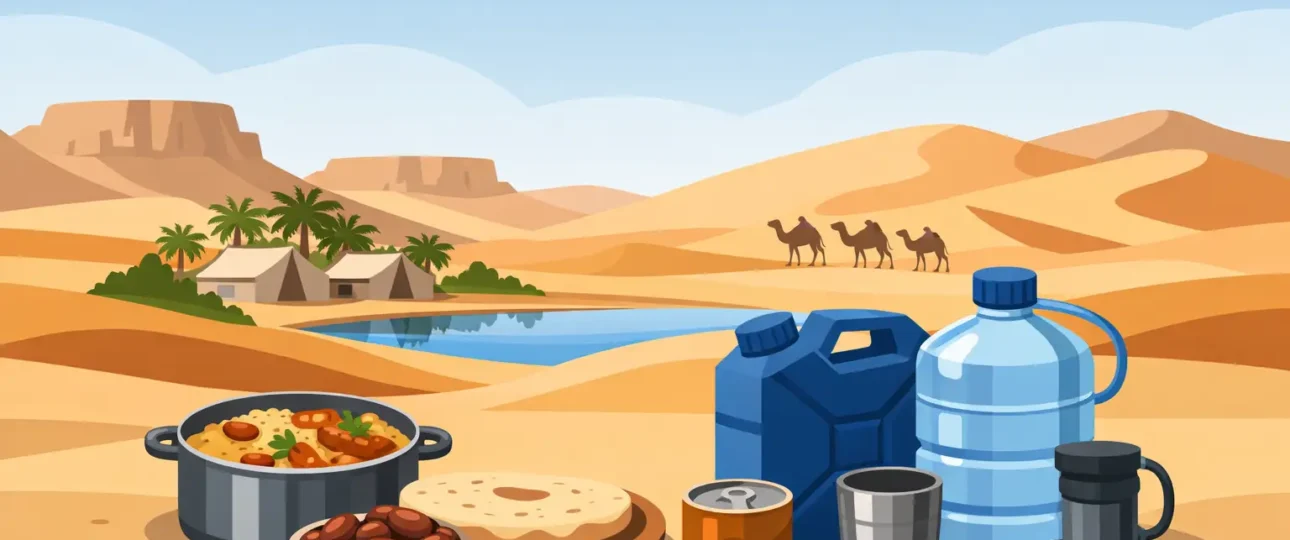
Mauritania Desert Food and Water Plan for Tours
A desert day in Mauritania can begin cool enough for a light jacket and turn intensely hot before lunch. That swing is why a thoughtful Mauritania desert food and water plan matters more than simply packing extra snacks. Good planning protects your energy, helps you enjoy long drives and dune walks, and makes remote camping feel like an adventure rather than an endurance test.
On a guided route through the Adrar, across Sahara dunes, or between historic caravan towns, food and water are part of the wider logistics. Distances are substantial, shops can be limited outside towns, and heat changes what your body needs. The goal is not to overpack. It is to carry the right personal supplies while traveling with a team that has already planned the essentials.
Start With Water, Not Thirst
The most useful hydration habit in the Mauritanian desert is to drink steadily throughout the day. Waiting until you feel very thirsty is rarely a good signal in dry heat, especially when you are walking, climbing dunes, taking photographs, or riding in a vehicle with dusty stops along the way.
For most travelers, a reusable bottle that holds at least one liter is the practical starting point. A second bottle or hydration reservoir is useful on active days, particularly if you prefer to keep water close during a dune walk. Your guide can advise on the expected activity level and refill opportunities for each stage of the route.
Water needs vary. A relaxed morning in an air-conditioned vehicle is not the same as several hours outside in sun and wind. As a general approach, drink regularly, add more during physical activity, and pay attention to headaches, fatigue, dizziness, or unusually dark urine. These can be early signs that you need water, shade, rest, or all three.
Electrolyte tablets or powder are a smart addition to your day bag. They are lightweight, easy to use, and especially helpful after sweating heavily. Choose a familiar product before your trip and pack enough for the full itinerary, since your preferred brand may not be available locally.
Avoid the Common Hydration Mistakes
Many guests drink less than usual because they are busy taking in the landscape or do not want frequent restroom stops during a drive. Others drink large amounts all at once after feeling overheated. Neither approach is ideal. Small, regular drinks are easier on the body and more effective across a full day.
Alcohol can also increase dehydration, while too much coffee or strong tea may leave some travelers feeling unsettled in the heat. You do not need to avoid them entirely, but balance them with water and do not make them your main source of fluids.
What Food Works Best in Desert Conditions
Desert travel calls for food that is filling, reliable, and easy to tolerate in warm conditions. On a well-organized guided expedition, meals are planned around the route, camp setup, and available supplies. You should still bring a few personal favorites, particularly if you have dietary needs or know you need frequent snacks to maintain energy.
Dates, nuts, dried fruit, crackers, energy bars, and peanut butter sachets travel well. They provide quick calories without taking up much space. For longer journeys, a mix of salty and sweet options is better than packing only sugary snacks. Salt can be welcome after a hot day, while protein and fats help you feel satisfied between meals.
Avoid bringing foods that melt easily, spoil quickly, or require refrigeration unless your operator has specifically confirmed storage. Chocolate can turn messy fast, and soft fruit may not survive a long drive over sandy tracks. Choose items in resealable packaging so they stay protected from dust.
Mauritanian meals can be simple, generous, and deeply comforting after a day on the road. Depending on the itinerary, you may encounter grilled meat or fish, rice dishes, couscous, vegetables, bread, dates, tea, and filling stews. In coastal areas, seafood may feature more prominently. In desert camps, the menu is shaped by what can be transported and prepared safely in a remote setting.
The key is to be flexible while communicating clearly. Tell your tour provider in advance if you are vegetarian, vegan, gluten-free, allergic to nuts, or managing a medical condition such as diabetes or celiac disease. Remote logistics do not make special arrangements impossible, but they do make advance notice essential.
Your Mauritania Desert Food and Water Plan by Day
A practical daily rhythm is more valuable than a complicated packing list. Begin the morning with a proper breakfast and water, even if you do not usually eat much early. The desert heat makes it harder to catch up later if you start depleted.
Keep your reusable bottle accessible in the vehicle, not buried in your main luggage. Carry a small snack bag for dates, nuts, electrolyte tablets, and one or two energy bars. At lunch, eat enough to sustain the afternoon, but avoid a very heavy meal immediately before a strenuous walk in peak heat.
At camp, rehydrate before you feel exhausted. Evening is also the right time to refill bottles, prepare the next day’s snacks, and let your guide know if you are feeling unwell. Early communication allows the team to adjust the pace, increase rest stops, or offer practical support before a minor issue becomes a difficult day.
Pack for Your Needs, Not Every Possibility
A compact personal food kit usually works best. Bring familiar items for the first day, transit days, and any period when a meal schedule may be later than you prefer. If you have strict dietary requirements, carry enough backup snacks for the full trip rather than relying on a single local shopping stop.
Do not pack large quantities of bottled water unless you are traveling independently and have been instructed to do so. Bottles are bulky, create unnecessary waste, and take up valuable space. On organized desert trips, the support team plans water supplies as part of the journey. Your responsibility is to bring a dependable bottle and use it consistently.
Food Safety Without Losing the Experience
The best food safety strategy is sensible, not anxious. Eat freshly prepared meals, use treated or provided drinking water, and wash or sanitize your hands before eating. Keep hand sanitizer in your day bag, since soap and running water may not always be available during road stops or at a wild camp.
Be cautious with food that has been sitting in direct heat, especially dairy products, mayonnaise-based items, or uncovered prepared dishes. When you are unsure, ask your guide. A knowledgeable local team understands where supplies come from, how meals are prepared, and what is appropriate for the day’s conditions.
Travelers sometimes worry that eating local food means taking unnecessary risks. It does not. It means choosing well-prepared dishes, keeping basic hygiene habits, and traveling with people who handle provisions responsibly. Some of the most memorable moments in Mauritania happen around a camp meal, a shared pot of tea, or breakfast as the sun reaches the dunes.
How Guided Support Changes the Equation
A self-drive desert route requires you to calculate water volume, fuel, backup supplies, route timing, and safe overnight stops. That can suit highly experienced travelers with the right equipment, but it is a serious logistical responsibility. A guided expedition removes much of that uncertainty.
Tours in Mauritania handles transport, desert camp arrangements, and on-the-ground coordination so guests can focus on the journey itself. That does not mean travelers should arrive unprepared. It means the crucial systems, including planned meals, water access, route knowledge, and support in remote areas, are managed by people who know the terrain.
There is still room for personal preference. A photographer spending long hours outside may need more water and quick snacks than someone taking a slower cultural itinerary. A motorcycle rider may prioritize easy-to-open foods and electrolytes. Families and travelers with medical dietary needs may need a more tailored plan. Share these details before departure, and the route can be prepared with your comfort in mind.
A Better Desert Day Starts the Night Before
Desert comfort is often decided by small choices. Refill your bottle before bed. Put electrolytes and snacks in the same place every evening. Eat a proper breakfast. Wear sun protection, take shade seriously, and speak up early if the heat is affecting you.
With food, water, and local logistics properly planned, the Sahara becomes less about coping with extremes and more about being present for them: the quiet of a desert camp, the color of the dunes at sunset, and the rare feeling of traveling far beyond the ordinary.