
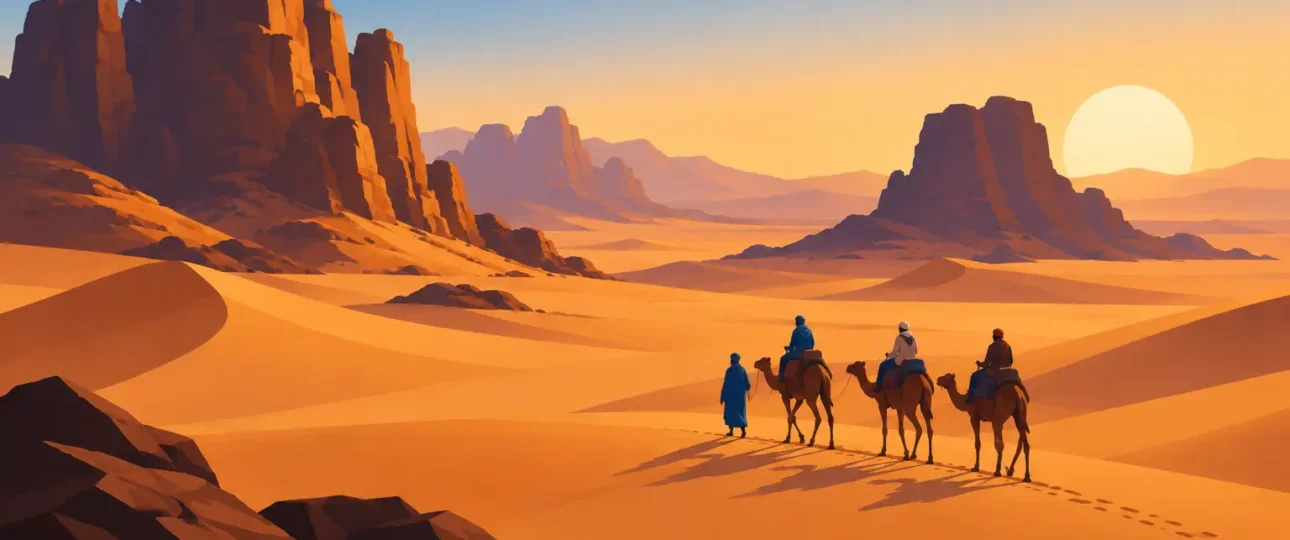
Adrar Desert Crossing Tour Example in 7 Days
An Adrar desert crossing tour example should show more than a line on a map. In Mauritania, the distance between two points can be short while the journey takes a full day: sand tracks shift, remote wells set the rhythm, and a sunset stop in the dunes is often worth more than arriving early. The right itinerary leaves room for the landscape while keeping transport, food, permits, and overnight stays properly organized.
This seven-day route is designed for travelers who want the essential Adrar experience without treating the desert as a checklist. It combines the historic towns of Chinguetti and Ouadane with a genuine off-road crossing, oasis walks, desert camps, and a clear return to Nouakchott. It is a practical example rather than a fixed promise. Road and sand conditions, flight times, and your preferred comfort level can change the final routing.
What This Adrar Desert Crossing Tour Example Includes
The Adrar is not one single destination. It is a vast region of plateaus, ergs, dry riverbeds, palm oases, ancient caravan routes, and towns that once connected West Africa with the wider Islamic world. A well-paced crossing needs a capable 4×4, an experienced local driver-guide, enough water and fuel, and confirmed places to sleep before the day begins.
For most travelers, a guided trip is the sensible choice. Desert navigation is specialized, and mobile coverage is not something to rely on once you leave the main road. With Tours in Mauritania, the operational details can be arranged in advance: airport transfers, transport, permits where required, camp equipment, meals, and clean, secure guesthouse stays. That gives you more time to photograph the dunes, speak with local hosts, and enjoy the quiet that brought you here.
Day 1: Arrival in Nouakchott
Begin in Nouakchott, Mauritania’s capital and the natural starting point for most international visitors. An airport welcome and transfer to your hotel or guesthouse make the first evening straightforward, especially if your flight arrives late. Use this time to meet your guide, confirm the next morning’s departure, and ask any final questions about packing, weather, or dietary needs.
A short city visit can include the fishing port, where painted wooden boats arrive with the day’s catch, or a walk through a local market. Keep expectations realistic: this is a working capital, not a polished resort city. Its value lies in the contrast it provides before the silence and open horizons of the interior.
Day 2: Nouakchott to Atar and the Adrar Plateau
The journey north to Atar is a transition day, but it does not have to feel like lost time. The paved road gradually trades coastal flatness for the rockier landscape of the Adrar. Plan for regular comfort stops, a picnic lunch or roadside meal, and an arrival with enough daylight to settle in.
Atar is an important base for the region. Depending on timing, you may visit its market, purchase a scarf or additional water, and prepare for the days away from larger towns. Spend the night in a welcoming guesthouse rather than pushing deeper into the desert after dark. This is a small decision that improves both safety and comfort.
Day 3: Atar, Amogjar Pass, and Chinguetti
Leave Atar for Chinguetti by way of the Amogjar Pass, where the road cuts through dramatic rock formations and wide, dry valleys. The scenery changes quickly here: dark stone ridges give way to palms and sand, with occasional signs of old settlement along the route.
Chinguetti deserves more than a quick photograph. Founded as a caravan center and place of learning, it remains one of Mauritania’s most evocative historic towns. Walk its narrow lanes with a local guide, see the mud-brick architecture, and, when access is available, visit a traditional library holding carefully preserved manuscripts.
Sleep in a local guesthouse on the edge of town or near the dunes. A simple dinner under the evening sky is part of the experience, but the practical details matter too: a proper mattress, clean bedding, drinking water, and a reliable plan for the night make desert travel much more enjoyable.
Why Chinguetti Is Worth an Overnight Stay
Some itineraries rush through Chinguetti on the way to the dunes. That can work for travelers with very limited time, but it misses the town’s best hour. After day visitors leave and temperatures soften, the sand-colored buildings, call to prayer, and nearby dunes create a calmer atmosphere. An overnight also provides flexibility if the road from Atar takes longer than expected.
Day 4: Chinguetti to the Dunes of Erg Amatlich
This is where the desert crossing begins in earnest. The vehicle leaves the established road for sandy tracks, and your guide reads the terrain rather than following roadside signs. Erg Amatlich is known for large, sculpted dunes that shift in color from pale gold to deep orange as the sun lowers.
The pace should be unhurried. Stop to walk a dune ridge, photograph wind patterns in the sand, or simply sit without the sound of traffic. Midday heat can be intense for much of the year, so shade, water, and timing are not minor details. Most walking is best saved for early morning or late afternoon.
Camp in the dunes tonight. A good desert camp is simple, not luxurious, but it should be thoughtfully managed: shelter from wind, a prepared dinner, hot tea, drinking water, and a clear sleeping arrangement. In favorable weather, many travelers choose to sleep beneath the stars. A tent remains useful when wind or sand makes an open-air bed less comfortable.
Day 5: Desert Tracks, Oases, and Ouadane
After sunrise and breakfast, continue across the Adrar toward Ouadane. The route may pass dry wadis, isolated acacia trees, rocky hammada, and small oases where palms signal water below the surface. This is often the day travelers remember most clearly, because the landscape keeps changing while the sense of remoteness remains.
Ouadane appears almost as an extension of the plateau. Its old town, a UNESCO-listed historic settlement, sits above the newer village and tells the story of a place shaped by trade, scholarship, and survival in an unforgiving climate. Explore the stone ruins on foot with your guide and take time to understand what the town represented along the trans-Saharan routes.
Stay overnight in or near Ouadane. Compared with a dune camp, a guesthouse offers a welcome opportunity for a shower, charging batteries, and a more settled evening. Photographers may prefer to ask for a room or terrace with views toward the old town and the open desert beyond it.
Day 6: Ouadane, Richat Structure, and Atar
If permits, weather, and route conditions allow, this day can include the Richat Structure, often called the Eye of the Sahara. From ground level, it is not a single dramatic viewpoint in the way aerial images suggest. Its appeal is geological and geographic: concentric formations spread across the desert in a place that feels remarkably remote.
The visit adds driving time and is not essential for every traveler. Those more interested in culture, relaxed photography, or a slower pace may prefer extra time in Ouadane or another night near an oasis. A dependable itinerary explains that trade-off clearly rather than trying to fit every landmark into one day.
Return toward Atar for the night. This is a useful reset before the drive back to the capital, with a comfortable bed, a substantial meal, and time to organize photographs from the crossing.
Day 7: Atar to Nouakchott
Drive south to Nouakchott, allowing enough time for breaks and a safe arrival before an evening flight where possible. If your departure is the following day, an additional city night removes pressure from the schedule. Desert travel is rewarding precisely because conditions can change, and leaving a buffer is one of the smartest choices you can make.
Planning the Route Around Your Travel Style
A seven-day itinerary suits travelers who want a balanced first experience of Mauritania. Add days if you want longer walks, more nights in the dunes, time with local communities, or a southern extension to Banc d’Arguin National Park. Reduce the route only with care. Cutting a night may save money, but it can turn a meaningful crossing into a sequence of long drives.
The best time also depends on your tolerance for heat and wind. Cooler months generally make camping and daytime exploration more comfortable. Summer travel is possible, but it requires earlier starts, careful hydration, and realistic expectations about how much time you will want to spend outside the vehicle.
Bring breathable layers, a warm item for cool desert evenings, sunglasses, sunscreen, a headlamp, and a reusable water bottle. A scarf is useful for sand and sun, while closed shoes are better than sandals for walking around rocky ground or camp. Your guide should carry the route-specific equipment, first-aid supplies, communications plan, and vehicle recovery essentials.
The strongest Adrar journey is not the one that covers the most ground. It is the one that gives you time to watch the dunes change at sunset, listen to the stories behind an old caravan town, and travel with the confidence that someone local is looking after the details.