
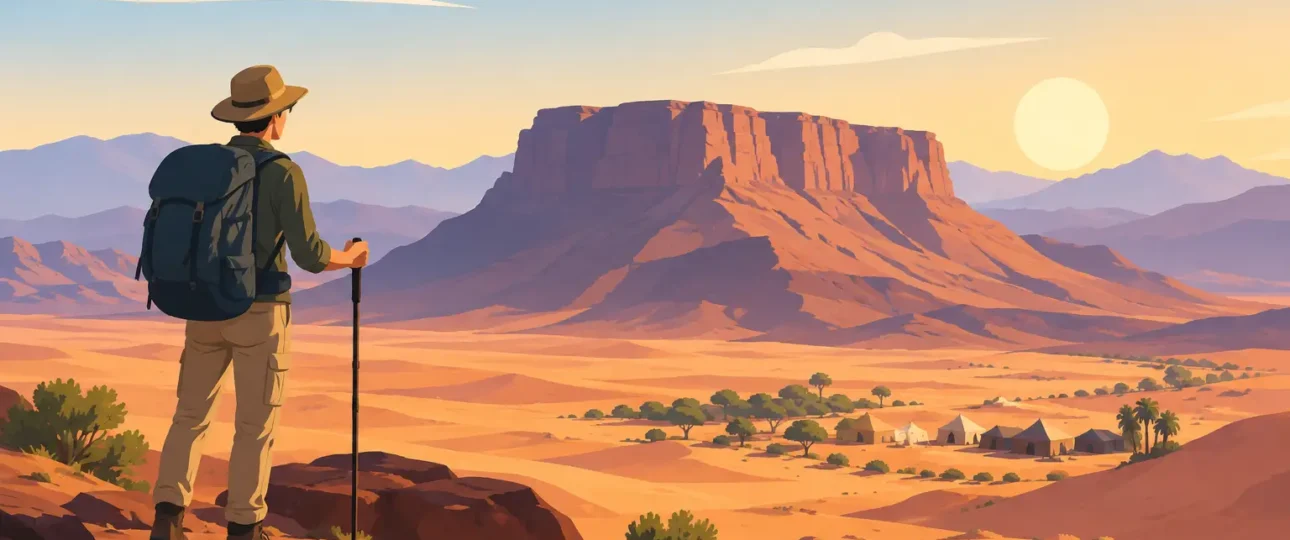
Adar Plateau Travel Guide for a Safer Sahara Trip
The first sight of the Adrar is rarely a single landmark. It is the change in scale: black rock shelves above the sand, date palms gathered around hidden water, and long tracks leading toward towns that once anchored trans-Saharan trade. This Adar Plateau travel guide is for travelers planning to experience Mauritania’s historic desert heart with the right balance of adventure, comfort, and careful local planning. The region is more commonly known as the Adrar Plateau, and while it feels wonderfully remote, it is not a place to approach casually.
A well-organized journey lets you focus on Chinguetti’s old libraries, the quiet lanes of Ouadane, sunset over the dunes, and a night beneath a clear sky. Your transport, desert routes, permits, meals, and places to sleep need to work together. That is where knowledgeable local support makes a demanding expedition feel possible rather than complicated.
Adar Plateau Travel Guide: What Makes It Special
The Adrar Plateau lies in north-central Mauritania, where sandstone formations, vast sand seas, green oases, and ancient settlements meet. It is one of the country’s most rewarding regions for travelers who want more than a quick desert photo stop. The landscapes invite long drives and short walks, while the towns give context to the Sahara’s cultural history.
Chinguetti is often the emotional center of an Adrar trip. Its old quarter, built in warm stone and partly shaped by shifting sand, reflects its former importance as a caravan hub and a place of Islamic scholarship. Small family libraries safeguard manuscripts that connect visitors to centuries of learning and pilgrimage. Visits should be respectful and unhurried. These are living collections, not museum displays arranged for tourism.
Ouadane offers a different atmosphere. Perched near the plateau, its ruined old town and elevated views make it especially compelling for photographers. The drive between Chinguetti and Ouadane is part of the experience, passing open desert, low escarpments, and traces of old caravan routes. Nearby, the Richat Structure can add a dramatic aerial or ground-based perspective for travelers with the time and appropriate transport.
Then there are the oases, including Terjit. After hours of rock and sand, palms and flowing water feel almost improbable. Terjit is a welcome place to slow down, walk through shade, and enjoy a comfortable lodge or camp setting before returning to the desert road.
Choose the Right Season and Pace
The best time for most visitors is from October through March, when daytime temperatures are more manageable and evenings can be cool. December and January can feel surprisingly cold after sunset, particularly in exposed desert camps, so warm layers are essential. From late spring into summer, the heat becomes far more demanding. Travel is still possible with the right planning, but it is better suited to travelers who understand desert conditions and are prepared for a less forgiving schedule.
Give the Adrar enough time. A rushed two-day visit can cover a town or an oasis, but it misses the region’s rhythm. Four to six days allows for a more satisfying route, with time for Chinguetti, Ouadane, Terjit, scenic drives, and at least one proper desert camp night. If you are combining the Adrar with the Iron Ore Train, Nouakchott, Banc d’Arguin National Park, or a longer Sahara crossing, plan a multi-day itinerary that includes realistic driving times and rest stops.
Distance in Mauritania is not measured only in miles. A route that looks short on a map may involve sand tracks, changing visibility, fuel planning, or a slower approach to protect both passengers and vehicle. A flexible itinerary is useful, but it should be supported by a guide who knows when conditions call for a different route or an earlier arrival at camp.
A Route That Brings the Region Together
Most Adrar expeditions begin with arrival in Nouakchott and a transfer or overland departure toward Atar, the principal gateway town for the region. Atar is practical rather than polished, but it is an important base for supplies, local coordination, and access to the surrounding plateau.
From there, a strong route usually combines the historic towns with the natural landscapes. You might travel to Chinguetti for the old quarter and dunes, continue through desert scenery toward Ouadane, then head to Terjit Oasis for a cooler overnight stop. Depending on your interests and the available time, the journey can include quiet camel walks, dune sunsets, village encounters, or a longer 4×4 crossing through remote sections of the Sahara.
The trade-off is simple: more destinations mean more driving. Travelers who care most about culture should linger in Chinguetti and Ouadane, with time to meet local hosts and walk slowly. Those drawn to wide-open landscapes may prefer an extra desert camp night and a longer off-road route. Photography and filming groups often need even more flexibility, especially for early-morning light, dust conditions, and sunset locations.
A fixed route has advantages for first-time visitors because it protects the essentials: reliable fuel, known accommodation, prepared meals, and realistic travel days. Private groups can often tailor the balance, but custom travel should still be built around safe daily distances rather than an ambitious wish list.
Desert Comfort Depends on Good Preparation
Sleeping under the stars is one of the Adrar’s defining experiences. Away from town lights, the night sky is exceptionally clear, and the silence of a desert camp can be unforgettable. Comfort, however, comes from preparation. A quality camp should provide a proper sleeping setup, warm blankets in cooler months, clean water, satisfying meals, and a team that knows the terrain.
Pack light, but pack deliberately. Breathable long sleeves and loose pants protect against sun and dust. Bring sunglasses, sunscreen, a refillable water bottle, a headlamp, and a scarf or buff for windy conditions. Closed shoes are better than sandals for walking around rocky ground and camp areas. In winter, add a warm fleece or insulated layer, a hat, and socks for the evening.
Electronics need special attention. Fine sand gets into camera bags, lenses, charging ports, and phone cases. Photographers should carry protective pouches, spare batteries, cleaning tools, and more memory capacity than they expect to use. Electricity can be limited outside larger towns, so charging should be planned rather than assumed.
Why Guided Travel Matters in the Adrar
The Adrar is not difficult because every moment is dangerous. It is demanding because small logistical failures can become major inconveniences in a remote environment. A missed fuel stop, an unsuitable vehicle, an unplanned night drive, or unclear accommodation arrangements can quickly change the tone of a trip.
A trusted ground team handles the pieces that travelers cannot easily arrange from abroad: airport pickup, appropriate 4×4 transport, experienced drivers, local guides, camp equipment, accommodation bookings, meals, and route coordination. They can also help manage permits where required and communicate with local hosts in a way that is respectful and efficient.
Guided travel is particularly valuable for solo travelers, small groups, and visitors with limited time. It also gives you a knowledgeable interpreter for the stories behind the places you see. In Chinguetti, that may mean understanding the role of a manuscript library. At an oasis, it may mean learning how water, farming, and family life shape settlement in a harsh climate.
Independent travel can work for experienced desert travelers with reliable vehicles, navigation skills, time, and contingency plans. Even then, conditions can change. For most visitors, the savings of doing everything alone rarely outweigh the reassurance of organized transport, secure stays, and active in-country support.
Travel Respectfully in Historic Towns and Oases
The Adrar rewards curiosity, but respectful behavior matters. Dress modestly in towns and villages, ask before photographing people, and do not assume every historic building is open to enter. When visiting manuscript collections or private homes, follow your host’s guidance. A small moment of patience often leads to a far richer conversation than arriving with a fixed checklist.
Water is precious throughout the region. Use it thoughtfully, avoid leaving waste at campsites, and keep plastic to a minimum where possible. Choose operators who clean up after camp and work with local suppliers. Responsible travel here is practical: it helps preserve fragile places while supporting the communities that make a visit possible.
Tours in Mauritania can arrange guided Adrar journeys with clear planning from airport arrival to desert departure. The goal is not to remove the sense of expedition. It is to make sure the expedition is supported by reliable vehicles, welcoming places to stay, and people who know the road ahead.
The Adrar is best experienced with time to look up, slow down, and accept that the desert sets its own pace. Let your route leave room for an unexpected tea stop, a changing line of dunes, and one more quiet hour beneath the stars.