
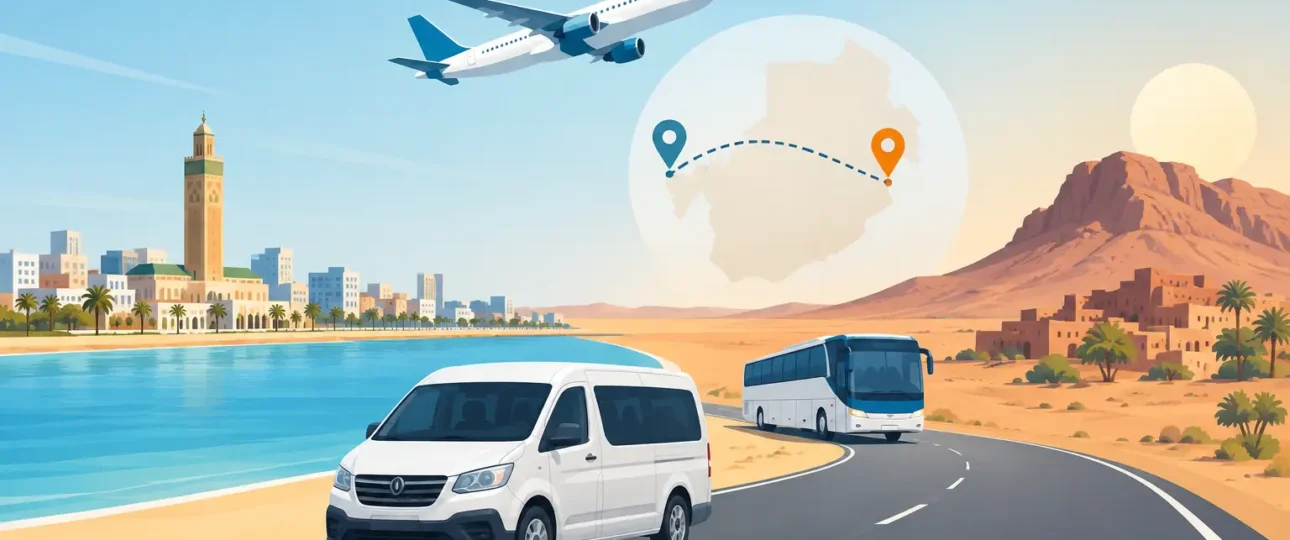
Nouakchott to Atar Transfer Options Explained
Atar is where many of Mauritania’s most memorable journeys begin: the stone lanes of Chinguetti, the oasis of Terjit, the vast Adrar plateaus, and desert camps beneath clear Sahara skies. But Nouakchott to Atar transfer options deserve careful planning. This is not a route where it pays to arrive at a station and hope for the best, especially if your itinerary includes fixed hotel nights, a guide, or a desert departure the following morning.
The distance is roughly 440 kilometers, but the journey is about more than mileage. Road conditions, heat, police checkpoints, luggage capacity, driver experience, and the reliability of departure times all affect the day. For most international travelers, a pre-arranged private vehicle is the most comfortable and dependable choice. Shared transport can work for flexible travelers, while flights may occasionally be relevant but should not be treated as the default plan.
Private 4×4 transfer: the most reliable choice
A private 4×4 with an experienced local driver is the strongest option for travelers who value timing, comfort, and support. Expect a road journey of around six to eight hours, including sensible stops for fuel, tea, lunch, photographs, and checkpoints. Conditions can change with roadworks, windblown sand, or traffic, so a responsible driver plans for the day rather than promising an unrealistic arrival time.
This transfer is particularly well suited to couples, families, photographers with equipment, motorcycle groups with support needs, and travelers joining an organized Adrar itinerary. You can leave directly from your Nouakchott hotel or the airport, travel with luggage secured in the vehicle, and arrive at a pre-booked guesthouse in Atar. If your route continues to Chinguetti, Ouadane, or a desert camp, the same vehicle and driver can usually continue with you.
The higher price compared with shared transport reflects the practical advantages: vehicle quality, a driver who knows the route, fuel planning, flexibility for stops, and someone responsible for the full transfer. When the cost is divided between two to four travelers, it can also be better value than it first appears.
For a first visit to Mauritania, this is the option we most often recommend. Tours in Mauritania can coordinate the vehicle, accommodations, and onward Adrar logistics as one clear plan, so you are not trying to solve transport details from the road.
What to expect on the road
The route north is largely paved, but it remains a long desert drive. The landscape gradually opens into wide, dry plains, with sparse settlements and long stretches where there is little reason to stop other than a checkpoint or roadside café. A good driver carries water, monitors fuel, and avoids unnecessary risks.
Plan an early departure from Nouakchott. Leaving in the morning means arriving in Atar with daylight to settle into your accommodation, have dinner, and rest before the next stage of your journey. Night driving is best avoided outside urban areas due to animals on the road, limited lighting, fatigue, and the possibility of sand obscuring the pavement.
Shared taxi and minibus: cheaper, but less predictable
Shared taxis and minibuses are the budget-focused Nouakchott to Atar transfer options. They are commonly used by local travelers and can offer a more direct view of everyday travel in Mauritania. They are also less predictable than a private transfer.
Vehicles generally leave from transport garages rather than from central hotels, and they may depart only once enough passengers and luggage have been loaded. That can mean waiting. Seating is often tight, luggage space can be limited, and the vehicle may make additional stops along the way. If you have a strict onward departure, heavy camera bags, or simply want room to travel comfortably, the savings may not outweigh the compromise.
This option can make sense for experienced, independent travelers with a flexible schedule, light luggage, and enough French or Arabic to manage practical conversations. It is less suitable for travelers arriving on an international flight the same day, those traveling with children, or anyone expected at a desert camp or guided departure at a specific time.
If you choose shared transport, build a full buffer day into your itinerary. Do not assume that an advertised morning departure will bring you to Atar in time for a same-day excursion to Chinguetti or Terjit.
Rental car and self-drive: possible, not always practical
Renting a vehicle gives you independence, but self-driving from Nouakchott to Atar is not automatically the best adventure choice. The paved section itself is manageable for drivers accustomed to long-distance travel in remote places. The more significant question is what happens after Atar.
Many of the region’s best experiences involve sandy tracks, changing conditions, isolated terrain, and route choices that are difficult to judge without local knowledge. A standard rental car may not be appropriate beyond town, while a true 4×4 requires confidence with sand driving, tire pressure management, recovery equipment, navigation, and fuel range. Insurance terms and permitted driving areas also need to be confirmed before you set off.
Self-drive can suit experienced overland travelers who have deliberately built their trip around it. For most visitors, using a driver for the Nouakchott-Atar road section, then continuing with a guide into the Adrar, removes a great deal of stress without reducing the sense of discovery.
Flights to Atar: check carefully, then have a road plan
Domestic air service can occasionally appear attractive, particularly for travelers with limited time. However, flight schedules, operating periods, luggage rules, and availability can change. A flight should be confirmed close to your travel date, and it is wise to keep a road-transfer alternative in mind rather than building a tightly timed itinerary around an unverified schedule.
Flying also does not replace ground planning once you land. You still need transport from Atar Airport to town, accommodation, and a capable 4×4 if you are heading into the dunes or toward historic caravan towns. For many travelers, the road transfer is simpler because it connects all of those elements in one movement.
Choosing the right transfer for your itinerary
The best choice depends on what you need the transfer to do. If Atar is one stop on a longer guided route, book a private 4×4 and make the journey part of the expedition. You can stop comfortably, arrive rested, and continue without changing vehicles or explaining your plans again.
If budget is the deciding factor and your dates are open, shared transport is a valid local option. Travel lightly, allow extra time, and accept that comfort and departure timing are outside your control. If you plan to rent, assess your experience honestly and make sure the vehicle, insurance, and support match the roads you intend to travel.
Travelers with a late-night arrival in Nouakchott should generally stay overnight before driving north. Mauritania rewards unhurried planning. A clean, secure place to sleep and a fresh morning start are worth more than trying to force a long transfer after a flight.
Practical preparation for the drive to Atar
Carry your passport where it is easy to reach, as checkpoints are normal on intercity routes. Keep drinking water with you, even when traveling in a vehicle that provides it, and pack sunscreen, sunglasses, and a light layer for air conditioning or cooler desert evenings. Mobile coverage can be intermittent outside towns, so download offline maps and keep key contact details available without relying on data.
For luggage, soft-sided bags are often easier to load into a 4×4 than rigid suitcases. Protect cameras and electronics from dust, and keep medication, documents, valuables, and a change of clothes in a small day bag inside the cabin. In the hottest months, breathable clothing and an early start make a real difference.
A road transfer from Nouakchott to Atar is not merely a connection between two points. It is the threshold between the capital and the Sahara. Choose the option that gives you enough time, enough comfort, and the right local support to enjoy what comes after the road.