Can You Camp in Mauritania? What to Know First
A night in the Mauritanian desert is not a generic camping experience. It might mean watching the last light leave the dunes near Chinguetti, eating a warm meal beside a small fire, and sleeping beneath a sky with no visible glow from a town. But can you camp in Mauritania safely and comfortably? Yes, with the right route, local knowledge, and realistic expectations.
Mauritania is made for travelers who want space, silence, and landscapes that feel genuinely remote. It is also a country where distances are long, services can be limited, and a simple overnight stop requires more planning than it would in a developed campground. The best camp nights are organized, not improvised.
Can You Camp in Mauritania Independently?
Wild camping is possible in many desert and rural areas, and camping is a familiar part of life for local communities, drivers, and guides. There are no established, signposted campgrounds across most of the country in the way many international visitors expect. Outside cities, you may find an open expanse of sand, rock, or acacia scrub rather than a formal site with facilities.
That freedom comes with responsibility. Whether a location is appropriate depends on land use, nearby villages, road conditions, weather, local sensitivities, and the current security situation. A place that looks empty may be used by herders or sit near a route where stopping overnight is not advisable. Do not assume that a map pin or a dramatic dune is automatically a suitable camp.
For independent travelers with a reliable 4×4, strong desert-driving experience, enough water and fuel, and time to adapt, self-organized camping can work. Even then, speaking with local contacts before leaving town is sensible. For most visitors, especially on a first trip to Mauritania, a guided desert camp is the safer and more rewarding choice. Your team can select the site, arrange food and bedding, read the terrain, and change the plan if conditions require it.
What a Desert Camp Usually Includes
A well-run camp in Mauritania can be simple without feeling rough. The setting is the luxury: a private stretch of desert, wide horizons, and a quiet that makes even a short stay memorable. Comfort depends on the itinerary and location, so ask what is included rather than assuming every camp is the same.
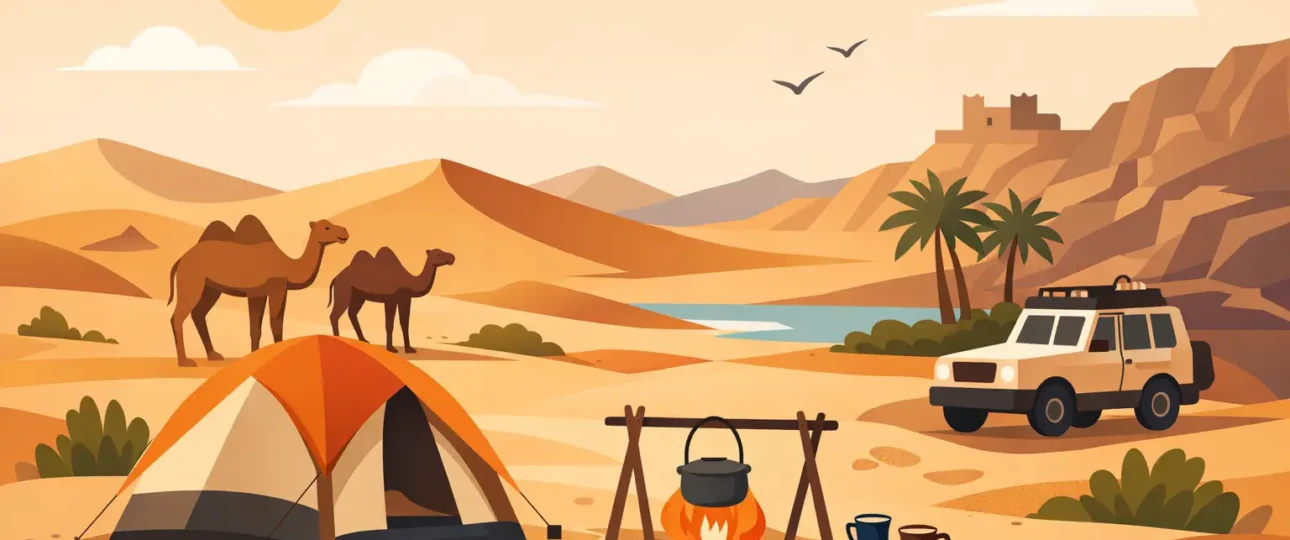
On a structured expedition, the crew generally brings sleeping mattresses, blankets or bedding suited to the season, a tent when needed, cooking equipment, drinking water, and a prepared evening meal. Some guests prefer to sleep under the stars; others want a tent for privacy, wind protection, or peace of mind. Both are usually possible when arranged in advance.
Do not expect permanent bathrooms, electricity, Wi-Fi, or hot showers at a remote dune camp. A responsible operator will provide a discreet toilet arrangement and explain how to manage washing and waste respectfully. This is practical desert travel, not a resort stay. Yet a clean sleeping setup, good food, safe water, and an experienced team make a major difference after a long day on the road or in the sand.
The best places to camp
The Adrar region is the classic choice for desert camping, particularly around the dramatic landscapes near Chinguetti, Ouadane, and the wider dune fields beyond the main roads. These areas combine Sahara scenery with caravan-town history, so a camp night can sit naturally within a route that includes old stone lanes, date palms, and ancient trading centers.
Camping can also fit journeys through more remote sections of the country, including routes toward the Iron Ore Train experience or extended overland crossings. These trips need careful logistics because services become thinner and travel times are less predictable. A camp near the coast or in a national park area may follow different local rules and environmental considerations, so the overnight plan should always be confirmed as part of the itinerary.
Safety Is Mostly About Preparation
The desert does not need to be dramatized to be taken seriously. Heat, wind, navigation, mechanical issues, and isolation are the real concerns. In cooler months, daytime conditions can be pleasant while nights become surprisingly cold. In warmer periods, afternoon heat can change the pace of travel and the amount of water your group needs.
A good camp plan begins before departure. Your driver should know the route and fuel range. The vehicle needs recovery equipment and basic communications. The group needs sufficient drinking water, food reserves, a first-aid kit, and a clear plan for changes in weather or road conditions. It is wise to tell someone where you are going, but on a guided journey, the local team handles those operational details for you.
Current travel advice should also be checked before any trip, as conditions and recommendations can change. Avoid traveling alone after dark, do not take unplanned off-road detours, and follow local guidance about areas that are unsuitable for visitors. Respectful behavior matters as much as logistics: ask before photographing people, dress modestly in villages, and never camp close to a settlement without local permission.
What to Pack for a Mauritania Camp Night
Your tour may supply the core camping equipment, but a few personal items will make the evening far more comfortable. Desert temperatures, sand, and dry air affect everyone differently, including travelers who are used to outdoor trips.
Bring layers rather than relying on one heavy item. A lightweight long-sleeve shirt protects from sun and wind during the day, while a warm fleece or insulated layer helps after sunset. Closed shoes are useful around camp, and sandals are welcome when you want to shake out the sand. A scarf or buff is helpful in wind, while sunscreen, lip balm, and sunglasses are essentials rather than extras.
Keep a small headlamp close to your sleeping area, along with a power bank, personal medications, hand sanitizer, and biodegradable wipes. Use a refillable water bottle, but follow your guide’s advice on the water supply. If you are a light sleeper, earplugs can help, although many people find that the desert’s stillness is part of the appeal.
For photography, protect cameras from fine sand with a simple dry bag or padded case. Bring extra batteries because cold nights can drain them quickly, and do not count on charging every day. Filmmakers and photographers should discuss gear, power requirements, and permits before the trip, not at the camp itself.
When Is the Best Time to Sleep in the Desert?
The cooler months, broadly from October through March, are the most comfortable for desert camping. Days are usually better for walking and exploring, while nights are crisp enough for blankets and warm layers. This is the preferred period for travelers combining camping with dune crossings, cultural sites, or long road journeys.
Spring can bring warmer days and occasional wind. Summer travel is possible, but heat changes the rhythm completely. Camps must be planned with more shade, water, and rest time, and some travelers will find the conditions too demanding. The right season depends on your tolerance for heat, the route, and whether you want a more active or more relaxed itinerary.
Why a Guided Camp Changes the Experience
A local guide does more than lead the way to a picturesque dune. They know where vehicles can safely reach the sand, how far the group is from services, which sites are appropriate for the night, and how to make camp feel welcoming after a long drive. That knowledge turns a remote overnight stop into an experience you can actually enjoy.
On a guided trip, the logistics are handled as one connected plan: transport, lodging before and after the camp, food, water, route timing, and any permits needed for the wider journey. Tours in Mauritania can also match the camp style to your group, whether you want a simple night under the stars, a comfortable tented setup, or a desert camp built into a multi-day Adrar expedition.
There is a trade-off. Independent camping offers maximum spontaneity, while an organized camp follows a planned route and schedule. In Mauritania, that structure is often what creates real freedom: less time worrying about fuel, navigation, and where to sleep, and more time watching the dunes change color as evening arrives.
When you settle into camp, leave the place as you found it, listen to the people who know the route, and give the desert the one thing it asks for: your full attention.