What to Wear in Mauritania for Desert Travel
The first surprise for many visitors is that what to wear in Mauritania is less about looking like an expedition traveler and more about staying comfortable, covered, and ready for rapid changes in temperature. You may be walking through Nouakchott in warm sun, climbing soft dunes in the Adrar, sharing tea in a historic town, and sleeping under a clear desert sky on the same trip. The right clothing makes every part easier.
Mauritania is welcoming to international travelers, and there is no need to buy a costume for your journey. A practical, modest wardrobe in breathable fabrics will help you move comfortably, respect local norms, and enjoy the desert without carrying an oversized suitcase. Your guide can also advise on the conditions along your specific route, particularly when wind, sand, or an unseasonably cool night is expected.
What to Wear in Mauritania: The Simple Rule
Choose loose, lightweight clothing that covers your shoulders and knees, then add layers for evenings and early mornings. Natural or technical fabrics that breathe and dry quickly are far more useful than heavy cotton jeans or tight synthetic clothes.
Long sleeves and full-length pants are practical in Mauritania for everyone. They provide sun protection, reduce contact with windblown sand, and are appropriate for visits to villages, markets, and religious or historic sites. In desert environments, covering up often feels cooler than exposing more skin to direct sun.
Neutral colors such as sand, olive, beige, light gray, and blue are comfortable and photograph well against desert landscapes. White can be cool in the heat, but it shows dust quickly. Very dark colors absorb more heat, while bright colors are perfectly acceptable if they are comfortable and not overly revealing.
Dress for the Heat, Then Pack for the Cold
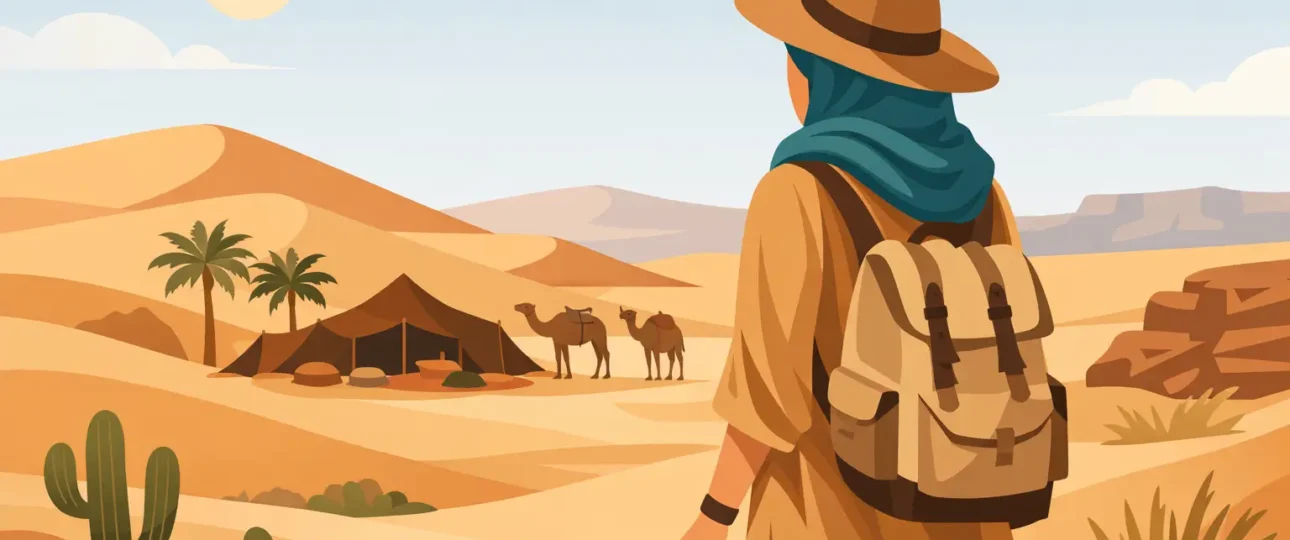
Daytime temperatures can feel intense, especially between late spring and early fall. A wide-brimmed hat or cap, sunglasses with good UV protection, and a lightweight long-sleeve shirt are essentials, not extras. Carry a scarf or neck gaiter as well. It can shield your face from dust on a windy drive, provide shade at a desert camp, or add warmth after sunset.
Do not let the daytime forecast fool you. Desert nights can be surprisingly cold, particularly from November through February and in exposed areas of the Adrar. Bring a warm mid-layer such as a fleece, light insulated jacket, or warm sweater. A light windproof outer layer is useful on open vehicles, dunes, and the Iron Ore Train.
Winter travelers should pack more seriously for cold mornings. Temperatures before sunrise can make a thin shirt and casual hoodie feel inadequate. In summer, the emphasis shifts toward sun protection, ventilation, and hydration, but a light layer is still worthwhile for air-conditioned vehicles and cooler evenings.
What Women Should Wear
Women travelers generally feel most comfortable in loose long pants, ankle-length skirts, maxi dresses, or relaxed jumpsuits paired with tops that cover the shoulders and upper chest. A lightweight overshirt, kimono-style layer, or long-sleeve linen shirt gives flexibility without adding much bulk.
A headscarf is not required for foreign visitors in most travel situations, but bringing one is a smart choice. It is useful for sun and dust protection and can feel appropriate when visiting more traditional communities. It also becomes one of the most versatile items in a desert bag.
Mauritania is not a place where travelers need to be anxious about every outfit, but very short shorts, crop tops, sheer clothing, and low-cut tops can attract unwanted attention and may feel out of place outside beach settings, which are not the focus of most itineraries. Dressing modestly is a simple way to travel with confidence and ease.
What Men Should Wear
For men, lightweight long pants or durable travel pants are the best daily option. Pair them with breathable T-shirts, polo shirts, or long-sleeve button-down shirts. Shorts can be suitable at a private camp or lodge, but long pants are more practical for town visits, desert drives, and protection from the sun.
A traditional flowing garment may be offered or available locally, and wearing one can be a memorable cultural experience. Still, it is not necessary to buy traditional clothing before you arrive. Bring familiar, well-tested pieces that allow you to walk, sit in a vehicle for long stretches, and handle changing weather.
Footwear for Dunes, Towns, and Desert Camps
Your footwear needs depend on the itinerary, but comfort matters more than technical appearance. For most guided Mauritania trips, lightweight hiking shoes, trail shoes, or sturdy sneakers with reliable grip work well. They are useful on rocky ground around Chinguetti and Ouadane, uneven paths, and desert camp areas.
Sandals are welcome for relaxing at camps, guesthouses, and beach stops, but they are not ideal as your only footwear. Fine sand enters everything, and open sandals offer little protection on hot ground or during windy conditions. Avoid bringing brand-new boots that have not been broken in. Blisters are an unnecessary distraction when the day includes dunes, ancient streets, or a long transfer.
Wear socks with closed shoes, including in the desert. They help prevent rubbing and make cool mornings more comfortable. A spare pair in your day bag can be helpful after a sandy walk or an unexpectedly wet rinse at camp.
Clothing for the Iron Ore Train and Other Big Days
The Iron Ore Train is an unforgettable Mauritanian experience, but it is not a fashion moment. Expect wind, dust, strong sun, and cold after dark. Wear clothes you are happy to get dirty, preferably in layers. Long pants, a long-sleeve top, warm outer layer, closed shoes, scarf or face covering, sunglasses, and a secure hat are the right foundation.
For dune crossings and desert camping, use the same approach: lightweight coverage by day and warmth at night. Keep one clean layer reserved for sleeping if you can. It makes a major difference after a dusty day, even at a well-organized camp.
In Nouakchott, comfortable modest clothing remains the best choice. The capital is more urban and busy than the desert, so choose clothing that feels appropriate for walking through markets, visiting cultural sites, and sitting comfortably in a vehicle. Keep valuables and loose accessories to a minimum in crowded areas.
If your itinerary includes Banc d’Arguin National Park or coastal areas, add a light windbreaker. The coast can feel cooler and windier than inland desert regions, even when the sun is strong. Swimsuits are best kept for private hotel pools or clearly appropriate settings, rather than public beaches.
A Practical Mauritania Packing Core
Rather than packing a different outfit for every day, bring a small rotation that can be washed, reworn, and layered. For a typical multi-day journey, this core selection works well:
- Two or three lightweight long-sleeve shirts, plus breathable short-sleeve tops for layering
- Two pairs of loose long pants or travel pants, with an optional long skirt or dress
- A warm fleece, sweater, or insulated layer for nights and early starts
- A lightweight windproof jacket, wide-brimmed hat, sunglasses, and multipurpose scarf
- Sturdy closed shoes, comfortable sandals, and several pairs of socks
Add underwear and sleepwear that suit your comfort level, but keep the overall bag compact. Many desert camps and guesthouses have practical standards for washing and resting, yet packing light makes transfers and camp changes far easier.
Small Choices That Make a Real Difference
Avoid expensive jewelry, delicate fabrics, and anything that needs special care. Sand finds its way into bags, pockets, camera equipment, and shoe seams. A simple crossbody pouch or zippered daypack helps keep essentials organized, while a reusable water bottle and sunscreen should stay within easy reach.
For photographers and filmmakers, consider clothing with secure pockets, but do not overload them. A scarf and sunglasses are especially valuable when shooting in open, dusty terrain. If you wear contact lenses, bring glasses as a backup for windy days.
Tours in Mauritania handles the route planning, transport, permits, and camp arrangements so you can focus on the journey. Packing for comfort, coverage, and changing conditions is your part of that preparation. Choose clothes that let you sit on a dune at sunset, accept an invitation for tea, and wake before dawn without worrying about what the day will bring.