Fixed-Departure Mauritania Tours: What to Expect
Mauritania isn’t the kind of place you “wing.” One day you’re buying fresh fish on the Nouakchott waterfront, and two days later you’re bumping across open desert toward a stone library town that once mapped the Sahara by starlight. The distances are real, the terrain changes fast, and the best experiences—Adrar oases, caravan cities, the Iron Ore Train—reward travelers who show up with a plan.
That’s where a fixed departure mauritania tour earns its reputation. It’s a set itinerary on set dates, run by a local operator who already has the route dialed in: vehicles, drivers, guides, permits, guesthouses, desert camps, and the small details that turn an “epic idea” into a trip you can actually enjoy.
What a fixed departure Mauritania tour actually is
A fixed-departure trip is not a rigid bus tour, and it’s not a DIY road trip either. Think of it as a small-group expedition with a published start date and a proven route. You join with other travelers (or occasionally run with a guaranteed departure once a minimum number is met), and the operator runs the logistics end to end.
In Mauritania, that structure matters more than in easier destinations. Travel times are long, fuel planning is part of the route, and some locations work best with local coordination—especially when you’re moving between Nouakchott, the Adrar region, and remote desert camps. Fixed departures reduce guesswork because the itinerary has been tested across seasons and road conditions.
You still get the “big empty Sahara” feeling. The difference is you’re not spending your evenings negotiating transport, hunting for a safe place to sleep, or trying to interpret what’s open on a given day.
Why fixed departures work so well in Mauritania
Mauritania is famously rewarding—and famously under-planned by first-time visitors. A fixed departure model fits the destination for a few practical reasons.
First, logistics are not optional. Long stretches have minimal services, and route planning affects everything from the time you reach a campsite to whether you catch a key moment in a historic town before the light fades.
Second, local knowledge changes the quality of the experience. Chinguetti and Ouadane aren’t just “points on a map.” The story is in the old quarters, the desert edges, the libraries and their caretakers, the tea rituals, and the way the wind reshapes the dunes. A guide who knows the people and timing can turn a short stop into something that stays with you.
Third, fixed departures are often the simplest way to include iconic experiences like the Iron Ore Train. Getting the right boarding point, coordinating a safe approach, and aligning expectations (passenger car vs. ore car, comfort vs. adventure) is much easier when it’s already built into the plan.
What’s usually included (and what isn’t)
In a well-run fixed departure mauritania tour, inclusions typically cover the pieces that are hardest to arrange from abroad: airport transfers, transport in a suitable 4×4, an English-speaking guide, drivers, accommodations that are clean and secure, most meals on the road, and the permits or local arrangements needed for the route.
What’s often not included is your international flight, personal travel insurance, and sometimes visa processing fees (though many operators can assist). Tips are usually at your discretion. If you’re comparing tours, look for clear pricing in writing and ask directly what “included” means in practice—especially around meals, single supplements, and any special modules like the Iron Ore Train.
The itinerary rhythm: cities, dunes, and ancient caravan towns
Most fixed departures are built around a satisfying arc: start with orientation in Nouakchott, head north into the Adrar, and then settle into the desert pace where days are shaped by sunrise, shade, and starlight.
Nouakchott is more than a landing point. It’s where you get your bearings—cash, SIM card, and a first look at daily life. Depending on timing, you might see the fishing port’s colorful chaos, local markets, and the city’s calmer corners.
Then the landscape opens. The drive toward the Adrar isn’t just transit; it’s the transition from Atlantic air to Saharan interior. In the Adrar, itineraries often weave together oases, rock plateaus, and dune fields, with nights split between welcoming guesthouses and desert camps.
Chinguetti and Ouadane are typically the cultural anchors. They’re the kind of places that feel quiet at first—until you understand what you’re seeing. Old stone houses, sand pressing at doorways, and libraries holding manuscripts that survived on trade routes long before modern borders. A fixed departure can time visits when the towns are most photogenic and least rushed.
The Iron Ore Train: adventure with real trade-offs
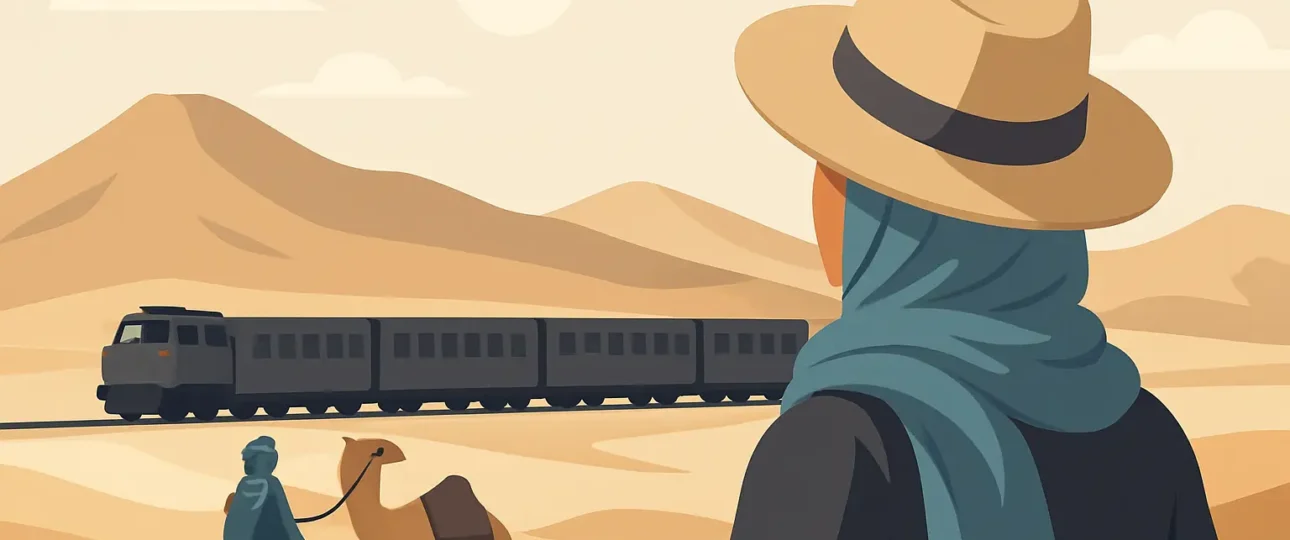
If you’re considering Mauritania, there’s a decent chance you’ve heard about the Iron Ore Train. It’s iconic for a reason: massive, cinematic, and unlike anything in mainstream travel. But it’s also an experience where expectations need to match reality.
Some travelers want the full grit: riding atop an ore car under open sky, wrapped against dust and wind, watching the desert roll by in the dark. Others prefer the passenger car for a more comfortable ride. Both are valid. The “best” option depends on your tolerance for cold nights, dust exposure, and physical discomfort.
A good fixed departure sets you up for success: where to board, what to pack for warmth and dust, how to handle water and snacks, and how to exit safely. It also offers alternatives. If the train doesn’t feel right for you, a Mauritania itinerary can still be extraordinary without it.
Comfort and safety: what “well-managed” looks like on the ground
Adventure travel in Mauritania should feel bold—not chaotic. The best fixed departures focus on practical comfort: reliable vehicles, sensible drive times, and accommodations that are clean, welcoming, and secure.
In the desert, “comfort” means thoughtful campcraft. A well-run camp has a clear plan for sleeping arrangements, a protected cooking area, enough water for basic washing, and a guide team that’s attentive without hovering. Sleeping under the stars can be the highlight of the trip, but it should still feel organized and safe.
On the road, safety is about judgment: avoiding unnecessary night drives, adapting to weather and road conditions, and maintaining communication. A fixed departure is valuable precisely because those decisions are made by people who know the routes and take responsibility for the outcome.
Who a fixed departure is best for (and when it might not be)
A fixed-departure model is ideal if you want Mauritania’s signature experiences but don’t want to build the logistics yourself. It’s especially well-suited to solo travelers who want companionship and support, photographers who want to be in the right places at the right light, and culture-forward travelers who value context.
It might not be the best fit if you need total freedom to change plans daily, or if your schedule can’t flex around set dates. Some travelers also prefer private departures for family groups, film crews, or very specific interests. In those cases, a tailored itinerary can make more sense, even if it costs more.
How to choose the right fixed departure (without overthinking it)
Because Mauritania is less standardized than many destinations, small differences matter. Start with the route: does it include the Adrar region, Chinguetti and Ouadane, and enough desert time to feel real? Then look at the operating style. You want a team that emphasizes clear communication, realistic drive times, and secure stays.
Ask a few direct questions before you book. How large is the group, and who is the guide? What kind of vehicles are used? What’s the accommodation standard in each location—guesthouse, lodge, desert camp? How do they handle the Iron Ore Train option? And importantly: what happens if weather or road conditions require changes?
If you want a local partner that runs structured multi-day itineraries with in-country logistics handled end to end, you can see current departures and route options at https://Toursinmauritania.com.
Timing, seasons, and what to pack (the practical reality)
Season affects comfort more than sights. Cooler months generally make desert travel easier and camping more enjoyable. Warmer periods can still work, but midday downtime becomes essential and some travelers find the heat draining.
Packing should match the trip style. For desert nights, layers matter even when days are warm—temperature drops can surprise people. Dust is part of the landscape, so bring eye protection and a face covering if you’re sensitive. Closed-toe shoes help in sand and rocky areas, and a small daypack keeps essentials close during drives.
Your operator should provide a more detailed packing list, especially if the Iron Ore Train is included. The goal isn’t to pack heavy; it’s to pack smart so you stay comfortable and present for the experience.
A fixed departure in Mauritania is, at its best, a simple promise: you bring curiosity, and the country meets you halfway—through dunes, stone cities, tea shared in the shade, and silence you can actually hear. Choose the departure that feels manageable, and you’ll find that the wild parts of Mauritania don’t need to be tamed to be accessible—they just need to be handled well.