
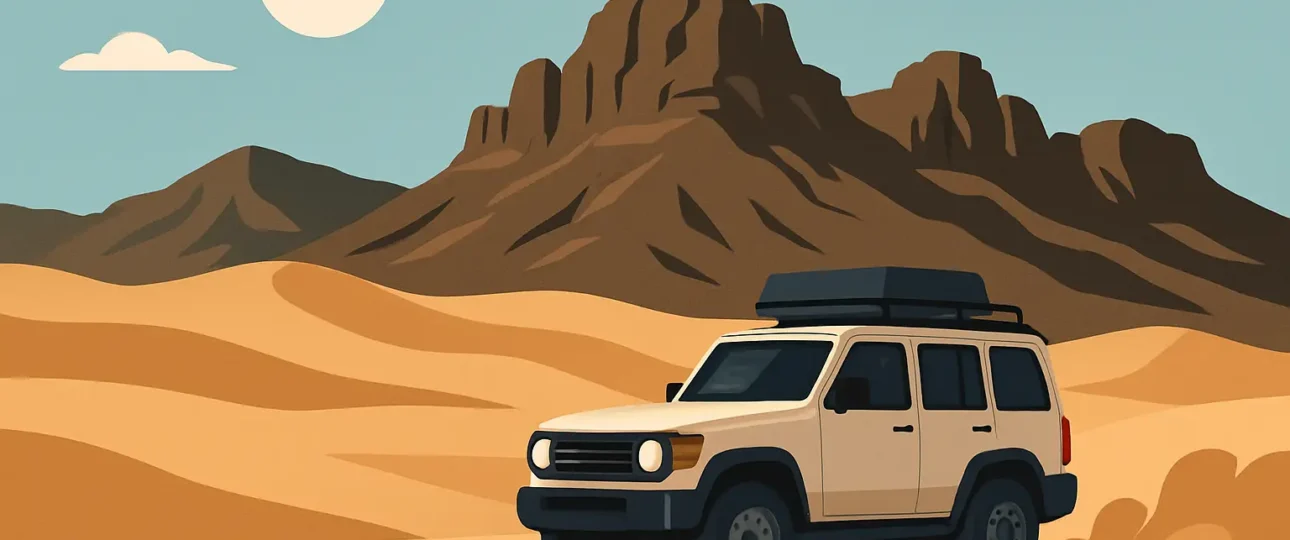
Adrar 4×4 Tours in Mauritania: What It’s Really Like
You feel it first in the road surface, not the scenery. The pavement thins, then gives way to gravel, then to sand that looks flat until the vehicle starts to float. That transition is the Adrar in a nutshell – Mauritania’s wide-open north where distances are real, the light changes by the minute, and the “main attractions” are often a horizon line, a ruined stone wall, and the quiet you didn’t realize you were missing.
An adrar mauritania 4×4 tour is not a theme-park desert drive. It’s a multi-day journey through caravan history and raw Sahara geography: oasis towns that once guided trade routes, sandstone plateaus carved by wind, and nights where the sky becomes the itinerary. Done well, it’s immersive and comfortable. Done casually, it can feel long, dusty, and logistically stressful. The difference is planning, pacing, and having reliable support on the ground.
Why the Adrar is made for a 4×4
The Adrar region rewards travelers who can get beyond the paved ribbon between major towns. A 4×4 isn’t about speed – it’s about access and control. You’ll encounter soft sand, rocky tracks, and stretches where the “road” is simply the most reasonable line across open terrain.
A capable vehicle also changes the rhythm of the day. Instead of planning around what a sedan can handle, you plan around light, temperature, and how much time you want at a site before moving on. That freedom is what makes the Adrar feel expansive rather than exhausting.
Just as important: a 4×4 tour supports a safer travel style. In remote areas, you want strong navigation, reliable comms, and a guide who knows where conditions shift after wind or recent traffic. The Sahara is not difficult because it’s dramatic – it’s difficult because it’s quietly indifferent to improvisation.
What you actually see on an Adrar Mauritania 4×4 tour
Most travelers come for a mix of three things: historic towns, desert landscapes, and the feeling of being far from everything without being unsupported.
Chinguetti is often the emotional center. It’s a UNESCO-listed caravan town where stone houses and sand meet in slow motion. Some visits focus on architecture and mosques, others on the manuscript libraries that hold fragile records of scholarship and trade. The experience is simple and memorable: walking lanes that curve into dunes, meeting locals who still live with the desert at the doorstep, and seeing how history survives in a place that never promises permanence.
Ouadane has a different texture. It feels more like a fortress town, perched and weathered, with ruins that hint at a larger past. The views out over the surrounding plains make it a photographer’s favorite, especially in late afternoon when the stone warms and the shadows sharpen.
Between these towns are the landscapes that justify the long drives: rocky plateaus, dune fields, occasional palm groves, and wide valleys where you can stop, step out, and hear nothing but wind. Some routes include the Richat Structure (the “Eye of the Sahara”), a vast circular geological formation best appreciated by understanding its scale. It’s not a single viewpoint so much as a slow realization that the land is patterned in ways the mind doesn’t expect.
A realistic route and pacing (and why it matters)
A common mistake is to treat the Adrar like a checklist. It’s not the number of places that makes the trip feel complete – it’s the pace.
For many travelers, 6 to 9 days in-country is a sweet spot if you want Adrar depth without rushing. Shorter trips can work, but you’ll spend more time in transit and less time in the places that reward lingering – a quiet library visit, a slow tea with locals, a sunset drive that doesn’t end with a headlamp.
The ideal flow usually alternates “movement days” with “presence days.” Movement days cover longer distances and include scenic stops. Presence days slow down – more walking in town, time for photography, a longer lunch, and a camp night that isn’t a late arrival followed by an early departure.
It also depends on your comfort with long drives. The Adrar is big, and the most stunning stretches can also be the least eventful in the usual sense. If you love big landscapes, those drives feel meditative. If you’re prone to restlessness, you’ll want a route with more short walks, viewpoints, and cultural encounters layered in.
Sleeping: guesthouses vs desert camps
Most Adrar itineraries mix guesthouses in towns with desert camping. That blend is part of the appeal, but it’s worth knowing what “comfort” means here.
In Atar, Chinguetti, and sometimes Ouadane, guesthouses are typically simple, welcoming, and oriented toward overland travelers. The best ones feel clean and calm, with hearty meals and staff who are used to international visitors. You’re not here for luxury design – you’re here for a solid night’s sleep, a shower when available, and a reliable base.
Desert camps can range from very basic to well-organized and surprisingly comfortable. A good camp setup prioritizes practical details: clean bedding, wind protection, straightforward bathroom arrangements, and a cooking team that understands food safety in the heat. Sleeping under the stars is often the highlight, but comfort comes from preparation – warm layers in winter, airflow and hydration planning in warmer months, and enough time to arrive before dark so you can settle in without rushing.
If you’re traveling with a strong preference – only camps, or minimal camping – it’s doable, but it changes the route. Pure camping gives you more wilderness time and fewer showers. Mostly guesthouses keep you refreshed and may reduce deep-desert flexibility. Neither is “right.” It depends on what you want to feel at the end of each day.
When to go: weather, light, and trade-offs
The most popular season for an Adrar 4×4 trip is roughly November through February, when days are pleasantly warm and nights can be cold. This is peak comfort for long drives and camp nights, but it’s also when demand is higher.
Shoulder months like October and March can be excellent if you’re okay with a bit more heat. You often get the same dramatic light and fewer crowds, though the midday sun can be stronger.
Spring and summer are possible, but they’re for travelers who understand the trade-off. Heat changes everything: how early you start, how long you can comfortably walk in towns, and how much you’ll enjoy camp life. If you’re a photographer chasing harsh, high-contrast desert light, you might not mind. If you want relaxed exploration, cooler months are more forgiving.
Wind also matters. A windy day can turn a pleasant stroll into a sandy workout. Good guiding helps here – shifting the order of stops, choosing sheltered lunch spots, and adjusting camp placement to keep the experience enjoyable.
What “logistics” really means in the Adrar
Mauritania is friendly, but it’s not plug-and-play. On an Adrar Mauritania 4×4 tour, logistics isn’t paperwork for paperwork’s sake. It’s what keeps the trip smooth.
You’ll want a plan for permits and checkpoints, especially outside major towns. You’ll also want reliable airport transfers, clear day-by-day timing, and a vehicle setup that matches your route and group size.
Food and water planning is another quiet success factor. In the desert you don’t “grab something later.” A good setup includes consistent water access, meals that travel well, and flexibility for dietary needs when communicated early.
Then there’s the human side: language, cultural context, and problem-solving. A professional guide is part historian, part navigator, part host. They translate not just words, but expectations – how greetings work, when to ask permission for photos, and how to engage respectfully in places that are not built for mass tourism.
For travelers who want all of this handled end-to-end, we offer fixed-departure and private options through Tours in Mauritania, with structured itineraries, pre-selected clean and secure stays, and on-the-ground support that keeps the focus on the experience rather than operational details.
What to pack (without overpacking)
Packing for the Adrar is about being prepared without hauling your closet across the Sahara. Think in systems: sun protection, dust management, and temperature swings.
Lightweight long sleeves, a warm layer for nights, and a scarf or buff for wind-driven sand go a long way. Sunglasses and sunscreen are non-negotiable. Closed-toe shoes are more practical than sandals for walking in towns and scrambling on rocky viewpoints.
Camera gear is worth protecting. Dust is normal, and it gets everywhere. A simple dry bag, a few zip pouches, and a basic cleaning cloth can save you frustration. If filming is a major goal, plan for charging strategy and storage – long drives are great for battery management if the vehicle setup supports it.
Who this trip is best for (and who should rethink it)
An Adrar 4×4 tour suits travelers who like big spaces, cultural depth, and the idea of being offline for parts of the day. It’s ideal for photographers, history-minded explorers, and anyone who wants a Sahara experience that’s more than dunes.
It may not be the best fit if you need constant variety every hour, struggle with long vehicle days, or expect luxury-level accommodations everywhere. The Adrar is comfortable when organized well, but it is still remote. If your goal is “effortless resort relaxation,” you’ll be happier elsewhere. If your goal is “I want to feel the Sahara, safely,” you’re in the right place.
The closing thought we hear most from travelers is simple: the Adrar doesn’t try to impress you – it gives you space to notice. If you arrive with patience and a well-run plan, you leave with something rare: quiet confidence that you went far, and it still felt easy.