
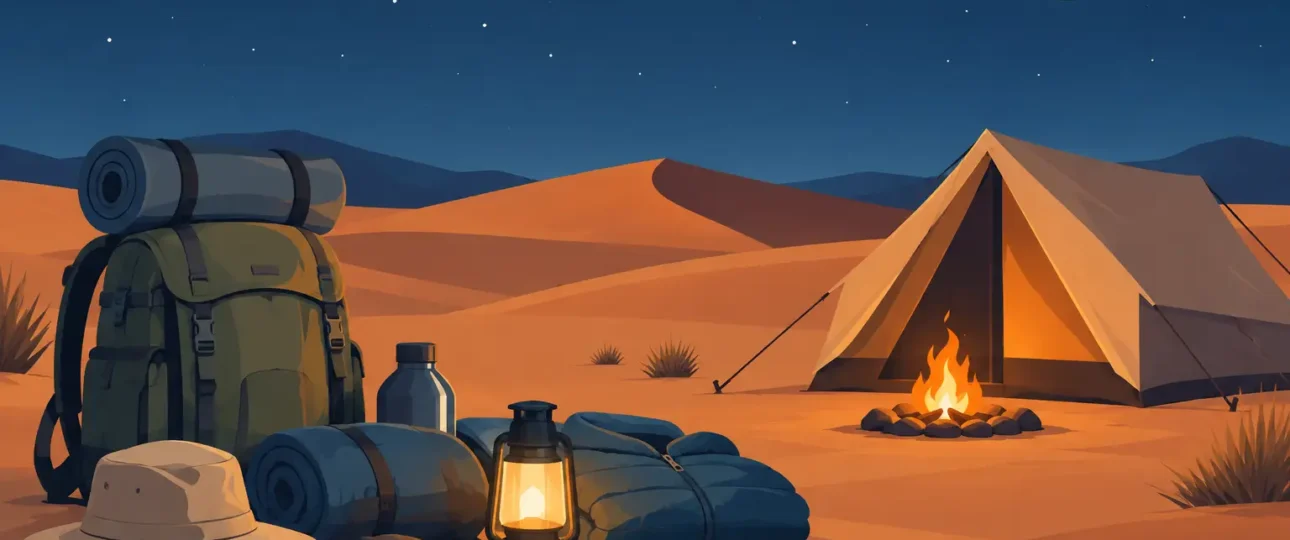
Sahara Camp Packing for Safe Desert Nights
The desert can feel like two different countries in one day. By afternoon, the sand reflects intense heat and every extra layer feels unnecessary. After sunset, the temperature drops quickly, the wind may rise, and the same camp that felt warm at dinner can feel surprisingly cold before dawn. Good Sahara camp packing is not about bringing more. It is about bringing the few things that keep you comfortable, protected, and ready to enjoy the experience.
On a guided Mauritania itinerary, much of the complicated planning is already handled: transport, route decisions, camp setup, and local support. Your personal bag should work alongside that organization. Pack for the conditions you will meet, keep essentials easy to reach, and confirm in advance what sleeping equipment and camp services are included on your specific departure.
Sahara Camp Packing Starts With Smart Layers
The most useful desert clothing system is simple: a breathable layer for the daytime, a warm layer for evening, and a wind-resistant outer layer. Loose, lightweight long sleeves and long pants offer better protection from sun, dust, and dry vegetation than shorts and tank tops. They also help you stay comfortable during vehicle transfers, walks around dunes, and visits to villages or historic towns.
Choose fabrics that dry quickly and do not hold odor. Cotton can be pleasant in dry heat, but it is less practical if you perspire heavily or need something to dry overnight. A lightweight technical shirt, a long-sleeve overshirt, and one or two pairs of airy pants are usually more useful than a large wardrobe.
For camp evenings, bring a fleece, insulated jacket, or warm midlayer. How warm depends on the season and the route. Winter nights in the Adrar and open desert can be genuinely cold, especially when wind moves through camp. Spring and fall can also bring chilly pre-dawn hours. Even travelers who rarely feel cold are usually glad to have a proper warm layer at breakfast.
A light windproof jacket is a strong choice because wind, not only temperature, often determines how comfortable you feel. If your tour runs in the coolest months, consider a compact hat and thin gloves. They take almost no space and make a noticeable difference when you are sitting outside under the stars.
Protect Your Eyes, Skin, and Breathing Space
Desert sun is persistent, including on days that begin cool or hazy. Bring sunglasses with reliable UV protection, a wide-brimmed hat or cap with neck coverage, and sunscreen that you know works for your skin. Apply sunscreen before the heat builds, not only once you feel exposed. Lips dry quickly too, so lip balm with sun protection belongs in the same pocket as your sunglasses.
A scarf, shemagh, or light buff is one of the most flexible items in your bag. It can shade your neck, reduce blowing sand around your face, add warmth in the evening, and provide a little privacy when resting during a long drive. You do not need to wear it in a particular style. The practical goal is simply to have an easy barrier when the wind picks up.
Dust is part of a real Sahara journey, particularly on dune crossings and unpaved tracks. Most travelers manage well with a scarf or buff, but people with asthma, allergies, or sensitive airways may prefer to pack a few well-fitting dust masks. Bring any prescribed inhalers or medication in your day bag, never buried in your main luggage.
Footwear for Sand, Camp, and Uneven Ground
There is no single perfect desert shoe. Your best choice depends on whether your itinerary includes longer walks, rocky plateaus, ancient towns, or mostly vehicle-based travel. For many travelers, lightweight hiking shoes or trail shoes with a secure sole are the most versatile option. They handle rocky ground better than sandals and remain comfortable when walking on firm sand.
Avoid bringing brand-new shoes. Sand can find small pressure points quickly, and a blister is far more distracting in the desert than at home. Wear your shoes beforehand, pack a few blister plasters, and use socks that stay comfortable over a full day.
Sandals are useful as a second pair for camp, short walks, and letting your feet breathe after a day in closed shoes. They are not ideal as your only footwear if you expect to climb dunes or walk over stones. Closed shoes also offer more protection from sun, dust, and occasional thorns.
What Belongs in Your Day Bag
Keep a small backpack with you in the vehicle rather than relying on your larger duffel or suitcase. This is where the items you may need during the day should live: water bottle, sunscreen, hat, sunglasses, camera, scarf, medication, and a warm layer for later.
A reusable water bottle is practical, but do not assume you will want to carry a large amount all day. Your guide will advise on water arrangements and driving times. The key is to drink regularly rather than waiting until you feel thirsty. Dry heat and wind can leave you dehydrated before you notice it.
Add hand sanitizer, tissues, wet wipes, and a small roll of toilet paper in a resealable bag. Desert camps are designed for practical comfort, not city-hotel routines. These small personal supplies are useful without turning your bag into a survival kit.
For electronics, use zippered pouches or dry bags. Fine sand gets into camera controls, charging ports, and the corners of backpacks. A soft lens cloth, spare memory card, portable battery, and charging cable will serve photographers well. If photography is a major reason for your trip, bring a protective bag that lets you access equipment quickly without setting it directly on the sand.
Sleeping Comfort: Confirm What Your Camp Provides
One of the pleasures of Mauritania is sleeping in the desert, where the night sky is unobstructed and silence feels unusually complete. It is also where travelers sometimes overpack because they are unsure what a desert camp means. Before departure, ask exactly what is supplied on your tour: bedding, mattress, blankets, sleeping bag, tent or open-air sleeping arrangement, and washing facilities can vary by season, route, and camp style.
If bedding is provided, you may only need sleepwear suitable for cool temperatures and perhaps a lightweight sleep liner for personal comfort. A liner can be useful for warmth and hygiene, but it should not replace proper cold-weather preparation if your departure is in winter. If you use earplugs or a sleep mask at home, bring them. Camp is quiet, but wind, fellow travelers, and an early departure can still interrupt sleep.
Keep a small flashlight or headlamp beside your sleeping area. A headlamp is especially useful because it leaves both hands free when you are organizing a bag, walking to facilities, or checking camera settings before sunrise. Bring spare batteries if your equipment uses them.
Pack Light Enough to Move Easily
Soft-sided luggage is often easier to load into expedition vehicles than a rigid large suitcase. A medium duffel, travel backpack, or soft rolling bag works well, paired with a smaller day pack. The goal is not to look like a minimalist traveler. It is to avoid bringing items that will remain untouched while taking up valuable vehicle space.
For a typical multi-day trip, plan to rewear outer layers and pants, while changing shirts, socks, and underwear as needed. You will have more room for the things that matter: sun protection, warmth, medication, camera equipment, and a little flexibility for changing conditions.
Keep passport copies, travel insurance details, cash, cards, and key medications in a secure pouch that stays with you. In remote areas, preparation is less about expecting problems and more about making small needs easy to handle.
A Few Items Travelers Commonly Forget
The smallest items often improve a camp night most: lip balm, moisturizer, a power bank, blister care, a spare pair of socks, and a refillable water bottle. If you wear contact lenses, pack glasses as a backup because dust and dry air can make lenses uncomfortable. If you use a CPAP machine or another medical device, discuss power needs before booking rather than assuming charging will be available at every camp.
Leave bulky valuables and excessive toiletries behind. Strong perfume is unnecessary in dry, dusty conditions, and glass bottles are inconvenient. A compact toiletry kit and biodegradable personal products are easier to manage.
The best desert packing list gives you room to notice where you are: the changing color of the dunes, tea shared around camp, and the stars appearing one by one after dark. Bring practical layers, protect yourself from sun and sand, and let your local team handle the logistics that make a remote night in the Sahara feel welcoming rather than complicated.