
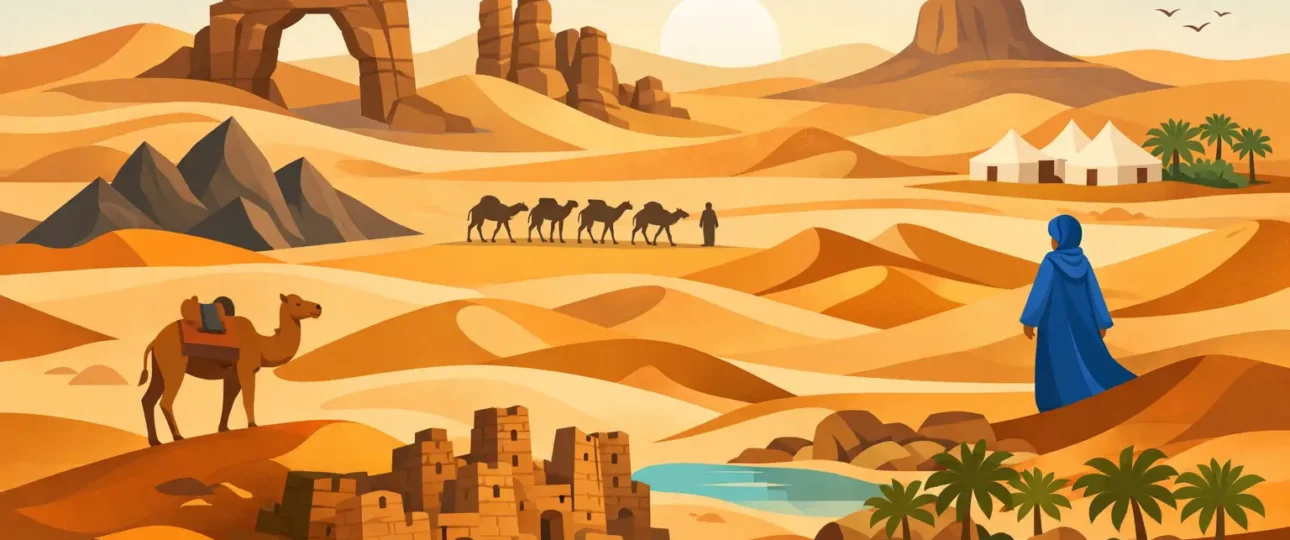
10 Best Places in Mauritania’s Desert
Mauritania rewards travelers who do not mind distance, silence, and a little sand in everything. What surprises most visitors is not just the scale of the Sahara, but how much variety exists within it – ancient towns, rock plateaus, palm-lined oases, giant dunes, and train routes that feel almost unreal. If you are deciding where to go, the right answer depends on whether you want history, landscapes, photography, or a full desert crossing.
For most travelers, the best approach is not trying to see everything. Mauritania is vast, and road logistics, permits, driving times, and overnight stops matter as much as the map itself. That is why the best places are the ones that fit well into a realistic route and give you the strongest sense of the country.
Best places to visit in Mauritania desert
The best places to visit in Mauritania desert are concentrated mainly in the Adrar region, with a few standout experiences that connect the desert to the coast and to Mauritania’s trading history. Some are visually dramatic. Others are quieter and become memorable because of the atmosphere, the people, and the feeling that very little here has been staged for tourism.
Chinguetti
Chinguetti is usually the first answer for good reason. It is one of Mauritania’s most important historic desert towns, known for old stone neighborhoods, libraries, mosques, and the deep caravan history that still shapes its identity. Walking here feels different from visiting a polished heritage site elsewhere. Chinguetti is living history, not a museum set.
The dunes pressing toward the edge of town are part of what makes it special. You can spend part of the day in the old quarter and then climb into the sand for sunset. That combination of culture and landscape is hard to beat. If you want one place that explains why desert travel in Mauritania is more than just scenery, Chinguetti is it.
Ouadane
Ouadane offers a different mood. It is also an ancient caravan town, but it often feels more remote and more starkly preserved than Chinguetti. The old settlement climbs over a hillside, and the ruined stone structures give the place an almost archaeological character, even though it remains tied to present-day life.
Travelers who love photography often prefer Ouadane because of its textures, light, and wide views. It can feel less immediately approachable than Chinguetti, but that is also part of its appeal. If you want a desert town that feels quieter, older, and more exposed to the elements, Ouadane belongs high on your list.
The Richat Structure
The Richat Structure, often called the Eye of the Sahara, is one of Mauritania’s most unusual natural landmarks. Seen from above, it is famous for its giant concentric rings. On the ground, it is more subtle. You are not looking at a perfect eye in the sand, but at a vast geological formation spread across a huge area.
That trade-off is worth understanding before you go. If you expect a dramatic single viewpoint, you may be underwhelmed. If you appreciate geology, scale, and the strangeness of standing inside a formation visible from space, it becomes one of the most memorable places in the country. It works especially well as part of a route with Ouadane.
Terjit Oasis
Terjit is one of the most accessible and rewarding stops in the desert. After hours of rock, dust, and open road, the shade of palms and the presence of water feel almost improbable. The oasis sits in a narrow gorge, and that contrast between harsh surroundings and cool shelter is exactly what makes it memorable.
It is not the biggest site in Mauritania, but it gives travelers a real sense of how oasis life made desert routes possible. Terjit is also a good place to slow the pace. On a longer itinerary, that matters. Not every highlight needs to be dramatic. Sometimes comfort, shade, and a quiet walk through palms are exactly what make the journey feel balanced.
Mhaireth Oasis
If Terjit is the better-known oasis, Mhaireth often feels more intimate. Reached through striking desert scenery, it offers palms, pools, and a sense of isolation that many travelers are looking for when they come to Mauritania. The road in is part of the experience, with changing rock formations and broad views that make the oasis arrival even stronger.
Mhaireth tends to appeal to travelers who want nature more than history. It is also one of those places where local logistics really matter. Reaching it smoothly, at the right time of day, with a well-planned route and overnight stop, can make the difference between a rushed visit and one of the best moments of the trip.
Desert camps and dune fields in the Adrar
When people search for the best places to visit in Mauritania desert, they are often imagining the classic Sahara experience – tall dunes, an open horizon, and a night under the stars. In Mauritania, those experiences are best understood as part of a wider route through the Adrar rather than a single named attraction.
The dune fields around Chinguetti and beyond offer some of the country’s most beautiful desert nights. Sunset changes the sand from pale gold to deep orange, and once darkness arrives, the sky is often extraordinary. Sleeping in a well-run desert camp adds comfort without taking away the feeling of remoteness. That balance matters, especially for travelers who want adventure but also appreciate clean bedding, reliable meals, and a safe setup.
Not every traveler wants the same thing here. Some prefer a short dune excursion with an easy return to a guesthouse. Others want a deeper crossing by 4×4 or camel-supported route. Neither is more authentic than the other. It depends on your time, energy, and tolerance for rougher conditions.
Ben Amera and the desert around Atar
Ben Amera is often mentioned as one of the largest monoliths in the world, and it is one of Mauritania’s standout natural sites. Rising dramatically from the desert, it has a scale that photographs never quite capture. The surrounding area feels stripped back to the essentials – rock, sand, sky, and distance.
This is a strong choice for travelers who like raw landscapes more than historic towns. It also pairs well with the train route, since the broader region carries that frontier feeling many people come for. If you want a desert stop that feels powerful and elemental, Ben Amera delivers.
The Iron Ore Train route
The Iron Ore Train is not a conventional sightseeing stop, but it is one of Mauritania’s most iconic desert experiences. Running through remote landscapes and mining territory, it connects you to the country in a way that no standard road transfer can. For some travelers, riding it is the main reason to come.
It is also the experience where expectations need the most honesty. Riding the train can be physically demanding, dusty, and highly dependent on timing and conditions. Some travelers love that challenge. Others prefer to photograph it, follow parts of the route by road, or combine the story of the train with more comfortable overland travel. A well-planned itinerary can help you choose the version that fits your style instead of chasing a hard experience just because it is famous.
Azoueiga dunes
Azoueiga is a smaller place in name but often a big favorite in real trips. Located in the Adrar, it is known for elegant dunes and a calm desert atmosphere that feels perfect for sunset walks and overnight camping. It does not carry the historic weight of Chinguetti or Ouadane, but that is exactly why many travelers enjoy it.
This is where the landscape becomes the main event. If your idea of the Sahara is silence, soft ridgelines, and time to sit and watch the light change, Azoueiga deserves attention. It is especially good on multi-day desert circuits where you want one night focused fully on the dunes.
How to choose the right desert route
The best route depends on how you travel. If this is your first time in Mauritania, Chinguetti, Ouadane, Terjit, and one desert camp usually create the strongest introduction. If you are drawn to geology and remote landscapes, add the Richat Structure and Mhaireth. If you want a signature adventure story, build in the Iron Ore Train or Ben Amera.
Season matters too. Cooler months are more comfortable for long drives, walking in old towns, and camping. Summer heat can make some stretches harder than many travelers expect. Road quality, supplies, timing, and overnight planning are not small details here. They shape the whole experience.
That is why many visitors prefer a guided itinerary with transport, permits, secure stays, and airport transfers already handled. A remote destination becomes much more enjoyable when the logistics are settled before you arrive. At Tours in Mauritania, that is exactly how we help travelers experience the country – with clear planning, reliable support, and routes that make the desert feel accessible without taking away its wild character.
If you give Mauritania enough time, the places you remember most may not be the ones with the biggest names. It may be the quiet after sunset in the dunes, tea in an old stone town, or the relief of palm shade after a long desert drive.