
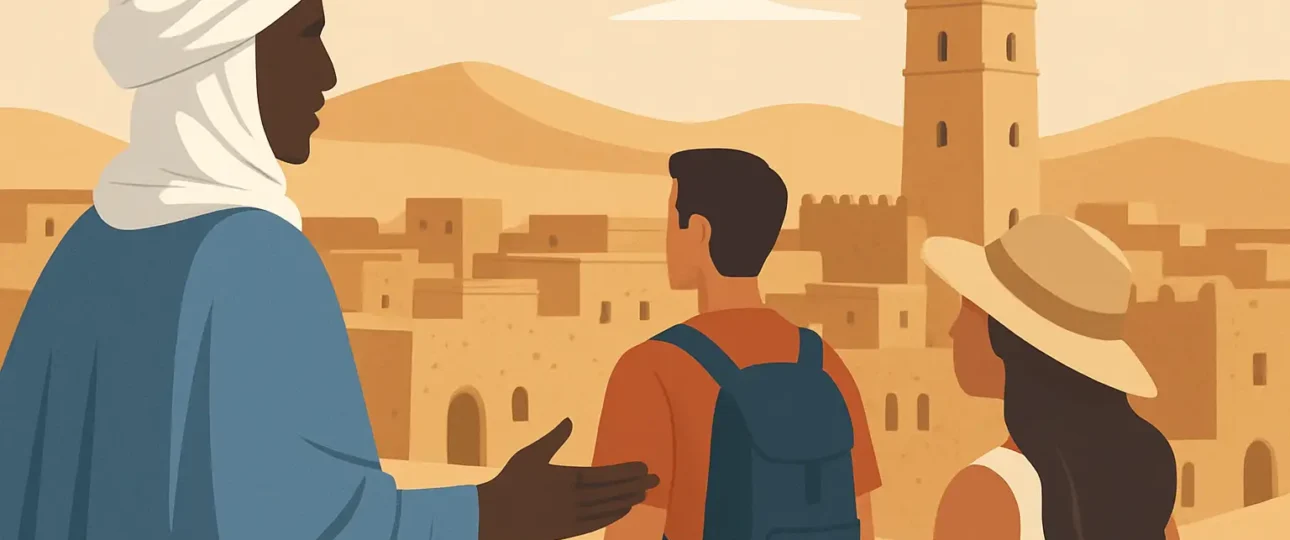
Chinguetti Guided Tour: What It’s Really Like
Chinguetti doesn’t announce itself with a big arrival moment. The paved road thins, sand gathers in soft drifts at the edges, and then—almost casually—you’re in one of the Sahara’s most storied caravan towns. The first thing most travelers notice isn’t a monument. It’s the quiet: the kind that makes small details loud, like the wind combing dunes behind a stone wall or the scrape of footsteps in an alley that’s been walked for centuries.
A chinguetti guided tour is the difference between simply “seeing” that atmosphere and actually understanding what you’re looking at—without worrying about navigation, checkpoints, or where you’ll sleep when the sun drops fast and the desert cools.
Why Chinguetti is best visited with a guide
Chinguetti is remote, and remote travel comes with trade-offs. Going independently can feel adventurous, but it also means you’re responsible for the parts that aren’t romantic: route planning, fuel, permits when required, local protocols, and the reality that English isn’t widely spoken outside of tourism touchpoints.
With a guided visit, you gain context and access. A good guide doesn’t just point out the old mosque or lead you to a library; they help you read the town properly. You’ll hear why a pile of stones can mark a boundary, how caravan routes shaped the layout, and what it means that Chinguetti is considered one of Mauritania’s historic ksour (fortified settlements).
Just as importantly, a guided tour reduces friction. Your driver knows the track conditions, your accommodation is arranged in advance, and there’s a clear plan for meals and water—small things that decide whether a desert day feels smooth or stressful.
What you’ll actually do on a Chinguetti guided tour
Chinguetti experiences are simple on the surface, but they’re layered. The best tours don’t rush; they let the town’s pace set the rhythm.
The old town and its stone streets
You’ll typically start in the historic quarter, where homes and walls are built from local stone and the streets narrow into shaded lanes. This is where a guide matters most, because the “highlights” aren’t always obvious. A doorway style, a collapsed wall, a small courtyard—your guide can explain what’s original, what’s been restored, and how families still use these spaces.
Expect a lot of walking at an easy pace, with frequent stops. Photographers love this part of town for its texture and clean lines, but it’s also where respectful behavior matters. A guide helps you understand when it’s appropriate to take photos and when it’s better to keep the camera down.
The ancient libraries (and what they represent)
Many travelers come to Chinguetti to see the manuscript libraries. They’re not museums in the polished sense. They’re living collections, often family-held, that reflect centuries of scholarship across religion, astronomy, mathematics, and poetry.
A good guided visit frames this properly: you’re not there for spectacle, you’re there to witness a tradition of preservation that survived desert conditions, shifting politics, and long periods of isolation. In some cases, you’ll be shown a small selection of manuscripts rather than a large display. That’s normal, and it’s part of treating the collection with care.
The mosque and the town’s spiritual center
Chinguetti’s old mosque is one of the most recognized images of Mauritania. Non-Muslim visitors should expect limits on access to prayer areas, and that’s not a “tourism issue”—it’s simply how sacred spaces work. Your guide can still walk you through the architecture, the symbolism of the minaret, and the role the mosque played when Chinguetti was a key stop in trans-Saharan travel.
Dunes at the edge of town
Chinguetti has a dramatic relationship with sand. You can walk from stone alleys to open dunes in minutes, and that contrast is part of the town’s identity. Many guided tours include a late-afternoon dune walk, when the light is softer and the temperature drops.
This is also where you’ll feel why planning matters. The desert is forgiving when you have enough water, a realistic route, and a guide who reads conditions. It’s less forgiving when you wing it.
How long to stay in Chinguetti
It depends on what you want out of the experience, and on how much of the Adrar region you’re pairing it with.
A one-night stop can work if you’re moving through the region and want a focused visit: old town walk, a library, sunset on the dunes, sleep, then depart. The trade-off is that you’ll experience Chinguetti more like a landmark than a place.
Two nights is the sweet spot for most travelers. It gives you time to slow down, revisit the old quarter in different light, and add a longer desert outing without feeling like you’re constantly checking the clock. If you’re interested in photographing the town, two nights also gives you sunrise and sunset conditions.
Three nights or more makes sense if Chinguetti is a centerpiece rather than a stop—especially for filmmakers, writers, or travelers who want deeper conversations and a less scheduled feel. The trade-off is simply time: Mauritania rewards slow travel, but most itineraries also want to include Ouadane, Atar, Terjit oasis, or the Iron Ore Train.
Comfort, safety, and what “logistics” really means here
Chinguetti is not a luxury destination, but it can be comfortable in the ways that matter: clean bedding, private or semi-private rooms depending on the guesthouse, reliable meals, and a secure place to rest after long drives.
The main comfort variable is expectation-setting. Power can be limited, Wi-Fi is not something to count on, and hot water may depend on the setup. On a guided tour, those realities are explained upfront, and accommodations are chosen with practical standards in mind—clean, welcoming, and secure.
Safety in Mauritania is largely about good judgment and local knowledge. That includes driving the right routes, handling checkpoints politely, avoiding unnecessary night driving between towns, and knowing what areas are appropriate for independent walks. A guided plan keeps those decisions off your shoulders.
When to go: timing your Chinguetti guided tour
The best season is generally the cooler months, when days are pleasant and nights are crisp. If you’re sensitive to heat, avoid the hottest stretch of the year; even if the town itself is manageable, the drives and dune walks can become draining.
Wind and sand are real factors, not just “desert vibe.” Some days are clear and still; others bring fine dust that gets into camera gear and makes long walks less enjoyable. A guide can adjust timing—swapping the order of activities or shifting the dune outing to a calmer window.
Ramadan and local holidays can also shape the experience. Visiting during these periods can be culturally rich, but shop hours and meal timing may change. It’s not a problem—it just requires planning.
What to pack (so you’re comfortable without overpacking)
You don’t need specialized gear, but a few choices make a big difference in the desert. Bring light, breathable layers for daytime and a warmer layer for evenings. Closed-toe shoes are more comfortable for sand-and-stone walking, and a scarf or buff helps on windy days.
If you’re photographing manuscripts or interiors, a fast lens helps more than a flash, and it’s more respectful. For power, a small battery pack is useful since outlets can be limited.
Most guided trips provide or arrange the essentials—water planning, meals, sleeping arrangements—so your packing can focus on personal comfort rather than survival supplies.
How Chinguetti fits into a bigger Mauritania itinerary
Chinguetti is rarely a standalone destination for international travelers, simply because getting there is part of a wider journey. Most people pair it with the Adrar circuit: Atar as a base, Terjit oasis for contrast, Ouadane for another historic caravan town, and desert camp nights for the Sahara experience you came for.
If you’re choosing between Chinguetti and Ouadane, it’s not a strict either/or. Chinguetti often feels more immediately iconic because of the mosque and the libraries; Ouadane can feel more expansive and ruin-rich, with wide views and a different sense of scale. When you do both, you start to understand the region as a network of places shaped by trade, scholarship, and survival.
Choosing the right guided tour (and the questions worth asking)
Not all guided experiences are built the same. Some focus on speed—touch the main sites and move on. Others prioritize pacing, comfort, and real interpretation.
Before you book, ask who is driving, who is guiding, what language support is available, and how accommodations are chosen. Ask whether the itinerary is flexible if weather changes, and whether the price is truly all-in or if there are expected add-ons for permits, transfers, or meals.
If you want a structured, multi-day approach where in-country details are handled end-to-end—transport, permits, airport transfers, and pre-selected comfortable stays—our team at Tours in Mauritania builds Chinguetti into guided itineraries that keep the experience adventurous without making the planning feel like a second job.
The best sign you’ve chosen well is simple: once you arrive in Chinguetti, you stop thinking about logistics. You start noticing the slant of late light on stone, the hush inside a manuscript room, and the way the desert sits right at the town’s edge, patient and permanent. Let yourself be fully there—that’s what you traveled for.